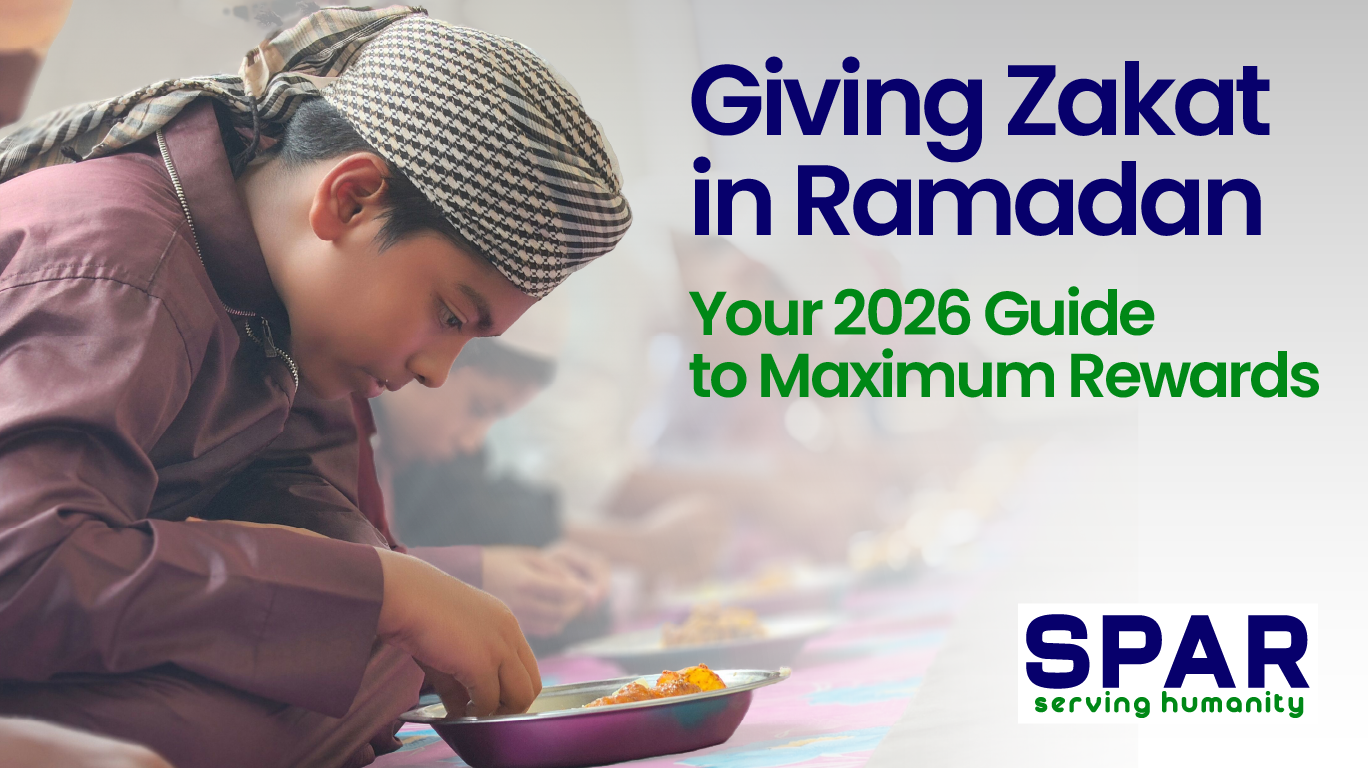
Giving Zakat in Ramadan: Your 2026 Guide to Maximum Rewards
Ramadan is the most sacred month in the Islamic calendar. It is a time for fasting, prayer, and deep reflection. For many Muslims, it is also the peak season for giving zakat in ramadan. This gesture fulfills an essential religious duty. Zakat is an obligation that depends on the anniversary of your wealth. However, many people choose to pay it during this holy month for spiritual reasons. In Islam, the rewards for mandatory acts of worship grow by seventy times during Ramadan. This turns a simple financial duty into a powerful spiritual investment. At SPAR Project, we work hard to ensure your gifts reach the most vulnerable families. Understanding the rules of timing and calculation is vital to ensure your worship is correct. This guide helps you navigate the process of giving your wealth during the most blessed time of 2026.
The Spiritual Meaning of Zakat in the Holy Month
Zakat is one of the five pillars of Islam. It serves as a mandatory form of charity for those who meet the wealth limit. You can pay it at any time of the year. However, giving zakat in ramadan is a tradition based on the search for extra blessings. Prophet Muhammad (PBUH) was always the most generous person. His kindness reached its peak during this month.
When we give during Ramadan, we do more than help the poor. We purify our souls. The word “Zakat” itself means to clean and to grow. By letting go of a small part of our wealth, we invite “Barakah,” or divine blessings, into the rest. In a world driven by greed, Zakat acts as a reset button for the heart. It reminds us that true wealth is not what we keep. It is what we give away for the sake of Allah.
Understanding the Zakat Anniversary
To answer the question of timing, we must understand the “Hawl.” This refers to the rule that you must own your wealth for one full lunar year. Your Zakat anniversary is the specific date your wealth first hit the “Nisab” limit.
If your personal anniversary falls in another month, you should pay it then. However, Islamic law is flexible. You are allowed to pay your Zakat early. Many donors choose to move their anniversary to Ramadan by paying in advance. This ensures they never forget the date. It also helps them benefit from the extra rewards of the month. Never pay late. If your due date was months ago, please consider settling that debt promptly instead of waiting for Ramadan.
Why the Reward Multiplier Matters
The “multiplier effect” is a main reason for the surge in charity this month. In the Islamic tradition, a mandatory act (Fard) in Ramadan earns the reward of seventy acts in any other month.
For a believer, this is a massive opportunity. Giving zakat in ramadan allows you to meet your duty while gaining a huge spiritual return. This is why charities like SPAR Project see so much activity during the final ten nights. Donors want to capture these rewards. They especially seek Laylatul Qadr, the Night of Power. This night is better than a thousand months. Every dollar given is a seed planted for a harvest in the hereafter.
How to Calculate Your Zakat Assets in 2026
Calculating your Zakat is a simple process. You only pay on “growth” assets that you have owned for a full year. You do not pay for the house you live in or the car you drive. Do not pay on the tools you use for your job. Focus on these items:
- Cash: All money in your bank accounts and cash on hand.
- Gold and Silver: Any jewelry or coins held as an investment.
- Investments: The value of stocks and pension funds.
- Business Assets: Cash held by the business and stock ready for sale.
- Money Owed to You: Loans you are certain will be repaid.
Add these up and subtract your immediate debts. If the final total is above the Nisab limit, you owe 2.5%. The market prices for gold and silver change every day. Always check the current rates for 2026 before you calculate.
Zakat vs. Zakat al-Fitr: Learn the Difference
People often confuse these two terms. They are separate duties.
- Zakat al-Mal (Yearly Zakat): This is the 2.5% tax on your total wealth. It is only for those who meet the wealth limit.
- Zakat al-Fitr (Fitrana): This charge is a small, flat fee for every member of the household.
You must pay Zakat al-Fitr during Ramadan before the Eid prayer. It purifies the person fasting from mistakes. It also provides food for the needy. You may be giving zakat in ramadan for your yearly wealth. However, you must also pay your Fitrana separately. At SPAR Project, we have distinct funds for both. This arrangement ensures they follow their specific rules.
The Role of Intent in Your Giving
The value of an action depends on the intention (Niyyah) behind it. Your Zakat is only valid if you have the specific intent. You must know that the money you pay is for your mandatory Zakat duty. It is not enough to give a large sum and decide later that it was Zakat.
Before you donate, take a moment to focus your heart. Set your intent by acknowledging the command of Allah. This turns a simple payment into a holy act of worship. Without this intent, the payment may only count as general charity. While general charity is good, it does not fulfill your pillar of faith. Always stay mindful throughout the process.
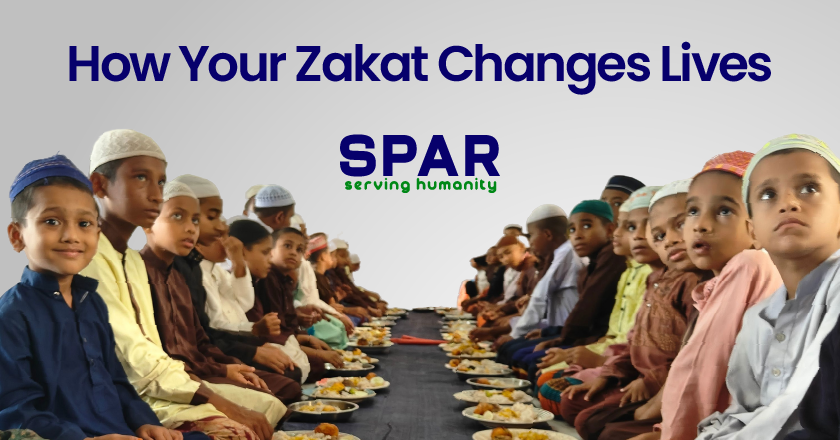
How Your Zakat Changes Lives
When you choose SPAR Project for your Zakat, your money goes directly to those in need. We focus on long-term growth and emergency help. Your 2.5% might seem small. However, it creates a massive wave of change when joined with others.
In 2026, many communities struggle with the rising costs of living. Your Zakat provides:
- Clean Water: We build solar-powered wells that serve entire villages.
- Food Security: We provide nutritious food packs to families.
- Medical Aid: We give clinics in rural areas life-saving medicine.
- Education: We support orphans with school supplies and fees.
By giving, you help a family move out of hardship. You provide the tools they need to stand on their own.
Giving to the Eight Categories
The Quran is very specific about who can receive Zakat. It identifies eight groups of people. These include the poor, the needy, and those in debt. This approach ensures the money is not wasted. It goes to those who have a genuine right to it.
At SPAR Project, we have strict checks. We ensure every project we fund fits these categories. Our process gives you peace of mind. Your duty is met according to divine law. We help widows start small businesses. We provide shelter to refugees. We are committed to the highest standards. Your Zakat is a trust. We treat it with the respect it deserves.
Common Mistakes to Avoid in 2026
Be aware of common errors to ensure your Zakat is accepted. One mistake is failing to update your wealth count. Many people pay the same amount every year. They do not check if their savings grew. They do not check if the gold price changed.
Another mistake is forgetting to include jewelry. In many cases, gold and silver jewelry must be included in the total weight. Also, some donors wait until the very last day of Ramadan. These situations can lead to rushed math and missed dates. We recommend starting your math in the first week. Such an approach allows you to give with a calm mind.
Transparency: Your Right as a Donor
When you are giving zakat in ramadan, you have the right to know how your money is used. Trust is built on transparency. At SPAR Project, we provide detailed reports on our projects.
We want you to see the impact of your kindness. We share the journey with you. We show you the groundbreaking of a new well. We show you the distribution of food packs. This approach keeps you connected to the work. In 2026, we use digital tools to keep you informed. You will know where every dollar goes.
Final Thought
Giving zakat in ramadan is a beautiful act. It connects your personal faith to the survival of the global community. It is a reminder that we are all part of one body. By fulfilling this pillar, you clean your soul. You bless your wealth and bring hope to the world. As we face the challenges of 2026, let your Zakat be a light. Trust SPAR Project to handle your gift with care and sincerity. May Allah accept your fasting, your prayers, and your charity during this holy month.