How to Do Qurbani in Islam: A Simple Guide for the Modern Donor
The air usually changes around this time of year as we approach the month of Dhul-Hijjah. For many of us, it’s a period of deep reflection and preparation for one of the most significant acts of worship in our faith. Yet, as the dates for Eid-ul-Adha 2026 draw near, I’ve noticed many people asking the same practical question: how to do qurbani in islam without getting lost in the technicalities? It’s not just about the ritual itself; it’s about making sure your sacrifice is valid, sincere, and truly reaches those who need it. With food inflation hitting nearly 10% this year and transport costs rising, especially in places like Bangladesh, getting your Qurbani right has never felt more urgent. This guide isn’t just a list of rules; it’s a roadmap to ensure your devotion translates into a real, Halal impact for families who might only taste meat once this entire year.
Beyond the Ritual: What Qurbani Really Is
Before we get into the “how-to,” we need to talk about the “why.” Qurbani, or Udhiya, is much more than just a tradition. It is a direct link to the story of Prophet Ibrahim (AS) and his absolute trust in Allah. When he was ready to sacrifice his son Ismail (AS) out of obedience, Allah replaced the boy with a ram.
The word Qurbani itself comes from the root word Qurb, which means “closeness.” So, when you perform this act, you aren’t just slaughtering an animal—you are sacrificing your wealth and your ego to get closer to the Creator. It is a moment of total surrender. In a world that often feels like it’s spinning too fast, this act of worship forces us to slow down and remember who actually provides everything we own.
Who Actually Has to Perform Qurbani?
This is where things can get a bit confusing for some. In the Hanafi school, performing Qurbani is Wajib (obligatory) for every adult Muslim who is of sound mind and meets the wealth threshold known as Nisab.
Basically, if you own wealth equal to 52.5 tolas of silver (about 612 grams) on the days of Eid, you are required to give. This isn’t just cash in your pocket; it includes savings, jewelry you don’t wear, and other extra assets. Given the current economic climate in 2026, many people are tightening their belts, but if you meet that threshold, the sacrifice remains a beautiful responsibility. It is your way of purifying your wealth and sharing your blessings with the wider Ummah.
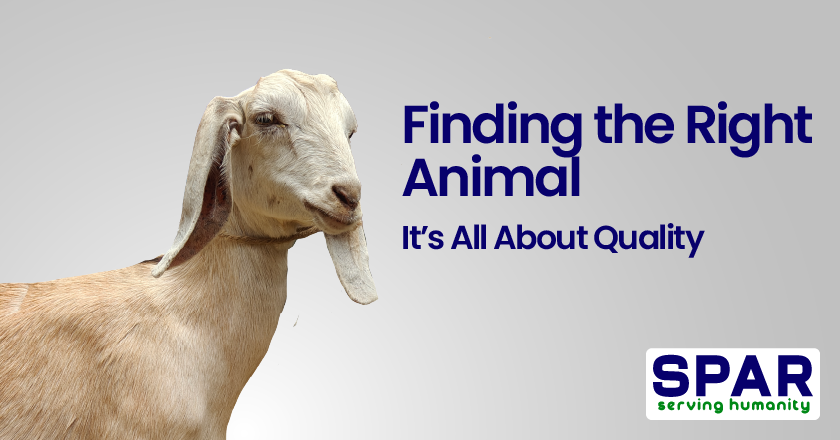
Finding the Right Animal: It’s All About Quality
When you’re looking at how to do qurbani in islam, you quickly realize that you can’t just pick any animal. You are offering a gift to Allah, so it has to be the best you can reasonably afford. Generally, you can choose from:
- Goats and Sheep (one share per animal)
- Cows, Buffaloes, and Camels (up to seven shares per animal)
I always tell people: don’t look for the cheapest deal. Look for the animal that is the most “Tayyib” (pure and wholesome). In our work in Bangladesh, we see firsthand that a healthy, well-fed animal doesn’t just fulfill the religious requirement—it provides better, more nutritious meat for the families who receive it.
The “Health Check” Every Donor Should Know
There are strict rules about the health of the animal. If it has major defects, the sacrifice won’t count. You should check for four main things:
- Eyesight: The animal shouldn’t be blind in one or both eyes.
- Strength: It must be able to walk to the place of slaughter on its own. If it’s too lame or weak to stand, it’s not eligible.
- Nutrition: It shouldn’t be so thin that you can feel its bones easily.
- Overall Health: Avoid animals that are visibly sick or have major injuries, like a broken horn (from the root) or a heavily torn ear.
A small scratch is fine, but for a valid Qurbani, the animal needs to be in good physical shape. This is why organizations like SPAR Project are so careful about sourcing—we check every animal before it’s even considered for our donors.
Why Age Matters More Than You Think
Even if an animal looks massive, if it hasn’t reached the right age, the sacrifice isn’t valid. This is a rule that catches people off guard sometimes.
- Sheep: Minimum 1 year (though 6 months is okay if it’s so big it looks like a year-old sheep).
- Goats: Must be at least 1 year old.
- Cows: Must be at least 2 years old.
- Camels: Must be at least 5 years old.
The easiest way to tell the age is by the teeth. For example, a two-year-old cow will have two permanent front teeth. If you’re donating through a charity, make sure they have a process to verify this. It’s part of the Amanah (trust) they hold for you.
The Timing: Don’t Rush the Process
Timing is everything in Islam. You cannot perform your Qurbani before the Eid prayer. If you do, it just counts as regular meat, not the ritual sacrifice. The window usually opens after the Eid-ul-Adha prayer on the 10th of Dhul-Hijjah and stays open until sunset on the 12th (though some scholars say the 13th is also acceptable).
Given that Eid 2026 falls in late May, we are often dealing with high heat or the beginning of monsoon rains in South Asia. This makes the timing even more critical. You want the meat processed and distributed quickly so it doesn’t spoil. This is why we start our operations the moment the prayer ends, working through the night to ensure everything is handled properly.
How to Do Qurbani in Islam: The Mercy of the Blade
The actual act of slaughter must be done with extreme compassion. The Prophet (SAW) taught us to sharpen the knife so the animal doesn’t suffer, but never to sharpen it in front of the animal.
Here is how the Sunnah slaughter is performed:
- Feed and water the animal first.
- Lay it on its left side facing the Qibla.
- Say the words: “Bismillahi Allahu Akbar.”
- The cut must be swift, severing the windpipe, gullet, and jugular veins.
- The animal must be allowed to rest until all life has left the body before skinning begins.
This “Halal” way isn’t just about ritual; it’s about being humane. It ensures the blood is drained and the meat stays clean and pure.
Dividing the Meat: The 1/3 Rule
The beauty of Qurbani is that it promotes sharing. The general rule is to divide the meat into three equal parts:
- For You: One-third for your family.
- For Friends: One-third for neighbors and relatives.
- For the Needy: One-third for those who cannot afford meat.
However, if you are donating to a place like Bangladesh through a charity, you often choose to give the entire animal to the poor. In a country where food inflation is squeezing the life out of rural families, that choice is incredibly powerful. It means a widow and her children might get a whole week’s worth of protein from your single gift.
The 2026 Economic Reality for Qurbani
Let’s be honest: things are expensive this year. In Bangladesh, transport costs have jumped significantly due to fuel shortages and global crises. Moving a truckload of cattle from Northern Bangladesh to the coastal regions now costs nearly 60% more than it did a few years ago.
When you see Qurbani prices around £99 or 15,000 BDT, that money isn’t just buying an animal. it’s paying for the transport, the local farmers, the butchers, and the distribution teams who navigate floodwaters to reach remote villages. Every penny you spend supports a whole local ecosystem during a very tough year.
Why Transparency is Non-Negotiable
If you’re sending your money thousands of miles away, you deserve to know it was handled right. This is where the concept of how to do qurbani in islam meets modern technology. You shouldn’t just get a receipt; you should see the impact.
At SPAR Project, we prioritize transparency because your worship is sacred. We provide photo and video proof to our donors. We want you to see the animal you paid for and the smiling faces of the families receiving the meat. That connection makes the act of giving feel much more personal and fulfilling.
Reaching the Unreachable in Bangladesh
Bangladesh has some of the most hard-to-reach areas in the world—places like the chars (river islands) or the remote haor wetlands. These are the people who often get missed by big aid agencies. When you do your Qurbani with a focused organization, your donation goes exactly to these “forgotten” people.
For them, Eid isn’t just a day off. It’s a day when they feel seen by the world. It’s a day when they can cook a proper meal and celebrate without the crushing weight of poverty for just a moment. Your sacrifice is the reason they can smile.
The Impact on Local Farmers
One thing people often forget is that Qurbani is a massive boost for local agriculture. Instead of importing meat, we buy directly from small-scale farmers in Bangladesh. This keeps the money within the community. It helps a farmer pay for his children’s school fees or repair his home before the next storm hits. Your religious duty becomes an engine for economic growth.
Overcoming the “Online Giving” Hesitation
I know some people feel hesitant about giving their Qurbani online. They feel like they’re losing that “hands-on” connection. But think of it this way: by giving online to a place like Bangladesh, you are performing a “Prophetic Qurbani.” The Prophet (SAW) often sacrificed an extra animal on behalf of those in his Ummah who couldn’t afford it.
When you send your share to a hungry family abroad, you are living out that spirit of global brotherhood. You are saying, “I might be here, but my heart and my help are with you.”
Final Thought: A Sacrifice for the Soul
At the end of the day, how to do qurbani in islam comes down to one thing: your heart. Whether you are buying a small share in a cow or a whole goat, Allah sees the effort you put into it. As we look at the challenges of 2026—the inflation, the climate shifts, the uncertainty—your Qurbani stands as a lighthouse of hope. It’s a reminder that we are all connected and that a single act of sincere worship can change a life. May your sacrifice be accepted, and may it bring barakah to your home and joy to the hearts of the poor in Bangladesh.