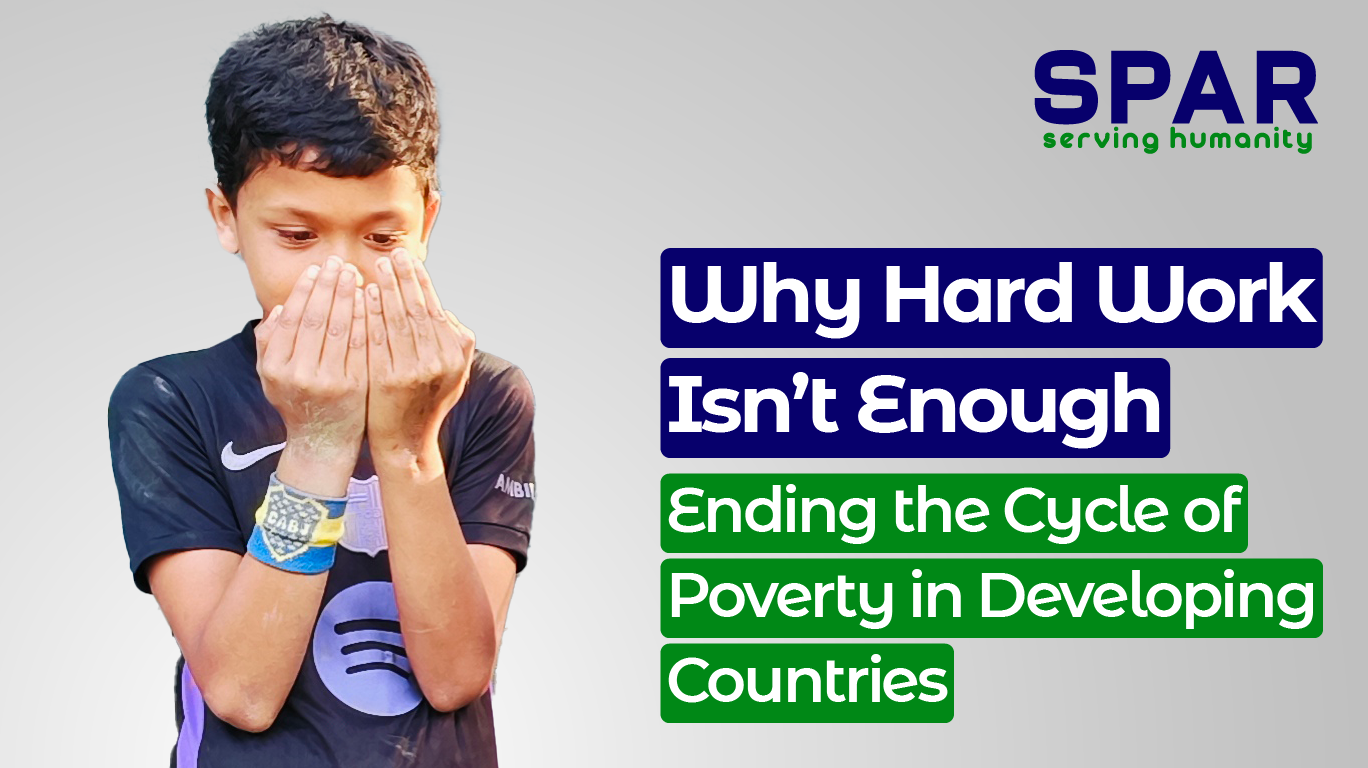
Why Hard Work Isn’t Enough: Ending the Cycle of Poverty in Developing Countries
We often hear that if you just work hard enough, you can achieve anything. But for a father in a remote village or a mother in a crowded urban slum, that sentiment feels like a cruel joke. The truth is, for millions of people, the cycle of poverty in developing countries isn’t a lack of effort. It is a structural cage. It is a system designed to keep people exactly where they are, regardless of how much they sweat or sacrifice.
Imagine being born into a family where your parents couldn’t afford school. Because they couldn’t read, they couldn’t get a steady job. Because they didn’t have a steady job, they couldn’t buy nutritious food for you. Now, as an adult, you are physically weaker and lack the skills needed for the modern workforce. Your children are now starting that exact same journey. This is the generational loop we are talking about. It isn’t just about “being poor.” It is about a set of circumstances that makes escape nearly impossible without outside help. In this article, we’re going to peel back the layers of this issue. We’ll look at what keeps this cycle spinning and, more importantly, how organizations like the SPAR Project are finally helping people break free.
The Reality of the Poverty Trap
What does a “trap” actually look like in real life? In economics, a poverty trap happens when a person’s income is so low that they must spend every cent just to stay alive today. There is no “saving for a rainy day” because it is already pouring.
When you live in this state, you can’t invest in anything that would make your life better tomorrow. You can’t buy a better plow for your field. You can’t buy a sewing machine to start a business. You can’t even buy a bike to get to a better-paying job further away. The cycle of poverty in developing countries thrives on this lack of “seed capital.” Without a small surplus of money to start something new, you are stuck in a loop of survival. This is why “hard work” isn’t the magic fix—you need a way to turn that work into growth.
Why Education Stalls Before It Starts
Everyone says education is the key, and they’re right. But for a family trapped in poverty, school feels like a luxury they can’t afford. Even if the school itself is free, the “opportunity cost” is massive.
If a 10-year-old boy stays in school, he isn’t in the field helping his father grow food. If a 12-year-old girl is in class, she isn’t at home watching her younger siblings so her mother can go to work. In the short term, the family needs that child’s labor just to eat. By pulling the child out of school to help today, the family unknowingly guarantees that the child will remain in low-wage labor for the rest of their life. This is how the cycle moves from one generation to the next. It’s a tragic trade-off: survival today for a better future tomorrow.
The Health Crisis Nobody Talks About
Being poor is expensive, especially when it comes to your health. In a developing country, a simple infection or a broken bone can be a total financial disaster. Most people in these regions don’t have health insurance or “sick days.” If you don’t work, you don’t eat.
When a breadwinner gets sick, the family loses its only income. At the same time, they have to find money for medicine or a doctor. Often, they have to borrow money from “loan sharks” at or sell their only assets, like livestock or tools. By the time the person is healthy again, the family is so far in debt that they may never recover. This “health-poverty feedback loop” is one of the most common ways families fall from “struggling” into “extreme poverty.”
The Heavy Burden of Unsafe Water
It’s hard to imagine, but for millions, “getting water” is a part-time job. In many developing regions, women and girls spend three to four hours a day walking to a river or a hole in the ground to collect water.
This isn’t just about the time lost, though that is a huge factor. The water is often filled with bacteria. Drinking it leads to chronic stomach issues, parasites, and diseases like cholera. When children are constantly sick from bad water, they can’t grow properly, and they can’t stay in school. When mothers are sick, they can’t care for their families. Simply putting a clean water well in the center of a village changes everything. It gives people their time back and, more importantly, it gives them their health back.
Food Insecurity and the Stunting of Potential
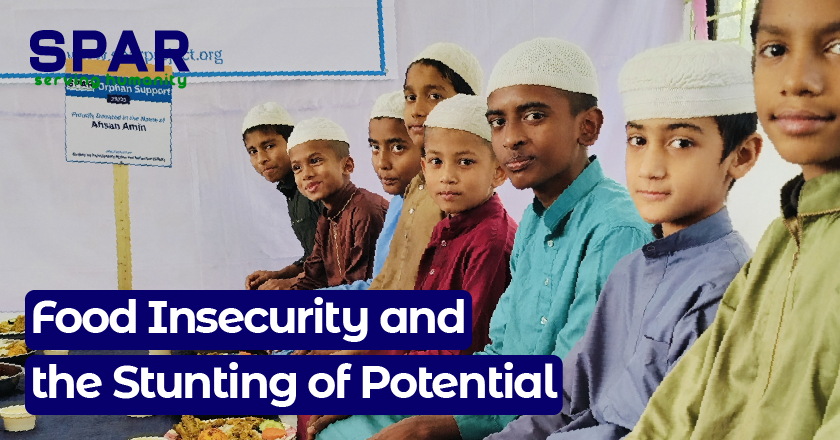
You can’t build a future on an empty stomach. Malnutrition, especially in the first 1,000 days of a child’s life, causes “stunting.” This isn’t just about being short; it’s about brain development.
A child who doesn’t get enough iron, protein, and vitamins will struggle to learn as much as their well-fed peers. They are more likely to drop out of school and less likely to earn a high wage as an adult. Many families in developing countries rely on “subsistence farming”—growing just enough to eat. If the rains don’t come, or if a pest destroys the crop, the family has no backup plan. They don’t just lose money; they lose their ability to feed their children’s potential.
Climate Change: The Great Unfairness
The people living in the cycle of poverty in developing countries contributed the least to global carbon emissions, but they are the ones paying the highest price. Farmers in these regions are on the front lines of climate change.
In the past, a farmer knew exactly when the rains would come. Now, the seasons are unpredictable. Floods wash away entire villages, and droughts turn fertile land into dust. For a wealthy farmer, a bad year is a setback. For a poor farmer, a bad year is the end. They have no insurance and no savings. One bad storm can reset a family’s progress by a decade, forcing them back into the trap they worked so hard to escape.
The Lack of Basic Infrastructure
Imagine trying to start a business when the power goes out for six hours every day. Or trying to sell your vegetables at the market, but the only road is a mud track that becomes impassable when it rains.
Infrastructure is the skeleton of an economy. Without roads, electricity, and internet access, rural communities remain isolated. They can’t reach customers, they can’t get supplies, and they can’t access information. This isolation keeps prices high for what they buy and low for what they sell. Breaking the cycle requires connecting these “islands of poverty” to the rest of the world.
Gender Inequality as an Economic Barrier
If you want to fix a country’s economy, start by empowering its women. In many places, women are legally or socially barred from owning land, taking out loans, or even having a bank account.
When women are held back, half of the workforce is sitting on the sidelines. But there’s an even deeper reason to focus here: data shows that when a woman earns an income, she spends about 90% of it on her family’s health and education. Men, on average, spend much less. By keeping women out of the economy, a society is essentially choosing to stay in the cycle of poverty.
The Predatory Cycle of Debt
When you have nothing and an emergency hits, you do what you have to do to survive. For many, that means turning to local moneylenders. These lenders often charge interest rates so high that it is impossible to pay back the original loan.
Families end up working just to pay the interest, year after year. They become “bonded laborers,” essentially working for free to pay off a debt that never gets smaller. This is a invisible side of the cycle of poverty in developing countries. It’s not just a lack of money; it’s a weight of debt that keeps the next generation from ever getting a clean start.
Why Handouts Aren’t the Answer
It’s a natural human instinct to want to send food or clothes to people in need. And in an emergency, that is vital. But as a long-term strategy, “handout culture” can actually do more harm than good.
If you flood a local village with free donated clothes, the local tailor goes out of business. If you give away free imported grain, the local farmer can’t sell his harvest. Instead of building a local economy, you’ve accidentally destroyed it. True change comes from “capacity building”—giving people the tools, the knowledge, and the systems to support themselves. We need to move from charity to partnership.
Sustainable Solutions That Actually Work
So, how do we actually stop this? It starts by looking at poverty as a web of problems that all need to be solved at once. You can’t just build a school; you also need to make sure the kids have clean water so they aren’t too sick to attend. You can’t just give a loan; you need to make sure there are roads so the business can reach customers.
Successful programs focus on:
- Micro-loans: Small amounts of credit that let people start businesses.
- Vocational Training: Teaching skills like coding, mechanics, or modern farming.
- Community Health: Building small, local clinics that focus on prevention.
- Legal Reform: Ensuring everyone has the right to own property and access the law.
How SPAR Project is Making a Difference
At the SPAR Project, we don’t believe in quick fixes. We know that breaking the cycle of poverty in developing countries takes time, trust, and local leadership. We don’t walk into a community and tell them what they need; we ask them.
Whether it’s through our education initiatives that keep girls in school or our sustainable water projects that give hours back to mothers, our goal is always the same: independence. We want to work ourselves out of a job. We believe that every person has the spark of potential inside them. Our job is simply to clear away the barriers—the lack of water, the lack of schools, the lack of opportunity—so that spark can finally catch fire.
Final Thoughts
The cycle of poverty is strong, but human resilience is stronger. When we talk about these statistics, it’s easy to get overwhelmed. But behind every “trap” is a human being with dreams, talents, and a desire to provide for their family. By understanding that poverty is a systemic issue rather than a personal failure, we can stop judging and start building. Breaking the cycle isn’t about pity; it’s about justice. It’s about making sure that the place you are born doesn’t determine how far you can go.