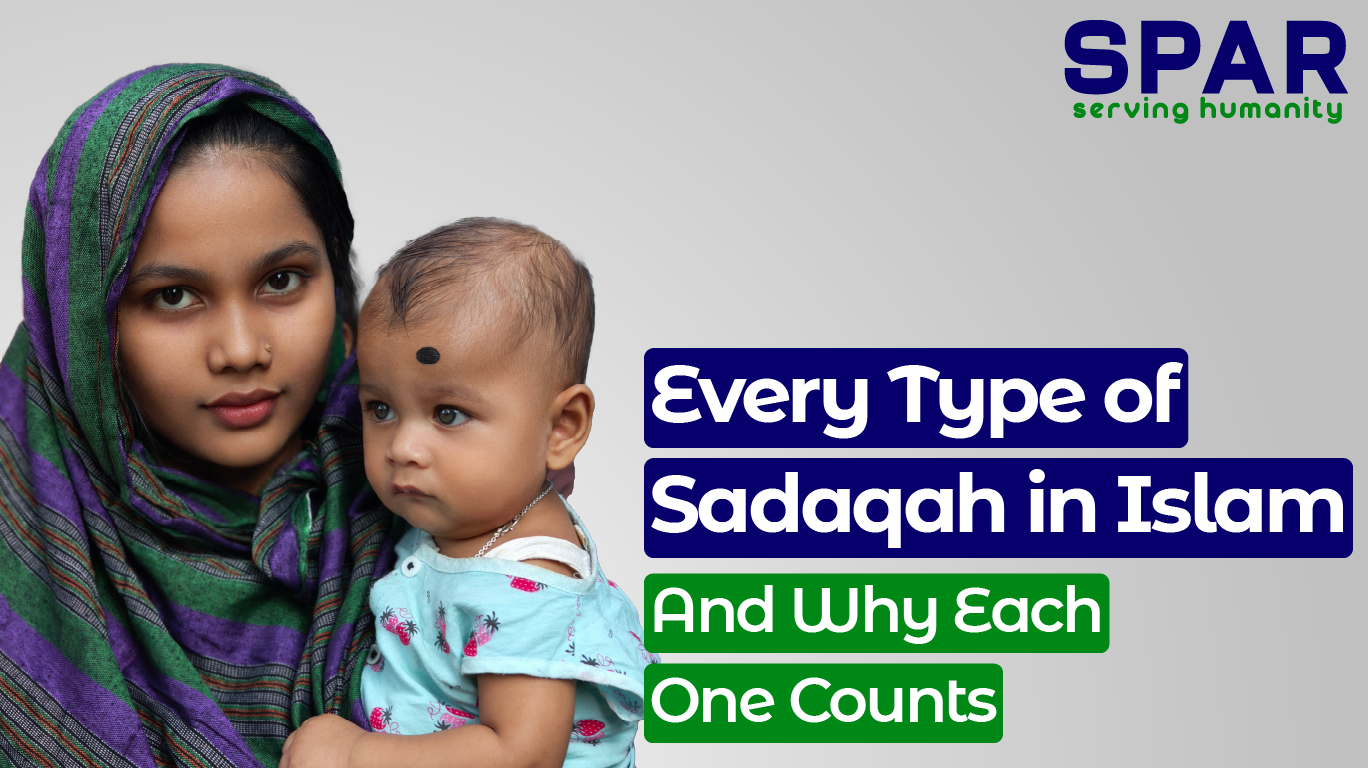
Every Type of Sadaqah in Islam — And Why Each One Counts
Have you ever wondered if your good deeds are actually sadaqah? Many Muslims think sadaqah only means giving money. But the types of sadaqah in Islam are far wider than most people realise. A kind word is sadaqah. Removing a stone from a path is sadaqah. Even smiling at your brother is sadaqah. This guide covers every major form of voluntary charity in Islam — from financial giving to acts of service — so you leave with zero confusion. By the end, you will know exactly what counts, what rewards Allah promises, and how to make your sadaqah work for people who need it most right now.
What Is Sadaqah in Islam?
Sadaqah comes from the Arabic root *sidq*, meaning truth and sincerity. When you give sadaqah, you are proving the sincerity of your faith through action. It is a voluntary act of worship—unlike Zakat, which is obligatory.
The Prophet Muhammad ﷺ described it simply. He said: “Every act of goodness is sadaqah.” (Sahih al-Bukhari) That one sentence opens the door to a world of reward most Muslims never fully claim.
Sadaqah covers anything you give or do for the sake of Allah — money, time, knowledge, kindness, or physical effort. There is no minimum amount. There is no single correct form. What matters most is the intention behind it.
Why the Types of Sadaqah Matter to Every Muslim
Understanding the different types of sadaqah changes how you live your daily life. You stop waiting until you have extra money. You start seeing opportunities to earn reward in almost every moment of your day.
The Prophet ﷺ said: “Charity is due upon every joint of a person on every day the sun rises.” (Sahih al-Bukhari and Sahih Muslim) That means your body itself carries a daily sadaqah obligation — and most of it costs nothing at all.
Knowing your options also helps you give more strategically. Some forms of sadaqah protect you in times of hardship. Others multiply your reward long after you are gone. When you understand what is available to you, you give smarter, more often, and with a deeper connection to Allah.
The Main Types of Sadaqah Every Muslim Should Know
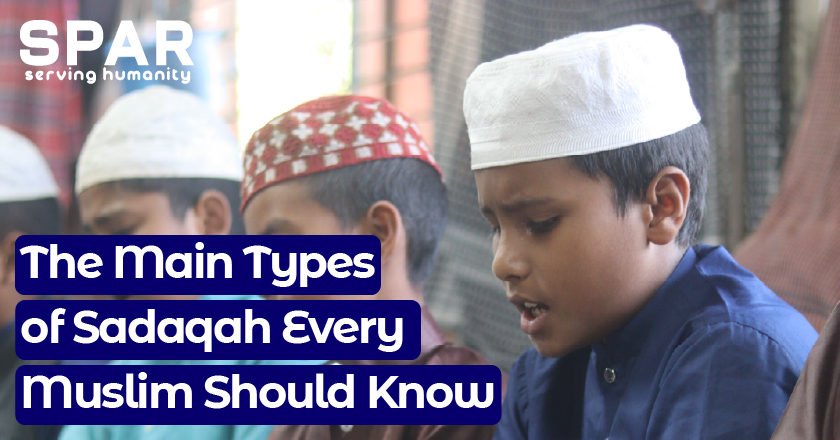
Scholars of Islam group sadaqah into several clear forms. Each one carries its own reward. Each one fits a different moment in your life. Together, they give you a complete map of how to earn with Allah every single day.
Here are the most important types — and how you can act on each one right now.
1. Sadaqah Jariyah — The Charity That Never Stops
Sadaqah jariyah is an ongoing charity. The reward keeps flowing to you even after death. This is one of the most powerful concepts in all of Islam.
The Prophet ﷺ said: “When a person dies, his deeds come to an end except for three: ongoing charity, knowledge that is benefited from, or a righteous child who prays for him.” (Sahih Muslim, 1631)
A water well is one of the most cited examples of sadaqah jariyah. Every time someone drinks from it, you earn a reward. Every time a mother washes her child, you earn reward. Every time a farmer waters his crops, you earn a reward — and you may be long gone from this world.
SPAR Project has installed over 250 clean water wells across Bangladesh. Families who had no clean water now drink safely every single day. You can build one of those wells and earn that unending reward. Visit sparproject.org to give sadaqah jariyah today.
2. Sadaqah Maaliyah — Giving Your Wealth
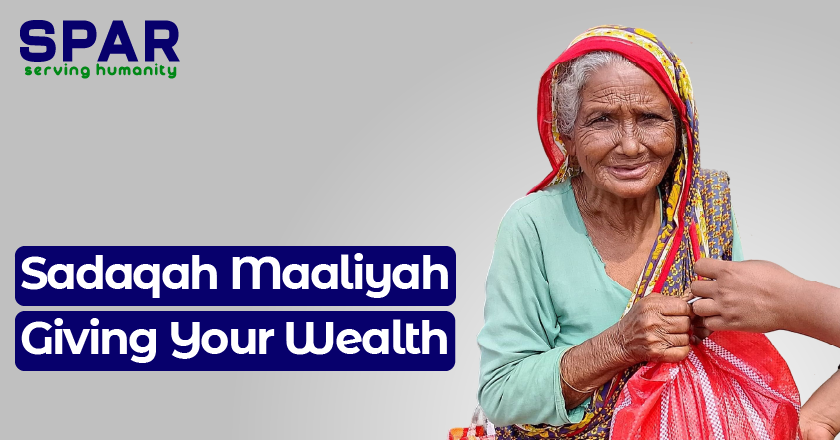
This is the form most people picture first. You give money, food, clothing, or goods to someone in need. It is direct. It is immediate. And Allah sees every dirham.
Allah says in the Quran: “Who is it that would loan Allah a goodly loan so He may multiply it for him many times over?” (Surah Al-Baqarah, 2:245)
The reward for financial sadaqah is not simply returned — it is multiplied. One donation can become ten, seventy, or seven hundred in your scale of deeds. The more sincerely you give, the greater that multiplication becomes.
You do not need to give a large amount. Even giving a date to a hungry person counts. What matters is that your hand opens and your heart follows.
3. Sadaqah of Knowledge — Teaching Others What You Know
Sharing knowledge is a form of sadaqah most Muslims overlook. When you teach someone something useful, Allah rewards you for it. When that person uses what you taught them, you earn again.
The Prophet ﷺ said: “The best of you are those who learn the Quran and teach it.” (Sahih al-Bukhari, 5027)
This applies beyond Quran. Teaching a child to read, showing a neighbour how to access clean water, explaining Islamic rights to someone who does not know them — all of it counts. You are extending your charity through the minds of others.
SPAR Project’s education programs work on exactly this principle. When a child in rural Bangladesh learns to read and gains skills, that knowledge travels with them for life. Supporting that child is sadaqah of knowledge given on your behalf.
4. Sadaqah of the Body — Acts That Cost You Nothing
Your smile is sadaqah. Removing a stone from the road is sadaqah. Guiding someone who is lost is sadaqah. The Prophet ﷺ listed these forms himself — and they require no money at all.
The Prophet ﷺ said: “Your smile in the face of your brother is charity. Your commanding good and forbidding evil is charity. Your guiding a man in a land of no roads is charity. Your removing stones, thorns, and bones from the road is charity.” (Tirmidhi, 1956 — declared hasan)
This means sadaqah is available to you at zero cost, at any moment. A busy parent can do it. A student with no income can do it. An elderly person unable to leave the house can still make du’a for others — and that counts too.
These small acts train your heart. They keep it soft and open. And they add up in the records that matter most.
5. Sadaqah for Orphans — One of the Highest Forms
The Quran and Sunnah single out orphans repeatedly.
How to Give Sadaqah the Right Way
- Start with sincere intention.
Before you give, pause and renew your niyyah. Say in your heart: “I give this for Allah alone.” Intention is what separates a gift from an act of worship.
- Give from what you love, not just what you can spare.
Allah says in the Quran: *”You will never attain righteousness until you spend from what you love.”* (Surah Aal Imran, 3:92) Push yourself to give something that actually costs you something.
- Give quietly when you can.
The Prophet ﷺ praised the man who gives with his right hand so secretly that his left hand does not know. Public giving is allowed, but private giving guards your sincerity.
- Make sadaqah a habit, not an event.
The Prophet ﷺ said: *”The most beloved deeds to Allah are those done consistently, even if they are small.”* (Sahih al-Bukhari, 6464) Set a weekly or monthly amount. Small and regular beats large and rare.
- Give through a trustworthy channel.
Your sadaqah should reach the people who need it most. Verify that the organisation is registered, accountable, and working on the ground. One confirmed well dug is worth more than ten unverified promises.
Mistakes to Avoid
Delaying your sadaqah. Tomorrow is not guaranteed. The intention you have right now is the one most likely to be acted on.
Giving to impress others. Riya, or showing off, can erase the reward of your gift entirely. Give to Allah and keep it between you and Him.
Thinking your amount is too small. A date, a kind word, a single dollar — none of it is too small. Allah weighs sincerity, not size.
Attach your gift with reminders of your generosity. The Quran warns that following charity with reproach cancels its reward (Surah al-Baqarah, 2:264). Give and let it go.
Giving only in Ramadan. Sadaqah is needed every month. Families living in poverty do not stop being hungry in Shawwal.
Why Give Through SPAR Project
SPAR Project — Society for Participatory Action and Reflection — has been working in Bangladesh since 2009. It is officially registered with the Bangladesh NGO Affairs Bureau under Registration No. 2424. That means your donation goes through a vetted, accountable organisation, not a social media campaign.
Clean water wells for villages with no safe water source, bringing clean water to families who walk miles to collect it
Orphan sponsorship covering food, school clothing, and healthcare for children who have lost their main provider
Education programs for children whose families cannot pay school fees, keeping them in classrooms instead of sending them to work
Healthcare and emergency relief for the most vulnerable families, especially during floods and other disasters that hit Bangladesh hard
SPAR Project shares updates, photos, and impact reports with donors. You will know where your money went. Over 250 clean water wells have already been installed across Bangladesh — each one a permanent sadaqah jariyah, a flowing reward back to the people who funded it.
Final Thoughts
Every type of sadaqah you have read about here is within your reach today. You do not need to wait until you are wealthy. You do not need to wait until Ramadan. The door is open right now, and Allah is watching with full attention.
The Prophet ﷺ said: *”Charity does not decrease wealth.”* (Sahih Muslim, 2588) That is a promise from the one who never spoke from his own desire. Give freely. Trust the One who keeps the accounts.
A child in Bangladesh is drinking clean water because someone, somewhere, made a decision exactly like the one in front of you right now. That child makes du’a for the person who funded their well — and they do not even know your name. But Allah does.
Give your sadaqah today. Plant something that grows after you are gone.