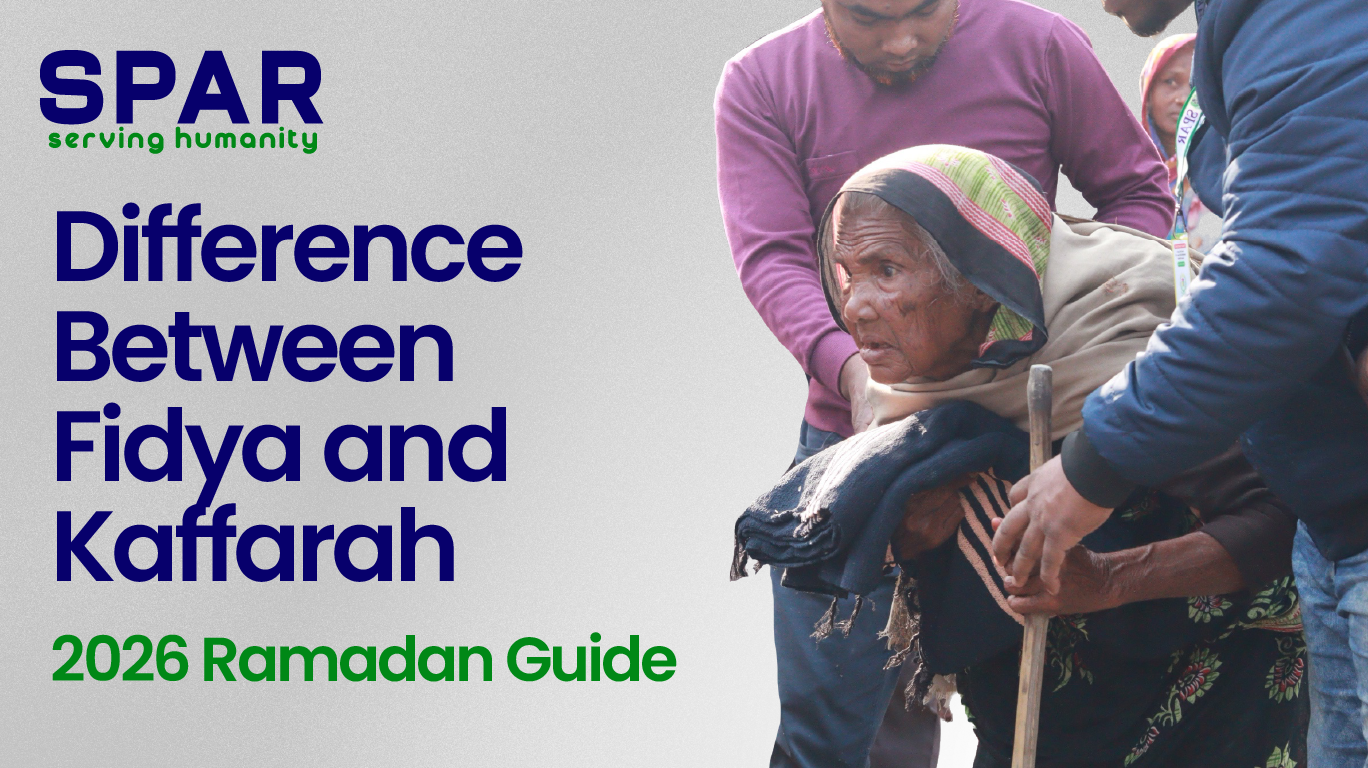
Difference Between Fidya and Kaffarah: 2026 Ramadan Guide
Fasting during Ramadan is a key part of Islamic life. Yet, many people find they cannot finish every fast. Knowing the difference between fidya and kaffarah is vital for every Muslim. These two terms describe how we make up for missed fasts. However, they apply to very different situations. Fidya is for those with a valid excuse, like an old age or a long-term illness. Kaffarah is a penalty for those who intentionally break a fast without a good reason. In 2026, many families face hard times. Your payments help feed the hungry across the world. At SPAR Project, we turn your missed fasts into meals for the poor. This guide helps you understand which one you need to pay and why it matters.
Defining the Core Concepts: Fidya vs. Kaffarah
To learn the difference between fidya and kaffarah, we must look at why they exist. Islam is a religion of mercy. Allah gives us ways to fix our mistakes. Fidya comes from a place of need. It helps those who are too weak to fast. It keeps them connected to the spirit of the holy month.
Kaffarah is different. It is an act of “expiation.” It covers a mistake you made on purpose. If you choose to break a fast without a medical reason, you create a spiritual gap. Kaffarah is the bridge to cross that gap. It is a much larger payment. This reflects the weight of missing a mandatory act of worship. Both feed the poor, but the reasons for giving are very different.
Who Needs to Pay Fidya?
Fidya is for people who cannot fast and cannot make up the days later. This is a common question for many families. You pay Fidya if you fall into one of these groups:
- The Elderly: Those who are too old or weak to fast safely.
- The Chronically Ill: People with permanent health issues like diabetes.
- Long-term Patients: Anyone told by a doctor that fasting will hurt them forever.
If you are only sick for a few days, you do not pay Fidya. You simply fast those days later in the year. Fidya is the answer when “fasting later” is impossible. It ensures that even those who cannot fast still help the community.
Who is Required to Pay Kaffarah?
The rules for Kaffarah are much more strict. You must pay this if you break your fast on purpose during daylight. Common reasons include eating a meal or drinking water while knowing it is Ramadan.
Kaffarah has a very high requirement. The first choice is to fast for 60 days in a row. If a person is healthy, they must do this as a penalty. If they cannot do this for health reasons, they must feed 60 poor people. This shows the big difference between fidya and kaffarah. One is a small gift for a missed day. The other is a large penalty for an intentional choice.
Calculating the Costs in 2026
The cost of these payments depends on the price of food today. In 2026, food prices have risen globally.
- Fidya Cost: You must feed one person two meals for every day you miss. The rate is about $10 per day. If you miss the whole month, you pay $300.
- Kaffarah Cost: You must feed 60 people for every single fast you break on purpose. At the $10 rate, the total is $600.
At SPAR Project, we use these funds to buy fresh food. We buy rice, flour, and oil for the needy. We make sure your payment provides a full, satisfying meal. This fulfills the Islamic rule for these donations.
The Role of Intent (Niyyah) in Your Payment
In Islam, your intention is the most important part. You cannot just give money and hope it counts. You must state in your heart what the money is for. This is a key part of the difference between fidya and kaffarah.
When you donate on our site, please select the right category. This helps you make the correct “Niyyah.” For Fidya, your intent is to help because you cannot fast. For Kaffarah, your intent is to seek forgiveness for an error. Without the right intent, the money is just a general gift. It may not fulfill your religious duty. Always stay mindful of why you are giving.
Why Ramadan Timing Matters for These Payments
You can pay Fidya at any time during the month. Most scholars suggest paying as you miss the days. This helps charities get food to the poor while the month is still active. Many donors pay for the full 30 days at the start of Ramadan to be safe.
You should pay Kaffarah as soon as possible after the fast is broken. Delaying a penalty is not a good idea. If you pay during Ramadan, you gain the extra rewards of the holy month. It allows you to start the Eid celebration with a clear mind. You will know that your spiritual debts are settled.
How Your Donation Fights Global Hunger
Whether you pay Fidya or Kaffarah, your money has a huge impact. We are facing a global food crisis in 2026. In many camps and dry regions, families struggle to find one meal.
Your Fidya provides steady support for a whole month. Your Kaffarah provides a massive feast for 60 people at once. These are real people who need our help. They are children, widows, and the elderly. By doing your duty, you are directly saving lives. This is the beauty of our faith. Our personal struggles become the solution to someone else’s hunger.
Common Myths About Fidya and Kaffarah
Many myths can confuse believers. Let’s clear them up for 2026:
- “I can pay Fidya for my pregnancy.” Most scholars say pregnant women should fast those days later. You only pay Fidya if you have a permanent health problem.
- “Kaffarah is only for the rich.” No, anyone who breaks a fast on purpose owes Kaffarah. Healthy people must fast for 60 days.
- “Fidya and Kaffarah are the same price.” As we showed, Kaffarah is 60 times more expensive. It is a major penalty.
Knowing these facts helps you navigate the month. It ensures you pay the right amount for your religious dues.
Teaching Your Family the Rules of Fasting
Ramadan is a great time to learn. Explaining the difference between fidya and kaffarah helps children value the fast. It teaches them that Islam is merciful but also requires discipline.
Involve your family in the giving process. Let your children see you calculate the Fidya for a grandparent. Explain why the money goes to SPAR Project. This builds a generation that cares about the world. They will learn that charity is a vital responsibility. It connects them to the global Muslim family.
How SPAR Project Distributes Your Funds
We value your trust. When you pay Fidya or Kaffarah, we follow a strict process:
- Finding the Needy: We work with teams on the ground to find poor families.
- Buying Food: We buy food from local farmers to keep it fresh and support the area.
- Delivery: We deliver food packs directly to homes and refugee camps.
- Updates: We provide reports so you can see your charity in action.
We take the “Amanah” (trust) of your payments very seriously. We know your spiritual standing depends on us doing our job right.
The Spiritual Relief of Making Amends
Missing a fast can feel heavy. It can make you feel disconnected from your faith. Fulfilling your compensation brings instant relief. It is a physical way to return to the path of Allah.
For those paying Fidya, it is a way to feel part of the month’s rewards. For those paying Kaffarah, it is the joy of being forgiven. Allah is the Most Merciful. He provides these paths so no one is left behind. Completing your payments is a way to celebrate your connection to the Ummah.
Final Thought
Learning the difference between fidya and kaffarah is an important lesson. It is about honoring the rules of our faith and caring for others. Whether you give because of a health struggle or a mistake, your gift is a light for someone else. In 2026, let us be careful with our duties. By trusting SPAR Project, you ensure your charity reaches those who need it most. May Allah accept your fasts and bring peace to your home this Ramadan.