

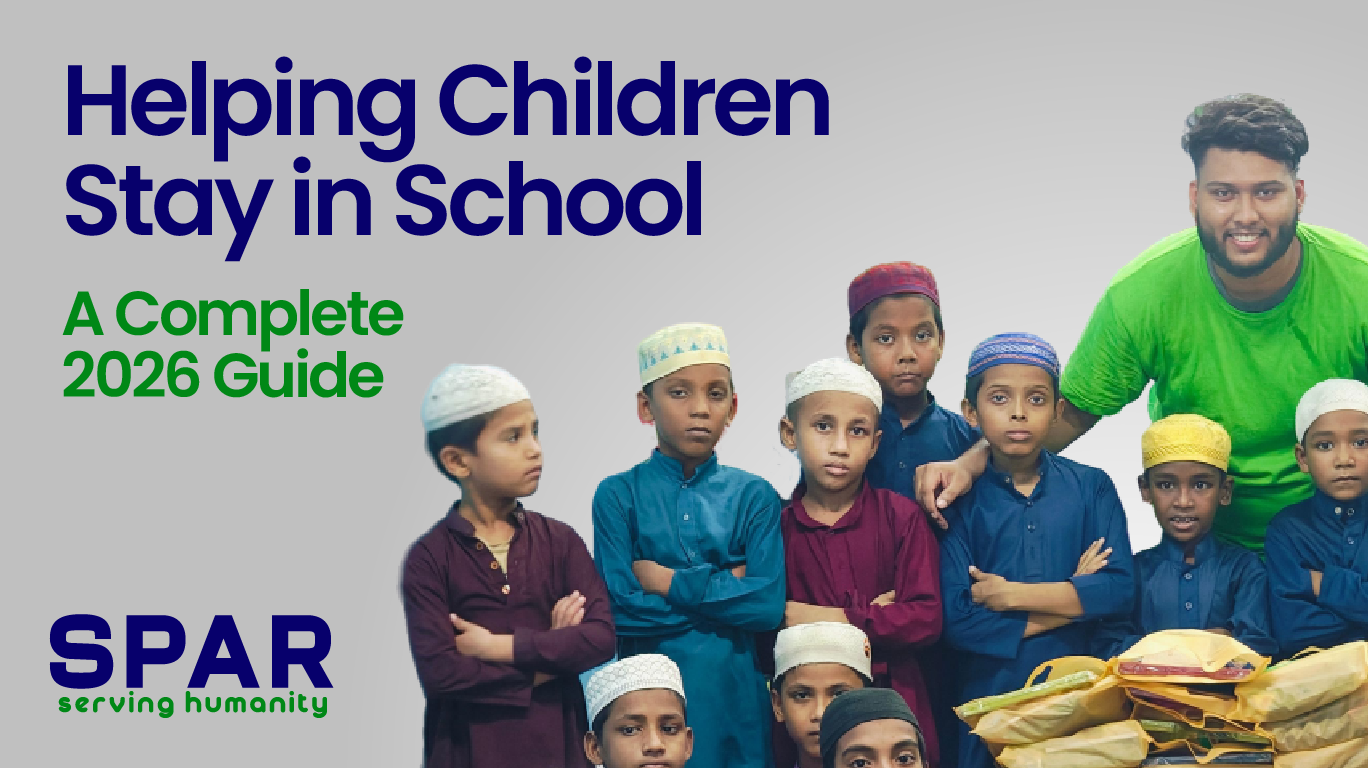
Helping Children Stay in School: A Complete 2026 Guide
Imagine a ten-year-old child in a small village. Instead of holding a pen, their hands are covered in dirt from working in the fields. This is the sad reality for millions of families living in extreme poverty today. Often, parents must choose between buying bread or buying a notebook. When money is tight, education is usually the first thing that a family lets go. However, helping children stay in school is the most powerful way to break the cycle of poverty forever. When we keep a child in the classroom, we give them a chance at a better life, a higher salary, and a brighter future. At SPAR Project, we see how a single year of learning can change a child’s entire world. In this guide, we will look at why kids leave school and how your support keeps their dreams alive in 2026.
1. Why Many Children Leave School Too Early
In many poor countries, children do not drop out because they want to. They leave because they have to. Poverty acts like a heavy weight that pulls kids out of the classroom. For some, the school is too far away. For others, they must work to help their parents buy food. When a family struggles to survive, a child’s education feels like a luxury they cannot afford.
Helping children stay in school starts with understanding these barriers. We cannot just tell kids to study; we must remove the obstacles in their path. Whether it is a lack of money, poor health, or family pressure, these problems need real solutions. By identifying these issues early, we can step in and provide the support a student needs to finish their degree.
2. The Hidden Costs of “Free” Education
Many people think that if a school is free, anyone can go. Sadly, this is not true. Even if the tuition is $0, there are many “hidden” costs. Parents still have to pay for school uniforms, sturdy shoes, and heavy backpacks. They need to buy pens, pencils, and stacks of paper every month.
For a family living on less than $2 a day, these costs are impossible. A child might feel ashamed to go to class in old, torn clothes. They might get in trouble because they do not have a ruler or an eraser. By providing these basic supplies, we take the pressure off the parents. This small act of giving is a major step in helping children stay in school through the entire academic year.
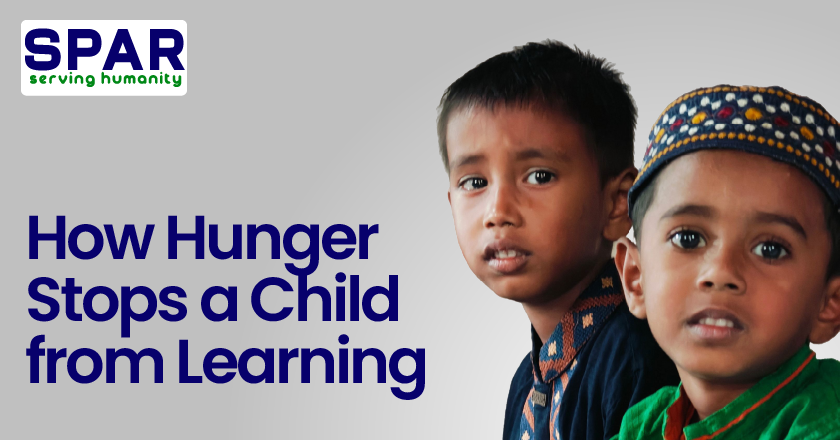
3. How Hunger Stops a Child from Learning
It is very hard to focus on a math problem when your stomach is growling. Hunger is a huge reason why children stop attending classes. Many students walk long miles to reach their school without eating breakfast. By the time they arrive, they are too tired and weak to listen to the teacher.
School meal programs are a game-changer. When a child knows they will get a hot, healthy meal at school, they are excited to go. Parents are also more likely to send them because it saves money on food at home. Nutrition keeps the brain sharp and the body strong. If we want to succeed in helping children stay in school, we must make sure their bellies are full.
4. Fighting the Pressure of Child Labor
In many parts of the world, children are seen as extra workers. If a father gets sick or a mother loses her job, the oldest child often goes to work. They might pick crops, wash cars, or work in dangerous factories. They earn a few cents today, but they lose their chance to earn thousands of dollars in the future.
We must show families that a child’s education is a better long-term investment. By supporting the parents with small loans or food aid, we can take the burden off the child. When the family feels stable, the child can put down the tools and pick up a book. Education is the only way to ensure that the next generation does not have to work in the same hard conditions.
5. The Importance of Girls’ Education
In some cultures, boys are sent to school while girls stay home to do chores. This is a huge mistake. Statistics show that when a girl goes to school, her entire community benefits. An educated mother is more likely to send her own children to school and keep her family healthy.
Helping children stay in school must include a special focus on girls. We need to provide safe transport and separate bathrooms to make them feel comfortable. When we empower a girl with knowledge, we change the future of her whole village. Education gives her the confidence to speak up and lead a successful life.
6. Providing Safe and Reliable Transportation
In rural areas, the nearest school might be five miles away. Walking this distance every day is exhausting, especially in the heat or rain. Many parents worry about their children’s safety on long, lonely roads. As a result, they keep their kids at home where they are safe but uneducated.
Simple solutions like bicycles or school buses can solve this problem. A bicycle can turn a two-hour walk into a twenty-minute ride. It saves energy and keeps the child safe. When the journey is easy, the child is more likely to show up every single day. Reliable transport is a vital part of helping children stay in school.
7. Supporting Teachers and Better Classrooms
Even if a child is in school, they need a good environment to learn. Many schools in poor areas are overcrowded. They might have 60 students in one small room with no fans or lights. Teachers are often underpaid and do not have enough training or books.
If the quality of education is low, parents might feel that school is a waste of time. We must support the teachers and fix the buildings. Clean classrooms, good desks, and plenty of books make a child feel valued. When a child enjoys being in the classroom, they are much less likely to drop out.
8. The Role of Clean Water and Hygiene
You might not think that a toilet affects education, but it does. Many kids miss school because they get sick from dirty water. Without clean drinking water and proper toilets, germs spread quickly. Girls, in particular, often stay home if the school does not have a private and clean bathroom.
By building wells and latrines in schools, we keep kids healthy. This reduces the number of days they miss due to illness. Teaching kids about handwashing and hygiene also helps them stay in the classroom. Helping children stay in school means taking care of their health just as much as their grades.
9. Mentorship and Emotional Support
Sometimes, a child needs more than just a book; they need a role model. Many kids in poverty do not know anyone who has graduated from college. They do not see the point of studying because they cannot imagine a different life.
Mentorship programs connect students with successful adults. These mentors encourage the kids to keep trying, even when the work is hard. They show the children what is possible with a degree. This emotional support builds the grit and spirit needed to finish school. Knowing that someone believes in them is a huge reason for helping children stay in school.
10. How SPAR Project Makes a Real Difference
At SPAR Project, we don’t just talk about education; we take action. We work directly with families in Bangladesh and beyond to remove the barriers to learning. We provide “School Kits” that include everything a student needs for the year. We also run meal programs and build safe spaces for kids to study.
Our goal is to make sure no child is left behind because of their bank account. We track every student’s progress to make sure they are actually attending and passing their classes. When you partner with us, you are directly helping children stay in school. Your donation turns into a backpack, a meal, or a desk for a child who has nothing.
11. The Long-Term Impact of a Graduation Cap
When a child stays in school and graduates, the world changes. An educated person earns significantly more money over their lifetime. They are less likely to fall back into poverty and more likely to contribute to their country’s economy.
Education reduces crime, improves health, and fosters peace. It is the best “money-generating” activity for a nation. By helping children stay in school today, we are creating the doctors, teachers, and leaders of tomorrow. The reward of your charity lasts for decades, not just a few days.
Final Thoughts: Be the Change for a Child
We have the power to change a child’s life story. We can decide that “poverty” is not the end of their path. Every child deserves to sit at a desk and learn about the world. Every child deserves a chance to reach their full potential.
Your support for SPAR Project is the key. Whether you give a small amount or a large gift, you are part of a global movement. You are helping children stay in school and giving them a reason to smile. Let’s make 2026 the year that we get more kids back into the classroom than ever before.