How Much Zakat to Pay in Ramadan: The 2026 Calculation Guide
Ramadan 2026 is a sacred time for every Muslim to seek closeness to Allah through fasting and prayer. For many, this month is also the perfect time to fulfill their third pillar of Islam. However, you might find yourself asking, how much zakat to pay in ramadan this year? Calculating your 2.5% contribution can feel like a big task while you are busy with worship. At SPAR Project, we want to help you clear every doubt so you can give with a happy heart. By understanding your Nisab limit and listing your savings, you can purify your wealth and help the poor in Bangladesh. This guide explains the rules, the math, and the huge impact your money has on hungry families. Let us work together to make your charity count during these blessed days.
1. Why Give Your Zakat During the Month of Ramadan?
Most Muslims prefer to pay their Zakat in Ramadan because of the immense rewards. During this month, Allah multiplies the value of every good deed by seventy times or more. When you calculate how much zakat to pay in ramadan, you are essentially turning a mandatory duty into a massive investment for your hereafter.
Beyond the rewards, giving now is very practical. Ramadan is a time when poor families face the most pressure. They need food for Iftar and new clothes for their children on Eid. By paying your Zakat now, you ensure that organizations like SPAR Project can deliver food packs and support to those who have nothing. It is the best way to show mercy to the global Ummah.
2. Understanding the Nisab Threshold for 2026
Before you can know how much zakat to pay in ramadan, you must check if you are eligible. In Islam, you only pay Zakat if your wealth is above a certain level called the “Nisab.” This level is based on the current market price of gold or silver.
For 2026, the two standards are:
- Gold Nisab: About 87.48 grams of gold (roughly $12,500 – $16,500).
- Silver Nisab: About 612.36 grams of silver (roughly $1,350 – $1,800).
Most scholars suggest using the silver standard today. Why? Because the silver price is much lower. This allows more people to qualify as donors, which means more money reaches the poor. If your net wealth has been above this silver limit for one full lunar year, you must pay Zakat.
3. List Your Cash and Bank Savings
The first step in your calculation is to look at your “liquid” money. This includes all the cash you have in your wallet, at home, or in the bank. Do not forget to check all your accounts, such as checking, savings, and even digital wallets like PayPal or crypto apps.
You only count the money that belongs to you and is not meant for immediate bills. If you have been saving for a house or a car, that money is still zakatable because it is sitting in your possession. Add up every dollar from these sources. This total is the foundation of your Zakat calculation for 2026.
4. Include Gold and Silver Jewelry
Gold and silver have always been considered a form of wealth in Islam. If you own gold jewelry, coins, or bars, you must include their value in your total. Many people ask if they should pay on jewelry they wear every day. Most scholars say yes—if it is made of gold or silver, it is zakatable.
To find the value, do not look at what you paid for the piece years ago. Instead, find the current market price for the weight of the metal. You do not need to pay for the value of diamonds or other stones. At SPAR Project, we often see donors give their “Gold Zakat” to help build masjids or sponsor orphans in rural Bangladesh.
5. Zakat on Stocks and Investment Portfolios
If you invest in the stock market or have a retirement fund like a 401k, this counts as wealth too. For stocks, you should look at the current market value of your shares on the day you calculate your Zakat.
If your retirement fund is “locked” and you cannot touch it without a big penalty, some scholars say you only pay on the amount you could actually withdraw today. However, if you have full access to the funds, you should include the whole balance. Investing your wealth is good, but purifying it through Zakat is what brings barakah to your future earnings.
6. Business Assets and Inventory Rules
Are you a business owner? If so, your Zakat calculation includes more than just your personal savings. You must look at your business cash and your “trade goods.” Trade goods are items you bought with the intent to sell for a profit.
For example, if you own a clothing shop, you would value all the clothes in your store at their current selling price. You do not pay Zakat on your office building, your delivery truck, or your computers. These are “tools of the trade” and are exempt. By paying Zakat on your business, you ensure your profits stay clean and blessed.
7. Deducting Your Immediate Debts
Islam is a religion of justice. You are not required to give away money that you actually owe to someone else. Before you figure out how much zakat to pay in ramadan, you can subtract your short-term debts.
You can deduct:
- Unpaid Bills: Rent, utility, or grocery bills due this month.
- Current Loan Payments: The specific amount you must pay on a loan this month.
- Employee Wages: If you run a business, subtract the salaries you owe for this period.
Do not subtract long-term debts like the entire balance of a 20-year mortgage. Only deduct the part that is due right now. This keeps your calculation accurate and fair to both you and the poor.
8. The Simple 2.5% Calculation Formula
Once you have added up all your assets and subtracted your debts, you have your “Net Zakatable Wealth.” The rest is simple math. You take that total and multiply it by 0.025 (which is 2.5%).
For example:
- Total Assets: $20,000
- Total Debts: $2,000
- Net Wealth: $18,000
- Zakat Due: $18,000 x 0.025 = $450
This $450 is the right of the poor. It is not a favor you are doing for them; it is a debt you are paying back to Allah. At SPAR Project, $450 can provide clean water for an entire village or feed hundreds of orphans.
9. Who Receives Your Zakat? The Eight Categories
The Quran is very clear about where your money should go. In Surah At-Tawbah (9:60), Allah names eight groups of people. These include the poor, the needy, those in debt, and travelers in distress.
SPAR Project focuses on the most vulnerable people in Bangladesh. We reach widows who cannot work, orphans who lack food, and families living in extreme poverty. When you give to us, you can be sure your money goes to the people Allah specifically mentioned. We verify every recipient to make sure they qualify under Islamic rules.
10. How SPAR Project Uses Your 2026 Donation?
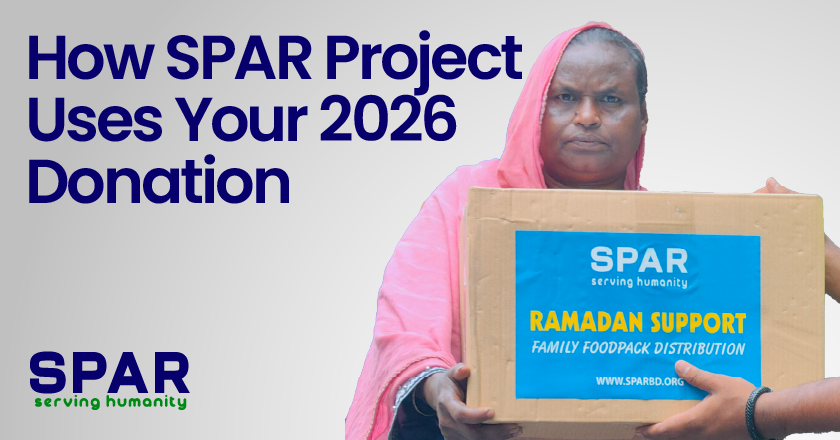
We believe in 100% transparency. When you calculate how much zakat to pay in ramadan and choose us, your money goes directly to life-saving programs.
- Food Packs: We buy rice, oil, lentils, and dates to feed families for the whole month.
- Water Wells: We build deep tube wells to provide safe, clean water.
- Orphan Care: We provide meals, clothes, and school books for children without parents.
- Medical Aid: We fund cataract surgeries to restore sight for the elderly.
We provide photo and video proof of every project. You will see exactly how your 2.5% is changing lives on the ground.
11. Common Mistakes in Zakat Calculation
Many people make small errors that can affect their worship. Avoid these common pitfalls:
- Paying on Income Only: Zakat is on your savings, not your monthly salary.
- Ignoring Gold Jewelry: All gold is zakatable if it meets the weight limit.
- Forgetting Cash Owed to You: If you lent money to a friend and expect it back, count it as an asset.
- Delaying the Payment: Once the month ends, the obligation remains. Pay it during Ramadan to get the extra rewards.
By being careful with these steps, you ensure your Zakat is perfect in the eyes of Allah.
12. Using an Online Zakat Calculator
If you are still unsure about the math, we have made it easy for you. Visit https://sparproject.org to use our free 2026 Zakat Calculator. You just enter your numbers, and the tool does all the work. It uses the latest gold and silver prices to tell you exactly if you qualify and how much you owe. It takes less than five minutes but gives you a lifetime of peace of mind.
Final Thoughts: Make Your Ramadan Count
Ramadan is a month of mercy. It is a time to look outside ourselves and help our brothers and sisters who are suffering. Fulfilling your Zakat is the highest form of gratitude for the blessings Allah has given you. It purifies your soul and protects your wealth from greed.
Don’t wait until the last day of the month. Start your calculation today and see how much of a difference you can make. Whether your Zakat is $50 or $5,000, it has the power to save lives in Bangladesh. Choose SPAR Project as your partner in charity this year.