

Giving Money to Charity Tax Deduction: 2026 Guide
Do you want to support a great cause and save on your taxes? Learning about giving money to charity tax deduction helps you do both. Many people give to groups like SPAR Project but feel confused by tax rules. You do not need to be a math expert to save money. The government rewards your kindness by lowering your tax bill. Whether you pay Zakat or give a small monthly gift, these donations can lower what you owe. This guide makes the process simple and clear for everyone. We will show you how to track your gifts and claim your benefits. Read on to learn how to make your generosity go further this year.
How a Tax Deduction Works
A tax deduction reduces the amount of income that the government taxes. Think of it as a way to keep more of your own money because you did something good. When you give to a charity, you tell the tax office that you have less “taxable” income.
For example, imagine you earn $60,000 in a year. If you give $3,000 to a qualified charity, you might only pay taxes on $57,000. This often leads to a smaller tax bill or a larger refund check. Remember, a deduction is different from a credit. A credit cuts your tax bill directly. A deduction lowers the income figure that the government uses to calculate your tax.
Standard vs. Itemized Deductions
This is the most important choice you will make on your tax return. Every person gets a “standard deduction.” This is a fixed dollar amount that lowers your taxes automatically. Most people take this option because it is easy.
However, to claim giving money to charity tax deduction, you must “itemize.” This means you list every single deduction one by one. You should only itemize if all your deductions together are worth more than the standard amount. This includes things like mortgage interest, state taxes, and your charity gifts. If you give a lot to charity, itemizing usually saves you more money.
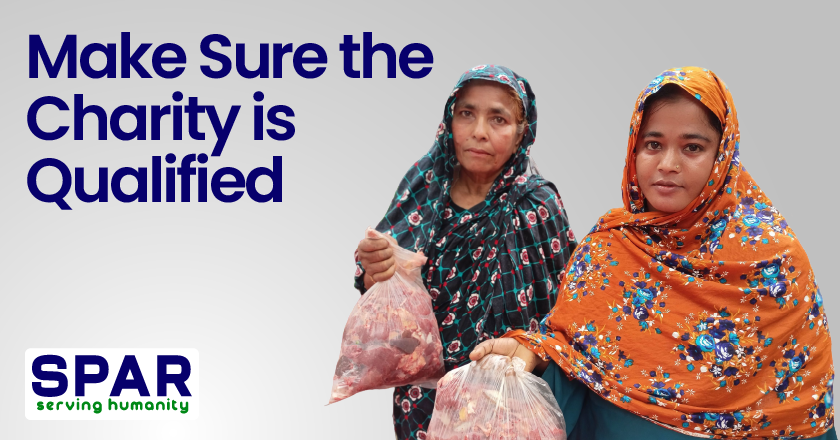
Make Sure the Charity is Qualified
You cannot get a tax break for giving money to just anyone. Giving five dollars to a person on the street is a kind act, but it is not tax-deductible. The law says you must give to a “qualified organization.”
In the United States, look for groups with 501(c)(3) status. In other countries, the charity must be registered with the local government. Most well-known non-profits, such as SPAR Project, hold this status. You can use online tools on government websites to check a group’s status before you donate. If the group is not registered, you will not receive a tax break for your gift.
Know the Limits on Your Giving
The government places a cap on how much you can deduct each year. Usually, you can deduct cash gifts up to 60% of your total income. This is a very high limit for most people. It means you can give away more than half of what you earn and still get the tax benefit.
If you give more than the limit, do not worry. You do not lose the extra deduction. You can “carry it forward” to the next year. This is helpful if you make a very large gift, like funding a new school or a medical clinic. You can enjoy the tax savings for up to five years after the initial gift.
Is Your Zakat Tax-Deductible?
Many Muslims wonder if their religious duty counts for tax purposes. The answer is a clear yes. Zakat is a form of charity. As long as you give it to a registered non-profit, it qualifies for a deduction.
This allows you to fulfill your faith and be smart with your finances at the same time. By giving money to charity tax deduction through Zakat, you maximize the impact of your wealth. You help those in need, and the tax savings give you more resources to help even more people in the future. It is a cycle of blessing that helps the whole community.
Why You Must Keep Every Receipt
The tax office needs proof of your donations. If you give cash, always ask for a written receipt. For small gifts under $250, a bank statement or a phone record is often enough. But for anything over $250, you need a formal letter from the charity.
A valid receipt should show:
- The name of the charity.
- The date you gave the money.
- The exact amount of the gift.
- A note saying if you received anything in return.
At SPAR Project, we provide clear receipts for every donor. We want to make sure your tax filing is stress-free and accurate.
Giving Items Instead of Cash
You do not have to give money to get a tax break. You can donate clothes, furniture, or electronics. These are called “non-cash” donations. You deduct the “fair market value” of these items. This is what the item would sell for at a local thrift shop.
If you donate items worth more than $5,000, you might need an official appraisal. Always make a list of what you give. Take photos of the items to show their condition. Donating goods is a great way to clear out your home and help people who need basic supplies.
Can You Deduct Travel for Charity?
Your time is very valuable, but the government does not let you deduct it. You cannot put a price on your hours and subtract them from your taxes. However, you can deduct the money you spend while volunteering.
If you drive your car to help at a charity event, you can deduct the cost of the miles you drive. You can also deduct the cost of supplies you buy for a project. For example, if you buy paint for a community center, keep that receipt. These small costs add up over twelve months and can lower your tax bill.
The December 31st Deadline
Timing is everything in the world of taxes. To get a deduction for this year, you must give the money by December 31st. It does not matter when the charity uses the money. It only matters when you gave it away.
If you send a check in the mail, the date on the postmark counts as the gift date. If you use a credit card on New Year’s Eve, it counts for that year. Many people make their biggest gifts in late December to ensure they get the best tax results for the current year.

Common Errors to Avoid
One big mistake is trying to deduct the full cost of a charity dinner or gala. If you pay $100 for a ticket but the meal is worth $40, you can only deduct $60. You must subtract the value of the food or entertainment you enjoyed.
Another mistake is giving to political groups. Donations to a person running for office are not tax-deductible. Also, stay away from “scam” charities. Always verify the group is real before you send your hard-earned money. Stick to trusted names to keep your tax status safe.
Using the “Bunching” Strategy
If your annual gifts are just below the limit for itemising, try “bunching”. This means you put two years of giving into one year. Instead of giving $3,000 in December and $3,000 the following year, you give $6,000 all at once.
This pushes your total deductions higher than the standard deduction for that specific year. The next year, you simply take the standard deduction. This strategy helps you get the most out of every dollar you give. It requires a bit of planning, but the savings are worth the effort.
How SPAR Project Makes it Easy
We believe that giving should be simple. When you support SPAR Project, you join a community that cares about results. We use your donations for clean water, education, and emergency aid. We also care about your peace of mind.
We send out yearly summaries to all our donors. These documents make it very easy to file your taxes. You won’t have to search through old emails for your receipts. We keep everything organized for you so you can focus on the joy of helping others.
Healing and Giving
Giving charity is good for the soul. It reduces stress and makes us feel connected to others. When you see the tax benefits, it feels even better. It is a way to be a good citizen and a helpful neighbor at the same time.
By giving money to charity tax deduction, you prove that you are a responsible manager of your wealth. You support the future of the world while securing your own financial future. Every gift, no matter the size, makes a difference.
Final Thoughts
You now have the tools to handle your charitable taxes with ease. Remember to choose qualified groups and keep your receipts. Use the active voice in your financial planning by taking charge of your deductions. Don’t leave money on the table that could go toward a good cause. Start your journey of giving today and watch how it changes your life and the lives of others. Your kindness has a price, and the tax office is ready to help you pay less so you can give more.

