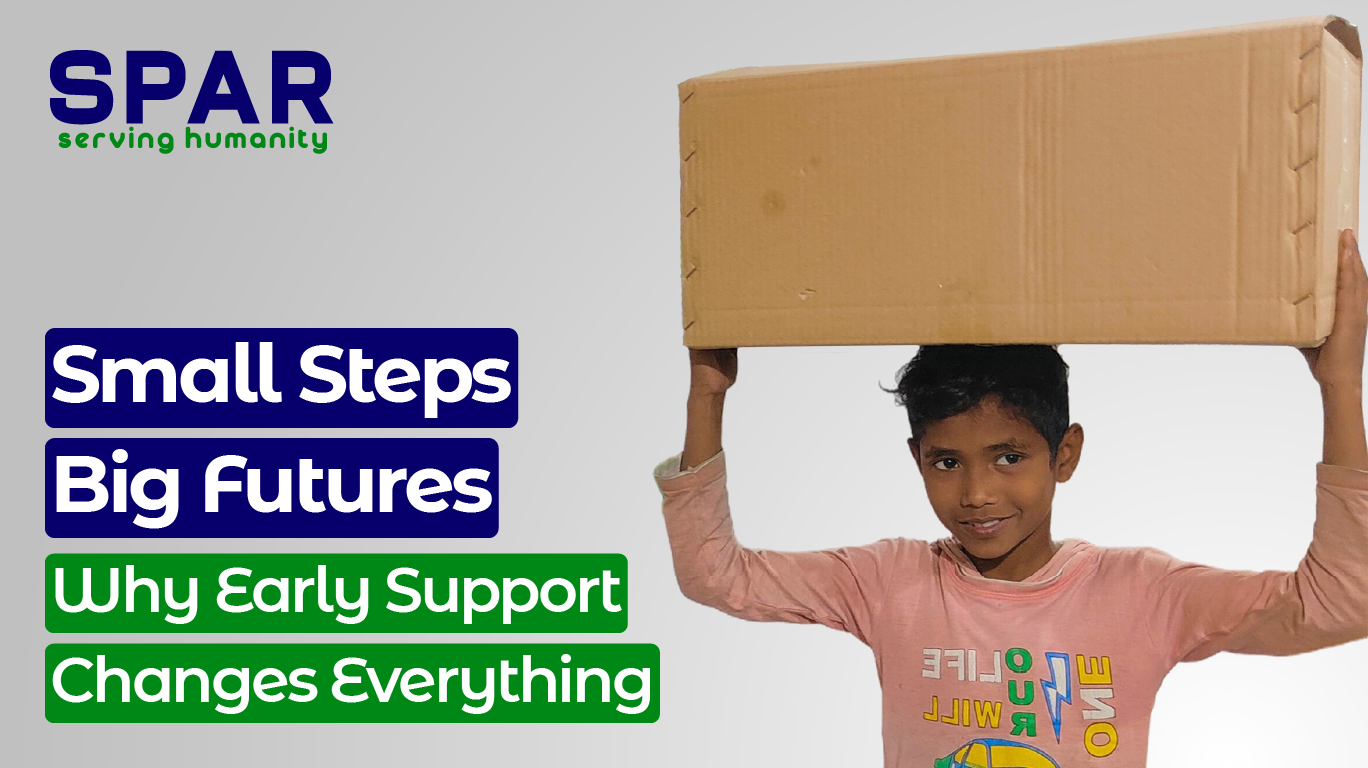
Small Steps, Big Futures: Why Early Support Changes Everything
Think about a house for a second. If the foundation is shaky, the walls will eventually crack. It doesn’t matter how beautiful the paint is or how expensive the furniture looks. If the base isn’t solid, the whole thing is at risk.
Children are exactly the same. The first few years of a child’s life are the “foundation” for everything they will ever do. During this short window, the brain grows at a speed that never happens again. However, many kids don’t get the tools they need during these vital years. This is why the importance of early childhood support programs is a topic we must talk about. These programs aren’t just a “nice to have.” They are a must-have. They provide the health, food, and learning that help a child thrive. When we support a child early, we set them up for a lifetime of success. At SPAR Project, we focus on these years because we know it’s the best way to stop poverty in its tracks. In this deep dive, we’ll look at why the first five years are the most important years of all.
1. The Brain is a Construction Site
A baby’s brain is not a smaller version of an adult brain. It is a work in progress. In the first three years, a child’s brain forms over a million new neural connections every single second. These connections are the wiring for how that child will think, feel, and learn for the rest of their life.
Early childhood support programs act like the master builders for this site. They provide the stimulation that makes those connections strong. This happens through simple things. Reading a story. Playing with blocks. Singing a song. These actions tell the brain, “This connection is important. Keep it.” Without this stimulation, the brain actually “prunes” or cuts away connections that aren’t used. We only get one chance to build this foundation right. Once the window closes, it is much harder to go back and fix the cracks.
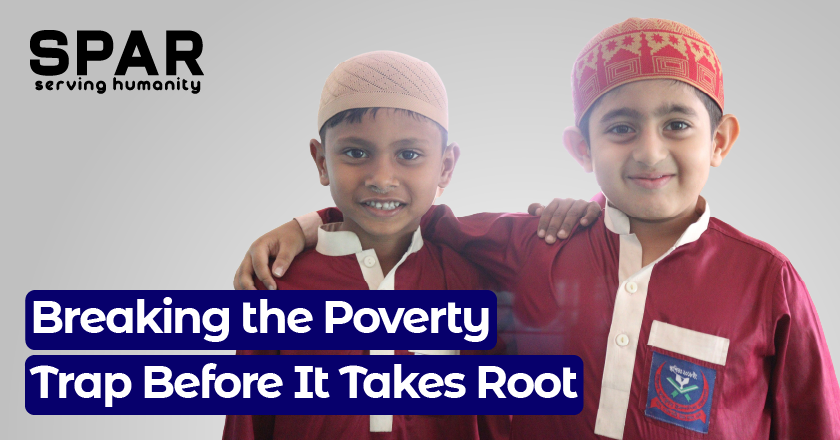
2. Breaking the Poverty Trap Before It Takes Root
Poverty isn’t just a lack of money in a bank account. It is a lack of opportunity that starts in the cradle. Children born into low-income families often lack books, toys, and even enough food. By the time they show up for the first day of school, they are already behind their peers.
This is where the importance of early childhood support programs really shines. These programs level the playing field. They give a child from a struggling home the same head start as a child from a wealthy one. They provide the “extra” help that parents simply cannot afford on their own. When we catch these kids early, we stop the poverty trap from closing. We ensure that a child’s future isn’t decided by their birth certificate. Instead, it is decided by their own talent and hard work.
3. Nutrition: The Biological Fuel for Thought
You cannot build a strong mind on an empty stomach. It is a biological fact. During the early years, the brain uses up a massive amount of the body’s energy. If a child doesn’t get enough vitamins, minerals, and calories, the brain simply cannot grow the way it should.
This leads to a condition called “stunting.” It doesn’t just mean a child is short for their age. It means their brain development has been stunted too. Early support programs tackle this head-on. They provide nutritious meals and fortified milk. They teach parents how to make the most of the food they have. This is “brain fuel” in its purest form. When a child’s belly is full of the right nutrients, their mind is free to explore, learn, and grow.
4. Why Early Health Checks Save Lives and Futures
In a wealthy city, a child with a hearing problem gets a hearing aid at age two. In a low-income community, that same child might just be labeled “slow” or “naughty” because they don’t follow directions. They aren’t slow; they just can’t hear the teacher.
Early childhood support programs include regular health screenings. Doctors and nurses check for things that parents might miss. They look at vision, hearing, and physical growth. They also give the vaccines that stop deadly diseases from spreading. Catching a problem when a child is three is a lifesaver. It is much easier to fix a speech delay or a vision issue early than to try and manage a major disability later in life. These programs provide a safety net that keeps small problems from becoming life-long barriers.
5. The Art of Learning “Soft Skills”
We spend a lot of time worrying about when a child will learn to read. But there are other skills that are just as important. Can the child share? Can they manage their anger? Can they follow a two-step direction? These are “social-emotional skills,” often called soft skills.
A high-quality early childhood program is the perfect place to learn these things. Kids learn to interact with their peers in a safe way. They learn that their feelings matter, but so do the feelings of others. These skills are the “glue” that keeps a person successful in a job or a marriage later in life. A child who learns to regulate their emotions at age four is much more likely to be a successful leader at age forty. These programs aren’t just teaching ABCs; they are teaching how to be a human being in a community.
6. Turning Parents Into Their Child’s Best Teachers
Parents are a child’s first teachers. They are also the most important ones. However, many parents in low-income areas didn’t get a great education themselves. They might love their children deeply, but they might not know how to help them learn.
Good early childhood support programs don’t push parents aside. They bring them in. They offer classes on child development. They show parents how to turn a trip to the market into a math lesson. They show them how to read a book so it sparks a child’s imagination. When we empower a parent, we create a 24/7 support system for the child. This “double-impact” is why these programs are so successful. The child learns at the center, and the learning continues the moment they walk through their front door at home.
7. The Economics of Early Support: The Heckman Curve
If you care about money and taxes, you should care about early childhood. Nobel Prize-winning economist James Heckman proved that the highest return on investment comes from the earliest years. He called this the “Heckman Curve.”
Think of it this way: if you spend $1 on a preschooler today, you save up to $13 in the future. Why? Because that child is more likely to graduate high school. They are more likely to get a high-paying job. They are less likely to need government help or spend time in prison. It is much cheaper to fund a preschool than it is to build a jail cell or run a crisis center. The importance of early childhood support programs is a financial reality. It is the smartest investment any government or donor can ever make.
8. Closing the “Word Gap” Before It’s Too Late
By the time children are four years old, kids from wealthy families have heard about 30 million more words than kids from poor families. This is a massive gap. Words are the tools we use to understand the world. If you have fewer tools, you can’t build as much.
Children with a “word gap” struggle to learn to read. Because they struggle to read, they struggle in every other subject. Early support programs are “word-rich” places. Teachers talk to children constantly. They ask questions. They read books. They sing songs. This environment helps poor children catch up to their peers before they even start “real” school. Closing this gap is the first step toward making sure every child has a voice in the world.
9. Preventing “Toxic Stress” from Damaging the Brain
Living in extreme poverty is scary and stressful. For a little kid, constant stress can actually be “toxic.” It floods the brain with chemicals that can stop growth. It keeps the brain in a state of “fight or flight” all the time. This makes it impossible for a child to sit still and learn.
Early childhood support programs provide a “buffer” against this stress. They are calm, predictable, and safe. When a child knows they are safe and loved, their brain can finally relax. It can move out of survival mode and into learning mode. Even if the home life is difficult, a few hours a day in a nurturing program can protect a child’s mental health. This protection is a life-changing gift that these programs offer every day.
10. Building a Safer Community for Everyone
The benefits of early childhood support don’t stop at the school gate. They ripple out into the whole neighborhood. Studies show that children who go through these programs are less likely to be involved in crime as adults. They develop better “impulse control”—the ability to stop and think before doing something wrong.
When we invest in toddlers, we are building a safer city for ourselves twenty years from now. We are creating a generation of people who are healthy, employed, and invested in their community. These programs are a form of “long-term crime prevention.” It is much more effective to support a child’s growth than to try and “fix” an adult who has already lost their way.
11. Early Intervention and Special Needs
Many children have learning delays or physical disabilities that aren’t obvious at first glance. Without early support, these kids often get lost in the system. They are labeled as “difficult” when they really just need a different kind of help.
Early childhood educators are trained to spot these signs. They can identify a speech delay or a motor skill issue when a child is just a few years old. Starting therapy at age three is much more effective than starting at age nine. For many children with special needs, early intervention is the difference between living an independent life and needing constant care. These programs give every child the specific type of help they need to reach their full potential.
12. How SPAR Project Puts This Into Action
At SPAR Project, we don’t just talk about these ideas. We put them on the ground. We work in the most neglected communities to make sure that no child is forgotten. Our early childhood programs are built to be sustainable and local.
We train local mothers to be teachers. We build safe learning centers using local materials. We provide daily meals that are high in protein and vitamins. We know that the importance of early childhood support programs is the key to everything we do. We aren’t just helping kids today; we are building the leaders of tomorrow. Every child we reach is a victory against poverty. Every child who learns to read or stays healthy is a step toward a better world for all of us.
Final Thought
The first five years of life pass by in the blink of an eye. But for a child, those years are an entire lifetime of growth. We have a choice to make. We can wait until the cracks in the foundation are too big to fix, or we can invest in the start. Early childhood support is the best tool we have to create a fair, wealthy, and safe world. When we give a child a strong start, we aren’t just giving them a gift. We are giving ourselves a better future. Let’s make sure every child has the foundation they need to build their biggest dreams.