Water Well Cost in Islam: What You Actually Pay and What You Permanently Earn
Water well cost is the total amount spent to dig, line, and finish a working water well. It covers labor, materials, and equipment. In Bangladesh, a hand-pumped tube well can cost as little as $300 to $800 USD — but deeper boreholes run $2,000 to $5,000 USD or more.
Why Water Well Cost Matters Right Now
Getting the number wrong can stall a project — or worse, leave a half-built well that no one can use. The UN estimates that 2.2 billion people still lack safe drinking water today. Every dollar miscounted is a family that waits another year.
Water Well Cost by the Numbers
Costs shift based on depth, soil type, and pump choice. A World Bank report found that rural water point costs in South Asia range from $500 to $10,000 USD, depending on location and design. Our team working across Bangladesh has seen hand-pump wells—serving up to 300 people—built for around $600 to $900 USD.
What Goes Into Water Well Cost?
Water well cost breaks into three parts: drilling, materials, and installation. Each part varies by depth and soil. Miss one — and the budget falls apart.
Drilling and Labor
Drilling is the highest cost. In Bangladesh, hand-pump tube wells go down 100 to 200 feet. Labor runs about $150 to $300 for a standard hand-pump well. Deeper boreholes needing a mechanical rig push that figure past $1,000.
Materials and Casing
PVC casing, gravel packs, and a pump head add $100 to $400 per well. Better materials last longer. Our team across northern Bangladesh has seen cheap casings crack within two dry seasons — turning an $800 well into a $1,500 repair job.
Installation and Finishing
A concrete pad and proper drainage seal the well against surface contamination. UNICEF guidelines recommend a minimum 1-meter sanitation apron around every hand pump. That finishing work adds roughly $50 to $150 to the total cost.
Common Misconceptions About Water Well Cost
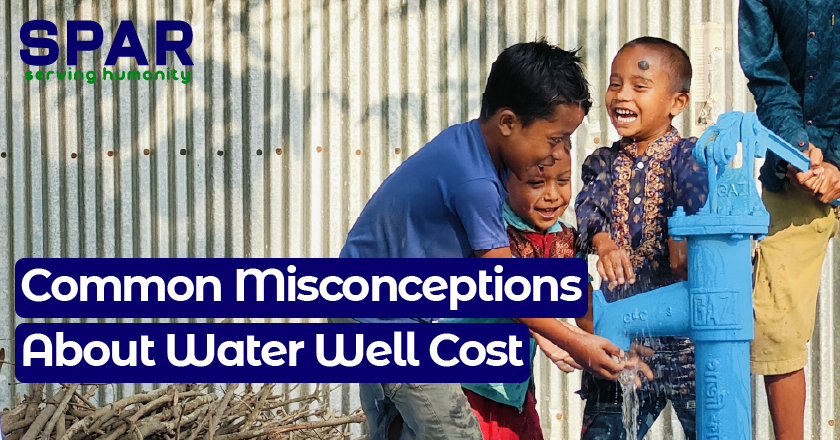
Most people undercount the real cost. They price the drilling—and forget the pump, the casing, and the pad. A well that costs $600 to install can cost another $200 in its first year if those details are skipped.
“Cheaper Is the Same as Affordable”
Cheap materials break faster. A $400 well using low-grade PVC may need full replacement within three years. A well-built-to-last one—around $700 to $900—can serve a community for 15 years or more.
“One Cost Covers Everything”
Maintenance is a separate line. WHO data shows that up to 36% of rural water points in low-income countries stop working within five years of installation. Budget for repairs from day one — roughly $30 to $80 per year.
“Depth Doesn’t Change Much”
It does. Going from 150 feet to 350 feet can triple the drilling cost. Arsenic contamination in Bangladesh’s shallow aquifers often forces deeper drilling. The Bangladesh National Groundwater Database tracks safe drilling depths by district—a tool every field team should use before budgeting.
Who Pays the Price When Cost Is Miscalculated?
Women and children pay the most. When a well project stalls or fails, they walk further. UNICEF reports that women and girls spend an estimated 200 million hours per day collecting water globally. In Bangladesh’s char regions—low-lying river islands—that daily walk can stretch past three kilometers each way.
Rural Communities in Northern Bangladesh
Kurigram, Gaibandha, and Jamalpur districts face the sharpest gap between need and supply. Seasonal flooding destroys shallow wells each monsoon. Rebuilding costs pile up every year. A well built at the right depth—past the flood-vulnerable zone—costs more upfront but breaks that cycle.
Children Under Five
Waterborne illness is a leading killer of young children. WHO estimates unsafe water causes about 485,000 diarrheal deaths each year. Most are under five. A well-built, correctly placed, at proper depth, with a sealed apron, cuts that risk sharply in the families it serves.
What Drives Water Well Costs Up or Down?
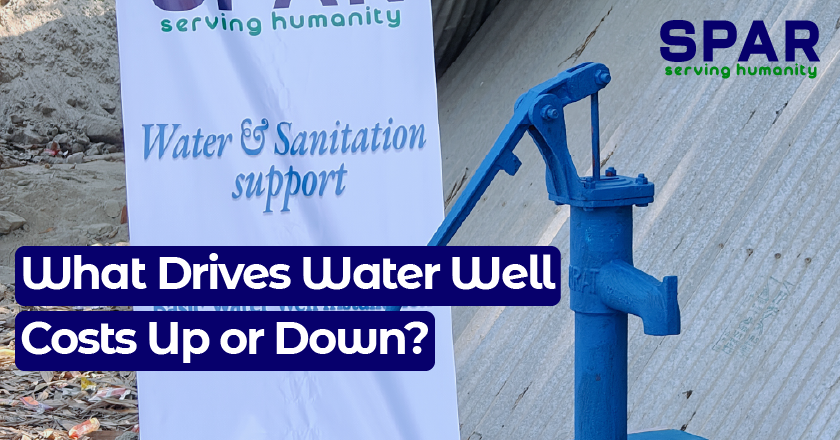
Four things move the price most: soil type, water table depth, local labor rates, and pump choice. Understanding each one before drilling saves money and prevents failed wells.
Soil and Geology
Sandy, loose soil drills fast and cheap. Hard clay or rocky ground slows the rig and raises labor hours. In Bangladesh’s Sylhet and Chittagong Hill Tracts regions, rocky terrain pushes drilling costs up by 30% to 50% compared to the flatter north.
Water Table Depth
Shallow water tables — under 100 feet — keep costs low. But shallow water in Bangladesh often carries arsenic or bacteria from
What This Means for You
Water well costs in Bangladesh range from $200 for a basic hand pump to $2,000 or more for a deep tube well with arsenic filtration. Soil depth, pump type, and flood risk all shift that number. Knowing these factors before drilling means fewer failed wells — and more families with water that stays safe year-round. See how this work continues →
Depth Is the Key Variable
Shallow wells under 100 feet cost less upfront. But they carry a higher arsenic risk in Bangladesh’s delta regions. Deep wells — past 300 feet — cost more but hit safer aquifers. That one decision changes both the price and the outcome.
The Right Pump Changes Everything
Hand pumps cost $50–$100. Solar pumps run $500–$1,200. A motorized pump with storage can hit $1,500. The right choice depends on how many families the well will serve and whether the site has reliable electricity.
Wells like the one in Kurigram don’t appear from one big push. They appear because someone decided this was worth continued attention—and kept showing up.