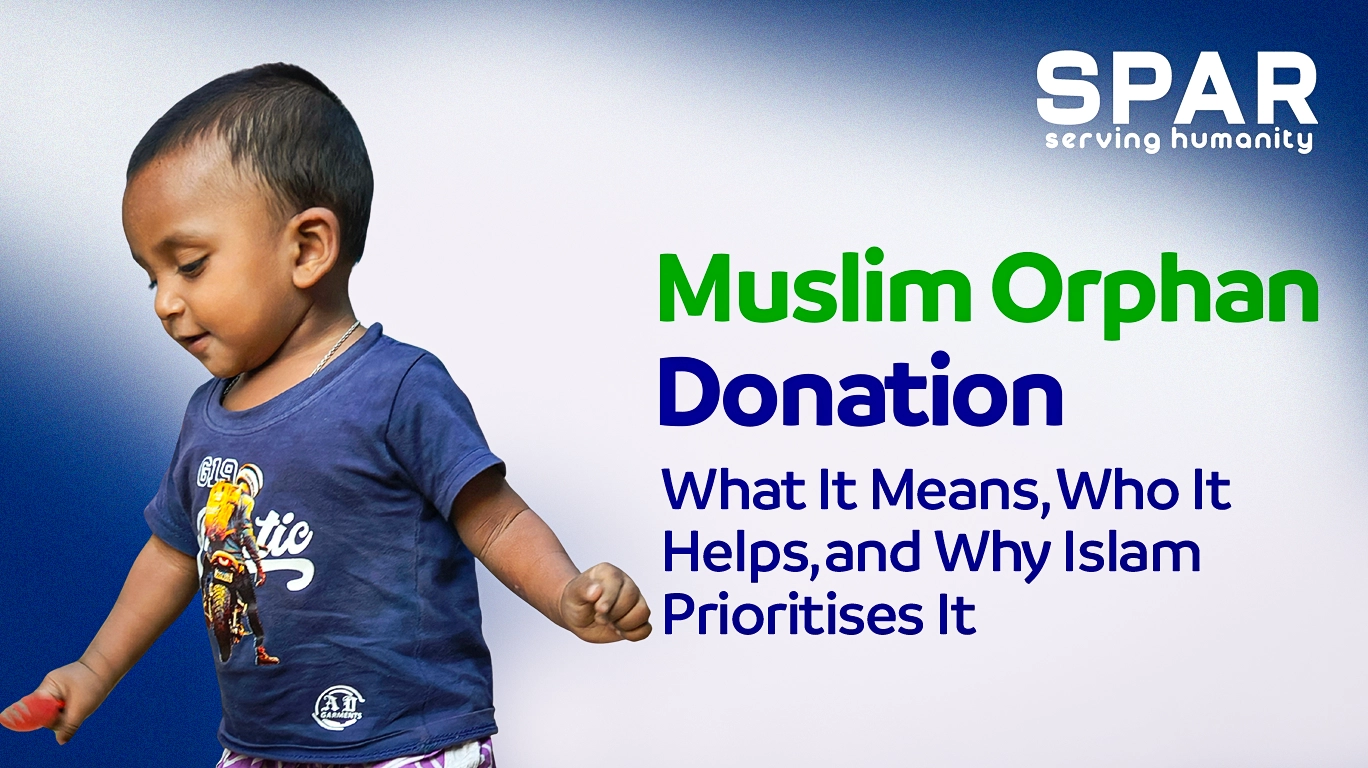
Muslim Orphan Donation: What It Means, Who It Helps, and Why Islam Prioritises It
Muslim orphan donation is a charitable act where Muslims give money, goods, or ongoing support to children who’ve lost one or both parents. It’s distinct from general sadaqah because Islam places orphan care in a category of its own. The Prophet Muhammad said the one who cares for an orphan will be close to him in Paradise. About 140 million children worldwide qualify as orphans, per UNICEF. Bangladesh alone holds one of South Asia’s largest orphan populations.
Why Muslim Orphan Donation Matters Right Now
Orphaned children don’t just grieve. They fall out of school, go hungry, and lose safe housing fast. UNICEF data shows orphaned children face higher rates of malnutrition, child labour, and early marriage than children with living parents. In Bangladeshi communities hit by floods and river erosion, this risk spikes every monsoon season. A father lost to a flood in Kurigram or Rangpur leaves behind children with no income buffer at all. That’s the gap Muslim orphan donation fills. SPAR’s orphan sponsorship program works directly in these communities, connecting consistent support to children who need it most. Sponsorship doesn’t just feed a child. It keeps them in school, stable, and seen.https://sparproject.org/orphan-sponsorship
Muslim Orphan Donation by the Numbers
The scale is bigger than most donors realise. UNICEF estimates that about 140 million children globally have lost at least one parent. In Bangladesh, the Bangladesh Bureau of Statistics (BBS) links child poverty directly to single-parent or no-parent households. Many of those children never make it past primary school. A basic orphan sponsorship typically costs around $30 to $50 USD per month. That covers food, school fees, and basic healthcare in a Bangladeshi context. Islam doesn’t treat orphan care as optional charity. The Quran mentions orphan welfare in over 20 verses, making it one of the most repeated moral duties in the entire text.
What Orphan Sponsorship Actually Covers
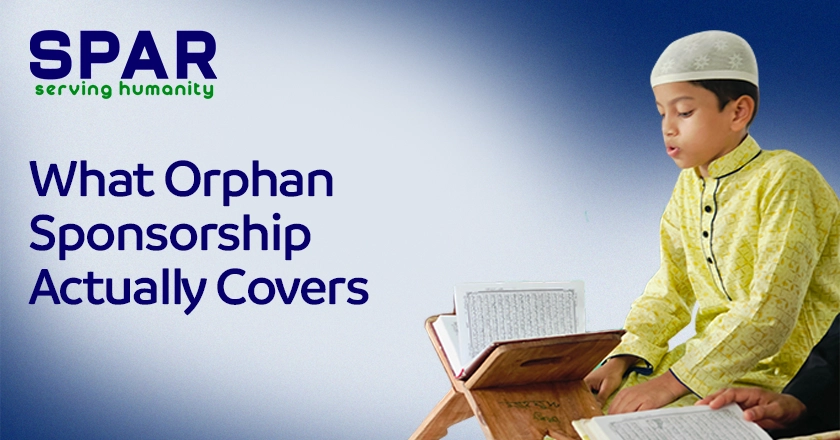
Muslim orphan donation is most powerful when it’s consistent. A one-time gift helps. But steady monthly support changes a child’s entire path. Sponsorship through programs like SPAR’s typically covers school fees, daily meals, basic health visits, and seasonal clothing. In rural Bangladesh, where many families survive on under $2 a day (according to World Bank income data), even $30 a month removes the barriers that push orphaned children out of school. It also gives a guardian, often an elderly grandmother or an older sibling, breathing room. That breathing room is what keeps a family unit intact.
Who Manages the Funds?
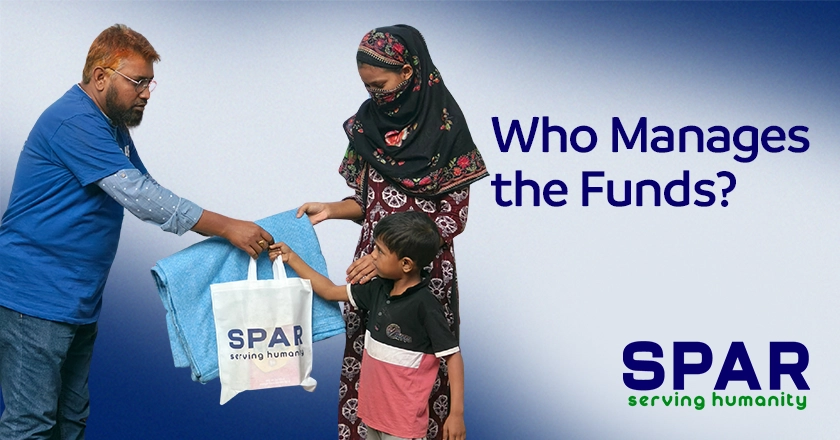
Field teams on the ground handle distribution directly. They know the families, the local schools, and the health clinics. In areas like Kurigram and Rangpur, where river erosion leaves communities cut off for weeks, local knowledge matters. A distant wire transfer means nothing without someone trusted to deliver it. SPAR’s approach puts verified local coordinators at the centre of every sponsorship. Donors receive updates on the child they support. The process stays transparent without becoming transactional.
What About Children with One Parent?
Islamic scholars agree on this point. A child who has lost their father is considered an orphan under Islamic law, even if the mother is alive. Ibn Qudamah and classical Hanbali scholarship confirm this. UNICEF Bangladesh data also shows that paternal loss is the more common trigger for child poverty in Bangladeshi households. The mother may still be present, but earns too little to cover school and food. Sponsorship steps in to fill that gap. It supports the whole household, not just the named child.
Common Misconceptions About Muslim Orphan Donation
Many donors assume orphan sponsorship means placing a child in an institution. That’s not how it works in most Bangladeshi contexts. Most sponsored children stay with extended family, a surviving parent, or a trusted community guardian. The sponsorship keeps them there. It removes the financial pressure that would otherwise force a family to send a child to work or pull them from school. According to the Bangladesh Bureau of Statistics household surveys, children from poor rural households leave formal education at alarming rates by age 10. Sponsorship directly counters that pressure. The child stays home. The child stays in school.
Who Is Most Affected by Orphan Poverty in Bangladesh
Children under 12 in rural northern Bangladesh face the highest risk. Kurigram, Jamalpur, and Gaibandha districts sit along floodplains where annual monsoon flooding can wipe out a household’s entire income in days. When a father dies in a flood or from a preventable illness, the family has no safety net. In Cox’s Bazar, Rohingya children face even sharper risk. Many have lost both parents to displacement and violence. According to UNICEF, Rohingya communities in Cox’s Bazar have among the lowest school attendance rates of any child population in South Asia. A child without a sponsor here can go years without formal learning.
The Real Impact: What Change Looks Like on the Ground
Our team visited a family in Nilphamari in March 2025. We met Ruksana, a nine-year-old girl raised by her aunt after losing her father to illness. Before sponsorship, her aunt sold vegetables at a roadside stall and couldn’t cover school fees and food in the same month. Something always had to give. After consistent monthly support started, Ruksana’s school attendance became regular. Her aunt told our coordinator she finally stopped choosing between the two. That shift, quiet and undramatic, is what Muslim orphan donation looks like in practice. It doesn’t make headlines. But it holds a life together, month after month.
What Muslim Orphan Donation Actually Does Over Time
Muslim orphan donation is not a one-time act. It is a sustained relationship between a donor and a child’s future. According to UNICEF, children who receive consistent support stay in school longer and break cycles of poverty more often than those who receive only emergency aid. In Bangladesh, where the Bangladesh Bureau of Statistics estimates over 4.8 million orphaned children, consistency matters. A child like Ruksana in Nilphamari doesn’t need a rescue. She needs someone to show up, month after month, until she can stand on her own.
Why Consistency Matters More Than Amount
A single large gift helps once. Regular giving changes what a family can plan for. When a caregiver knows support will arrive next month, she can enroll her child in school without fear. She can pay fees in advance. She can buy medicine without skipping a meal. Zakat, sadaqah jariyah, and kafala all carry this logic. The amount matters less than the commitment behind it. Even $30 a month, sustained across a year, covers school fees and basic nutrition for one child in rural Bangladesh.
The Islamic Framework Behind Long-Term Giving
The Prophet Muhammad (peace be upon him) described the one who cares for an orphan as close to him in paradise, and Islamic scholars, including An-Nawawi, have noted that this closeness grows through sustained care, not a single act. Sadaqah jariyah, a charity that continues to benefit others after the initial act, maps closely onto orphan sponsorship. The gift keeps working long after the donor moves on with their day. That is the spiritual logic behind monthly orphan support in the Islamic giving tradition.
Behind every shift like Ruksana’s is a long line of people who chose to stay involved long after the headlines moved on. SPAR is one of those quiet lines. The work in Bangladeshi communities keeps going because of it. See how this work continues.