A Charity That Helps Orphans and Widows: What It Means and Why It Matters
A charity that helps orphans and widows provides direct, sustained support to children who’ve lost a parent and to women who’ve lost a husband. It goes beyond one-time aid. These charities cover food, education, medical care, and emotional stability for some of the world’s most overlooked people. In Bangladesh alone, UNICEF estimates millions of children grow up without one or both parents. This kind of work addresses needs that families and governments often can’t meet alone.
Why Charity That Helps Orphans and Widows Matters Right Now
Orphans and widows sit at the bottom of almost every support system. They don’t qualify for many government programs. They’re often too poor to access private help. In Bangladeshi communities, a widow without income can lose her home within months of her husband’s death. Her children may drop out of school before they turn ten. According to the Bangladesh Bureau of Statistics, female-headed households earn significantly less than male-headed ones, and many rural widows in districts like Kurigram and Rangpur rely entirely on informal support from neighbors. That informal safety net breaks down fast. SPAR’s orphan sponsorship work addresses this gap with consistent, long-term care rather than short-term relief.
Who’s Most Affected by This Kind of Need
The families hit hardest aren’t in cities. They’re in rural upazilas where farming is the only income, and one death ends everything. A Bangladeshi farmer earns about $2 to $4 USD a day. If he dies, his widow and children have nothing left over after food. Rohingya families in Cox’s Bazar face this twice over, displaced and grieving at the same time. According to UNICEF, children in female-headed households are more likely to be stunted, out of school, and without access to clean water. Boys get pulled into labor. Girls get pushed into early marriage. The problem isn’t invisible. It’s just underfunded.
What Orphan and Widow Support Actually Looks Like on the Ground
Real support isn’t a one-time food parcel. It’s school fees paid before the deadline. It’s a widow learning to keep basic accounts. It’s a child staying in school past grade five because someone covered the cost. According to UNICEF Bangladesh, dropout rates spike sharply at ages ten to twelve, often when families can’t afford exam fees or uniforms. SPAR’s approach focuses on that exact window. Consistent monthly support stops the moment when a child’s future gets traded for short-term cash. That’s the difference between charity that patches a wound and charity that closes it.
When a Father Dies in a Farming Family
In rural Bangladeshi households, the father usually holds the land title and the credit line. When he dies, both vanish. The widow can’t access the farm loan. She can’t renew the lease on the field. She often can’t even prove ownership of the home without male witnesses. Our team visited Kurigram District in early 2024 and met Rashida, a mother of three whose husband died of a sudden illness. Within weeks, a relative disputed her right to stay in the family home. Without legal support and a regular income, she had no way to fight back.
Why Boys Drop Out First
It feels backward. But boys leave school before girls in many Bangladeshi farming families after a father’s death. A twelve-year-old boy can earn $1 to $2 a day carrying bricks or loading trucks. A girl cannot, in most rural contexts. So the boy becomes the income. He stops learning. By fifteen, he’s locked into unskilled labor with no path out. UNICEF Bangladesh data confirms this pattern in districts like Rangpur and Sylhet. Sponsorship programs that cover the full cost of schooling change this math directly.
Common Misconceptions About Charity That Helps Orphans and Widows
Many donors assume this kind of work is simple. Feed the child, house the widow, done. But the real gaps are less visible. A child can have food and still fail school because no one pays for books. A widow can have shelter and still lose it because no one helps her understand her land rights. According to the World Bank, women in South Asia are significantly less likely than men to own land or hold a formal bank account. The structural problems outlast the immediate crisis. That’s why the most effective charity that helps orphans and widows works on both levels at once.
The Role of Small, Sustained Efforts
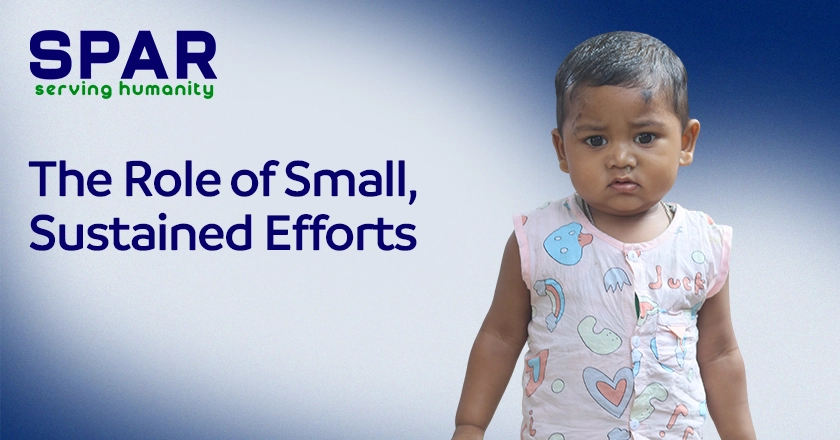
One large gift does less than most donors expect. It covers a month. Maybe two. Then the need returns. What actually changes a family’s situation is regular, predictable support over one to three years. That’s long enough for a child to finish a school cycle. Long enough for a widow to build a small income. Long enough for a family to stop being in crisis. The families we support in Bangladeshi villages don’t need a rescue. They need a runway. Real change here is rarely sudden. It comes from small, sustained efforts, season after season, from people who decided this was worth their continued attention.
How Islam Frames This Responsibility
The Prophet Muhammad (peace be upon him) placed the guardian of orphans among the highest ranks in the next life. In a well-known hadith recorded in Sahih al-Bukhari, he described himself and the one who cares for an orphan as neighbors in paradise. Ibn Kathir and An-Nawawi both comment on the weight of this obligation. It’s not optional generosity. It’s a communal duty. The Arabic term for orphan, “yateem,” appears in the Quran multiple times, always with a command to protect, never to ignore. For Muslim donors, this isn’t about charity in the Western sense. It’s about fulfilling a named, specific obligation.
What This Means for You
Orphans and widows in Bangladesh face specific, measurable risks. According to UNICEF Bangladesh, children without parental care are more likely to drop out of school before age thirteen. Widowed mothers in rural upazilas often lose land rights within months of losing a husband. The families most at risk are rarely in Dhaka. They’re in Kurigram, Rangpur, and the coastal belts, where seasonal floods cut off income every year. A charity that helps orphans and widows works best when it stays present through those hard seasons, not just the visible ones.
Why Sustained Support Matters More Than One-Time Help
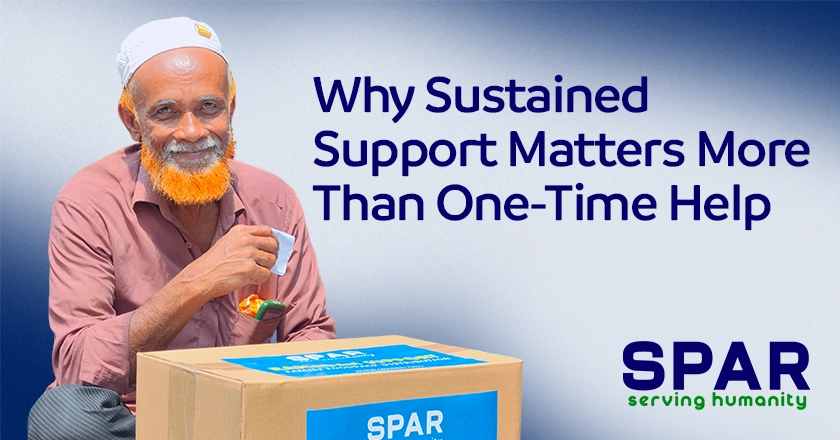
One payment changes one month. Sustained support changes a child’s school record. It changes whether a widow can keep her home. According to the Bangladesh Bureau of Statistics, female-headed households in rural areas earn less than half the income of male-headed households. That gap doesn’t close with a single gesture. It closes when support arrives consistently, season after season, until the family builds something that holds.
How Islam Shapes This Duty for Muslim Donors
The Quran uses the word “yateem” in contexts of active protection, not passive sympathy. An-Nawawi noted that neglecting an orphan under one’s care carries moral weight. This frames the work differently for Muslim donors. It’s not optional. It’s a named responsibility. A charity that helps orphans and widows becomes a channel for fulfilling that obligation, not just a way to feel good about giving.
Behind every child who stays in school is a long line of quiet decisions made by people far away. At SPAR, the work in Bangladeshi communities continues because some people chose to stay involved after the headlines moved on. Widowed mothers in Kurigram and Rangpur don’t need applause. They need a steady presence. The families we support aren’t waiting for rescue. They’re waiting for enough stability to build something lasting. See how this work continues.