How Can I Help Orphans? Real Ways That Actually Change Lives
Helping orphans means giving children without parental care the things they’ve lost: safety, education, nutrition, and someone who shows up. It’s not just charity. It’s a human duty that cuts across faith, culture, and geography. UNICEF estimates 140 million children worldwide live without one or both parents. For Bangladeshi Muslims, this call sits deep in scripture and in the street outside.
Why Helping Orphans Matters Right Now
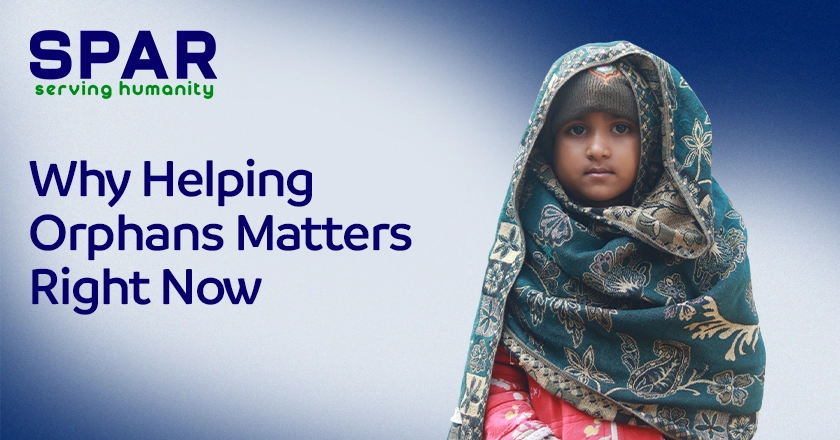
Bangladesh has one of the highest rates of child poverty in South Asia. Many children lose parents to illness, floods, or accidents in rural upazilas like Kurigram and Rangpur. That loss doesn’t just cause grief. It cuts off school, food, and any path forward. According to UNICEF Bangladesh, orphaned and separated children face much higher risks of trafficking, early marriage, and child labour. When a child loses parental care before age five, the damage compounds fast. SPAR’s orphan sponsorship program works in these communities with a long-term, consistent presence, not a one-time drop-off.
Who’s Most Affected by the Orphan Crisis
Most orphaned children don’t live in institutions. They live with grandparents, aunts, or older siblings who can’t always feed them. The Bangladesh Bureau of Statistics has found that child-headed households in northern Bangladesh face extreme food insecurity. Children in Cox’s Bazar, including many Rohingya children, face compounding disadvantages: no citizenship, no birth certificate, no school enrollment. Boys often get pulled into informal labour. Girls face early marriage pressure. These aren’t abstract statistics. They’re children who wake up each day without a safety net and without a plan.
What Actually Helps an Orphaned Child Long-Term
Short-term aid keeps a child alive. Long-term support gives them a future. The difference matters more than most donors realise. According to UNICEF, children who receive sustained care, including education, nutrition, and emotional support, are far less likely to drop into child labour or early marriage. A one-time food packet helps for a week. A sponsored education keeps a door open for years. The most effective help works across three areas at once: school access, stable meals, and a trusted adult who stays involved season after season.
Education as the First Line of Support
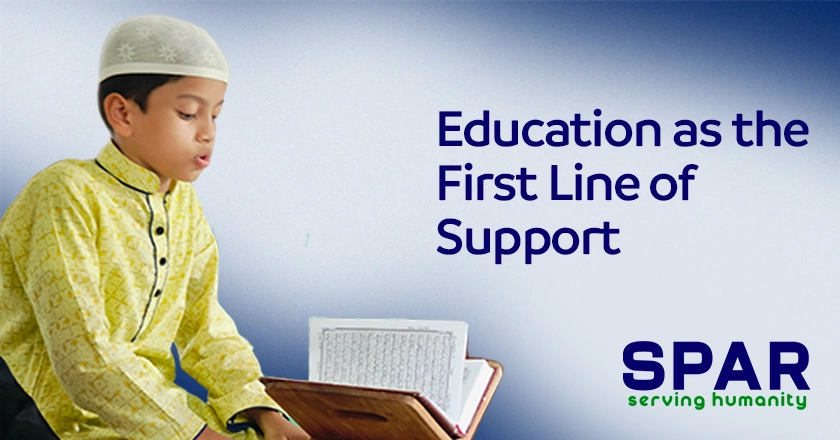
School is not a luxury for orphaned children. It’s protection. A child in class is a child not working a field or being married off at thirteen. In northern Bangladesh, many orphaned children drop out before grade five. The reasons pile up fast: no school fees, no uniform, no one to walk them there. Consistent sponsorship covers those gaps. It keeps a child enrolled and shows up when problems arise, not just at the start of the year.
Nutrition and Health Access
Hunger is chronic for many child-headed households. The Bangladesh Bureau of Statistics has found that food insecurity in rural northern districts is highest among households without a working adult. Malnutrition at a young age affects brain development, school performance, and long-term health. Programmes that pair food support with education sponsorship see better results than either alone. A hungry child can’t concentrate. A sick child can’t attend. Nutrition and health access aren’t extras. They’re the foundation everything else rests on.
Real Impact: One Family in Kurigram
Our team visited Kurigram District in February 2025. We met Amina, a nine-year-old girl living with her elderly grandmother after her parents died in a flood two years earlier. Her grandmother couldn’t read. She had no way to help Amina with schoolwork or enroll her in the local school. The nearest madrasa was three kilometres away and required a small monthly fee, about $4. That fee had kept Amina out of school for over a year. With consistent outside support, she enrolled the following month. She’s now in grade three. That gap, one year, one small fee, is what “how can I help orphans” actually looks like in practice.
Common Misconceptions About Helping Orphans
Many donors assume orphaned children live in orphanages. Most don’t. UNICEF data shows that the vast majority of children without parental care live with extended family, not in institutions. That shapes what help looks like. Cash sent to an institution may not reach the child. Direct sponsorship tied to a named child, a specific school, and a field team that checks in regularly is far harder to misuse. Another common mistake: assuming one donation solves the problem. Real change here is rarely sudden. It comes from small, sustained efforts, season after season.
How Islamic Teaching Frames the Obligation to Help
Islam doesn’t treat orphan care as optional charity. It treats it as a duty tied to character. The Prophet Muhammad (peace be upon him) said, “The one who sponsors an orphan and I will be in Paradise like these two,” pointing to his index and middle fingers held together. This hadith appears in Sahih al-Bukhari. Scholars like Ibn Uthaymeen have noted that this reward applies whether the orphan is a relative or a stranger. For Muslim donors asking how they can help orphans, Islamic scholarship is clear. The act of sustained care, not a single gift, is what earns that closeness.
What Helping Orphans Actually Looks Like in Practice
Knowing how you can help orphans is one thing. Doing it well is another. UNICEF estimates there are around 140 million children worldwide who have lost one or both parents. In Bangladesh, many of them live with grandparents or aunts and uncles who are already stretched thin. The gap isn’t always money. It’s often school fees, medical care, or one trusted adult checking in each month. Sustained involvement, not a single act, is what changes a child’s path. SPAR’s field teams in Bangladeshi communities work on exactly that kind of steady, long-term presence.
Does the Type of Orphan Support Actually Matter?
Not all support reaches children the same way. Cash sent to an institution can get lost before it reaches a child. Named sponsorship tied to a specific child, a local school, and a field worker who visits regularly is far harder to misuse. UNICEF Bangladesh has noted that most children without parental care live with relatives, not in homes or institutions. That means effective help often looks like supporting the aunt, the grandmother, or the community network already keeping that child alive.
How Do You Know If Your Help Is Working?
A good programme tells you. It names the child. It updates you on school attendance. It connects your support to a field team you can ask questions of. If an organisation can’t tell you who your support reaches or how it’s tracked, that’s worth noticing. SPAR’s approach to orphan sponsorship in Bangladesh is built around that kind of accountability. Each child has a name. Each case has a team member behind it.
Behind every child who stays in school is a long line of quiet decisions by people who chose to stay involved. No single gift does that. It’s the monthly commitment, the school-fee payment in October, and the follow-up call in March. At SPAR, that sustained work happens across Bangladeshi communities where the need is real, and the field teams are already on the ground. See how this work continues.