


Best Orphan Charity: How to Choose One That Actually Helps
The best orphan charity is one that delivers sustained, long-term support to vulnerable children, not just one-time aid. It covers food, education, healthcare, and emotional care together. UNICEF estimates that over 140 million children worldwide have lost one or both parents. Orphaned children in low-income countries face the sharpest risks. Choosing the right charity shapes whether a child rebuilds or stays stuck.
Why Choosing the Right Orphan Charity Matters Right Now
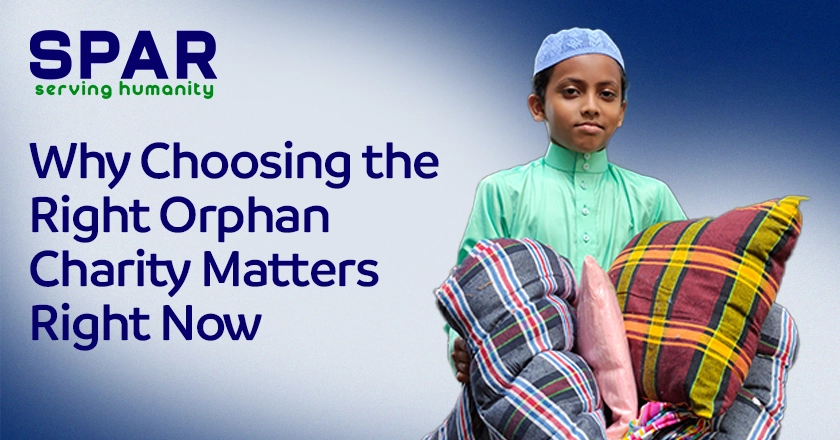
Orphaned children don’t just need money. They need consistent care, present adults, and real educational access. According to UNICEF, children without parental support are far more likely to experience malnutrition, drop out of school early, and face abuse. In Bangladeshi communities, particularly in flood-affected districts like Kurigram and Rangpur, families break apart fast after disasters. A child can lose both parents to illness, flood, or poverty in the same season. That’s why our orphan sponsorship program focuses on long-term placement, not short bursts of aid. The best charities don’t just respond. They stay.
Key Facts About Orphan Charities Most Donors Don’t Know
Not every charity that names itself an “orphan fund” actually reaches children in the field. Many donors assume all orphan charities operate similarly, but delivery models differ widely. Some channel funds through local partner NGOs with little oversight. Others, like SPAR, maintain direct field teams in Bangladesh. The World Bank notes that children in rural, low-income households face compounding disadvantages when adult care disappears. In Bangladeshi rural upazilas, a single parent’s death can push all siblings out of school within months. The best orphan charities track each child individually, not just the donation count. Accountability at the child level is what separates real impact from good intentions.
What Makes an Orphan Charity Trustworthy?
A trustworthy orphan charity does three things well. It tracks each child by name, not by batch. It reports back to donors with field-level detail. And it stays present after the crisis fades. According to UNICEF, children who lose consistent adult supervision face sharply higher risks of school dropout and early labor. In Bangladeshi rural upazilas, that risk moves fast. A child without a sponsor can fall out of school within one term. The best charities catch that window before it closes. Trust isn’t built through marketing. It’s built through consistent presence in the field, year after year.
What Should Donors Look For?
Donors should ask two direct questions. First, does the charity assign each child a caseworker? Second: Does it report on that specific child, not just aggregate numbers? Many funds pool donations and report program-wide. That’s not the same as child-level accountability. The best orphan charities tie every sponsor to one name, one file, and one update cycle. That structure forces field teams to stay in contact. It also makes fraud much harder to hide.
How Does SPAR Approach This?
SPAR’s field teams work directly in Bangladeshi communities. They don’t subcontract care to third parties. Our team in Kurigram met Riya, a nine-year-old girl, in early 2025. Her father had died in the previous monsoon flood. Her mother was already ill. Without early placement, Riya would have been pulled from school by the following term. Direct field presence made early identification possible. That’s the difference between a charity that processes donations and one that actually knows the children it serves.
Common Misconceptions About Orphan Charities
Many donors believe that “orphan” always means a child with no living parents. But in many Muslim-majority aid frameworks, the term covers children who’ve lost their father, even if their mother is still alive. The Prophet Muhammad (peace be upon him) was himself fatherless, and Islamic scholarship has long held the paternal-loss definition as the basis for orphan care. According to Pew Research, Bangladesh has one of the largest Muslim populations in the world. That context shapes how local communities define need and who qualifies for support. Donors should understand this distinction before choosing a charity.
Does Sponsorship Replace Family?
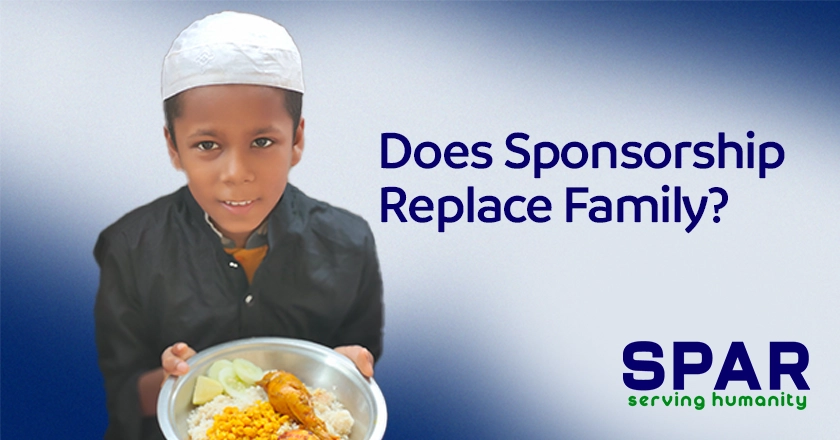
No. Good orphan sponsorship works alongside the existing family structure. The goal is never to remove a child from their home. It’s to give that home enough support to stay intact. SPAR’s model focuses on the surviving parent or guardian as the primary caregiver. Sponsorship covers school fees, basic food support, and periodic health checks. The family stays together. The child stays enrolled. That stability is what long-term outcomes depend on.
Who Needs Orphan Support Most in Bangladesh?
Children in flood-prone northern districts face the highest need. UNICEF Bangladesh data points to Rangpur and Kurigram divisions as areas where child vulnerability concentrates after seasonal floods. Boys aged eight to fourteen face the highest dropout risk. Girls in that same range face early marriage pressure when household income falls. Both risks rise sharply after a father’s death. Paternal loss in a single-income rural household doesn’t just mean grief. It means the household loses its entire earning base overnight. Real change here is slow. It comes from small, sustained efforts, season after season.
How Orphan Charities Connect to Long-Term Education Outcomes
UNICEF reports that children who receive consistent adult mentorship are significantly more likely to complete secondary school. In Bangladesh, secondary completion rates drop among children from low-income single-parent homes. Orphan sponsorship programs that include education tracking close that gap. The support isn’t just financial. It’s structural. A caseworker who follows a child through three school years does more than a one-time food package. The best orphan charity isn’t the one with the biggest budget. It’s the one whose children graduate.
What This Means When Choosing an Orphan Charity
Choosing the best orphan charity means looking past logos and social media. UNICEF estimates that over 140 million children worldwide have lost at least one parent. In Bangladesh, the Bangladesh Bureau of Statistics links paternal loss directly to school dropout and early marriage in rural areas. The best programs combine education tracking, consistent caseworkers, and local field presence. They measure success by graduation rates, not distribution tallies. If a charity can name the children it serves and show their progress over the years, that is a strong sign you are looking at real work.
What Separates Good Programs from Great Ones
Great orphan programs do one thing consistently. They stay. A caseworker who visits a child in Kurigram in year one and is still there in year three does more than any single aid delivery. According to UNICEF, consistent adult mentorship raises secondary school completion rates among vulnerable children. The best orphan charity is not the loudest. It is the one whose staff know the children by name, season after season.
Why Bangladesh Needs Sustained, Not Seasonal, Support
Bangladesh faces a specific pattern. Floods in Rangpur and Kurigram wipe out household income fast. A father dies. A family loses everything overnight. One food package does not fix that. Sustained orphan sponsorship, tied to school enrollment and caseworker visits, addresses the real gap. According to the Bangladesh Bureau of Statistics, children from single-income rural homes face the steepest drop in educational outcomes after a parent’s death. Seasonal charity cannot meet a year-round need.
Behind every child who stays in school is someone who decided not to walk away. It is not dramatic work. It is a quiet, repeated presence: a visit before exams, a uniform replaced after a flood, a caseworker who answers when a family calls. At SPAR, that kind of work is what we do in Bangladesh, season after season, without waiting for a headline to make it urgent. See how this work continues.

