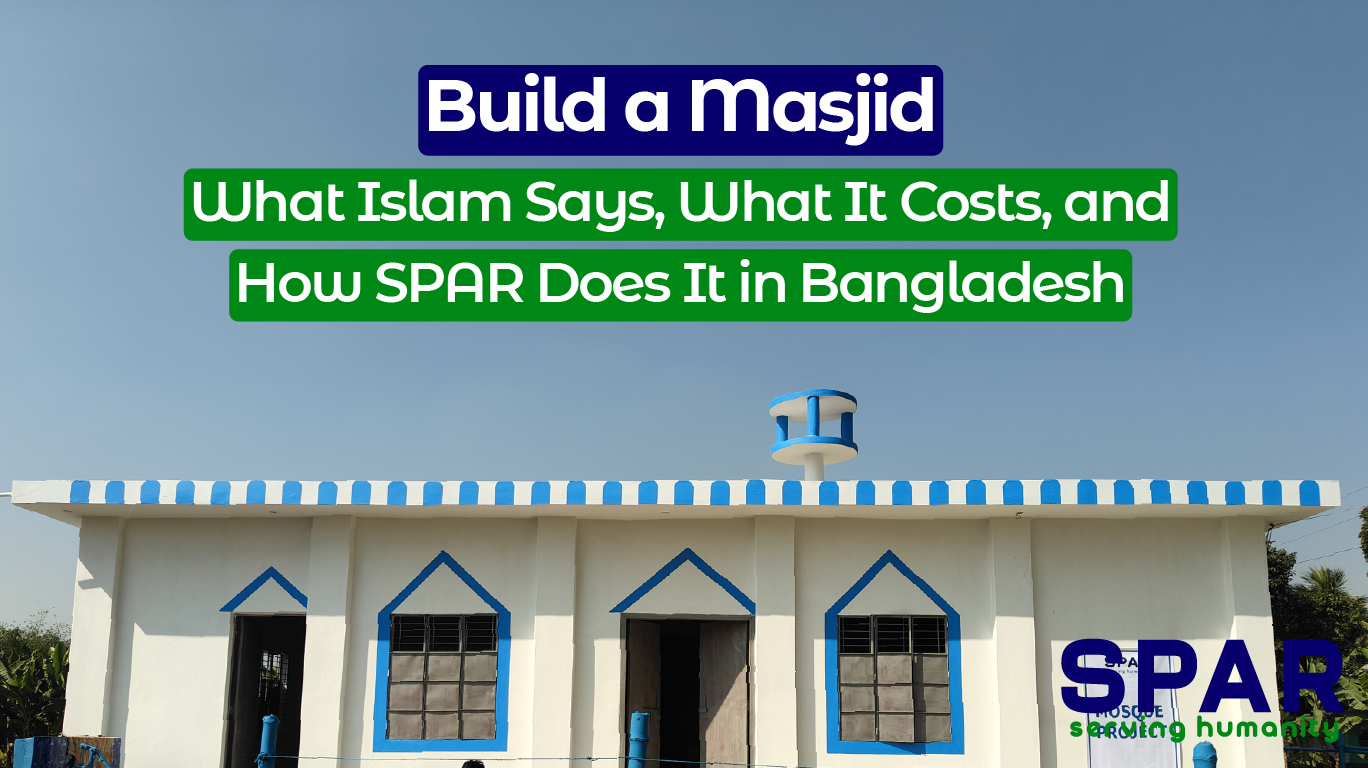
Build a Mosque in Bangladesh: What It Costs, What It Earns, and Why It Never Stops Giving
Building a mosque means constructing a dedicated space for Muslim prayer and community life. It’s not just a building – it’s an act of worship in itself. The Prophet Muhammad ﷺ said that whoever builds a mosque for Allah, Allah builds for him a house in Paradise (Sahih al-Bukhari, 450).
Why Building a Mosque Matters Right Now
Muslims make up about 25% of the world’s population – roughly 2 billion people – yet many communities still lack a safe, nearby place to pray. According to Pew Research Center, Muslim populations are growing fastest in regions with the fewest purpose-built mosques. That gap is real, and it’s widening.
Mosque Construction: What Most People Don’t Know
Most people think building a mosque is just about money. But land access, local permits, and community trust shape the outcome far more than the budget does. In Bangladesh alone, our team has seen projects stall – not from lack of funds – but from missing one planning step early on.
How Much Does It Cost to Build a Mosque?
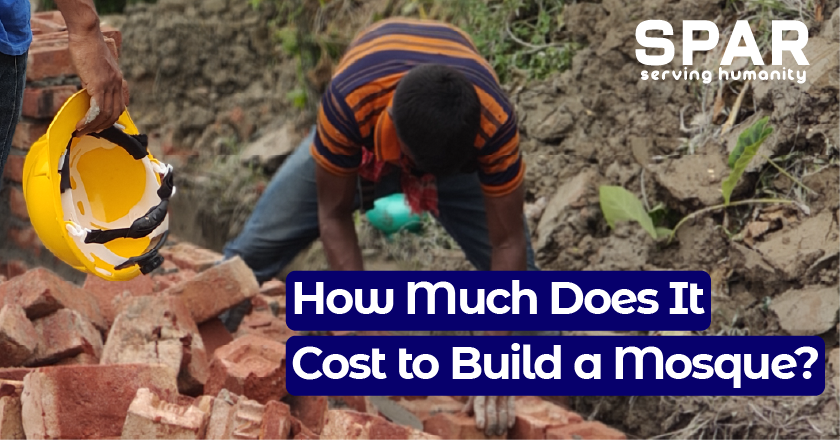
Mosque construction costs vary widely — from $15,000 for a small rural structure to over $1 million for a full urban complex. The gap depends on land, materials, and local labor. Most community mosques in South Asia fall between $20,000 and $80,000.
What Drives the Cost Up?
Land is often the biggest expense. In urban Bangladesh, a small plot can cost more than the building itself. Structural design, sanitation facilities, and accessibility features add up fast.
What Keeps Costs Down?
Local materials cut costs sharply. So does volunteer labor from the community. In rural Sylhet, our team has seen mosques built for under $18,000 when the community contributed both land and labor.
Are There Hidden Costs?
Yes. Permits, utility connections, and waqf (endowment) registration fees catch many projects off guard. Budget at least 10–15% above your build estimate for these.
What Are the Main Types of Mosque Structures?
Not every mosque looks the same — or serves the same purpose. Structures range from small prayer rooms to large community centers. The right type depends on congregation size, budget, and local need.
Masjid vs. Musalla: What’s the Difference?
A masjid is a permanent, dedicated mosque. A musalla is a temporary or informal prayer space — often a room in a school, home, or clinic. Both serve the community, but only a masjid carries the full legal and spiritual status in Islamic jurisprudence.
What Is a Jami Mosque?
A Jami mosque — also called a Friday mosque — is large enough to hold the full community for Jumu’ah prayer. According to classical scholars like An-Nawawi, a town should have at least one Jami mosque accessible to all residents.
What Does a Community Mosque Include?
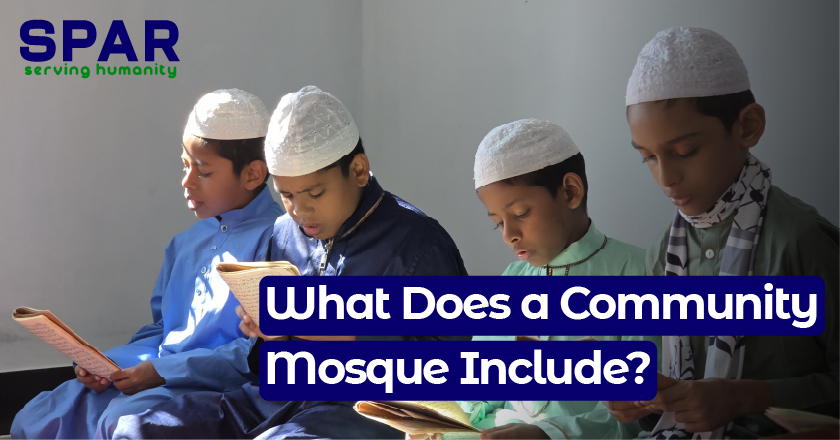
Beyond the prayer hall, a full community mosque includes wudu (ablution) areas, separate women’s sections, and often a madrasa room for children’s education. In Bangladesh, many mosques also serve as local relief points during floods.
Common Mistakes When You Build a Mosque
Most mosque projects run into the same problems. Poor land title checks, skipping community consultation, and underestimating drainage needs are the top three. Fixing these early saves months of delay.
Mistake 1: Starting Without a Land Audit
Building on disputed or mortgaged land is more common than anyone admits. In Bangladesh, land title disputes are involved in roughly 70% of civil court cases, many of which stall construction for years.
Mistake 2: Ignoring the Qibla Direction Early
The qibla — the direction of prayer toward the Kaaba — must be set before the foundation is laid. Correcting the orientation after pouring concrete is expensive. It’s a technical step, but a non-negotiable one.
Mistake 3: No Maintenance Plan
Many mosques open without a fund for upkeep. Roofs leak. Wiring fails. A mosque that falls into disrepair within five years serves no one. Plan a small monthly reserve — even $30 to $50 a month — from day one.
Who Needs a Mosque Most?
Rural Muslim communities with no paved road access face the sharpest shortage. UNICEF data shows that infrastructure gaps in rural Bangladesh hit hardest in the northern districts — Kurigram, Jamalpur, and Gaibandha. These are the same communities with the fewest mosques per capita.
The Elderly and the Disabled
Older community members and those with limited mobility depend on a nearby mosque. Walking three kilometers on a dirt path isn’t possible for everyone. Distance isn’t just inconvenient — it cuts people off from congregational worship entirely.
Women and Children
Many mosques in South Asia were built without women’s sections. That’s changing slowly. But in underserved areas, girls’ access to Islamic education depends on whether the local mosque has a dedicated madrasa room. Without one, they often have none.
New Muslim Communities
Converts and migrant communities often lack the social ties needed
What to Know Before You Build a Mosque
A mosque built on clear plans, community ownership, and a maintenance fund will outlast one built on urgency alone. SPAR’s work in northern Bangladesh shows what that looks like on the ground — small communities, long-term results.
Start With the Community, Not the Blueprint
The strongest mosques begin with a local shura — a small group of trusted people who own the project. They raise accountability. They solve problems before an outside team even hears about them.
Plan for Year Five, Not Just Day One
Most mosque projects fail in the maintenance phase. Set aside $30 to $50 a month from the start. That small reserve covers wiring repairs, roof patches, and cleaning — and keeps the doors open for decades.
Behind every mosque still standing after twenty years is a quiet group of people who never stopped showing up. At SPAR, we’ve seen that in Kurigram, in Jamalpur, in communities that had nothing but will and a patch of land.