Charity to Orphans: What Islam Says and Why It Still Matters
Charity to orphans means giving consistent support to children who’ve lost one or both parents. It’s distinct from general sadaqah because Islam treats orphan care as a specific obligation, not just a kind act. UNICEF estimates 140 million children worldwide qualify as orphans. Many live in Bangladesh, Palestine, Sudan, and Somalia. This need isn’t fading. It’s one of the most urgent calls in the Quran.
Why Charity to Orphans Matters Right Now
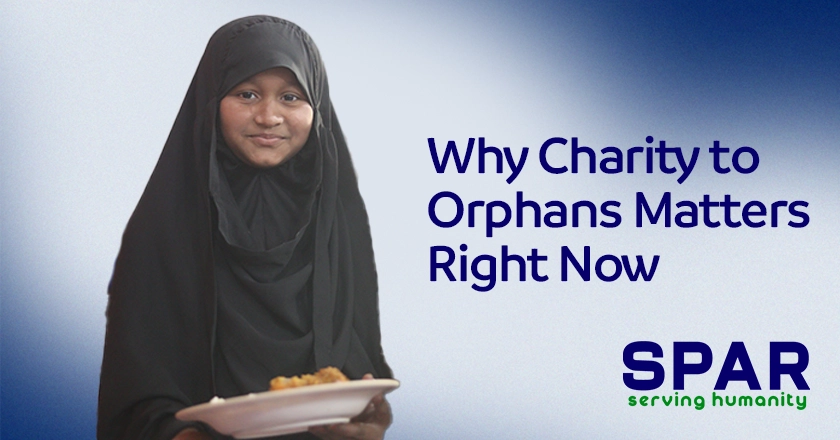
Orphan vulnerability doesn’t end with losing a parent. It compounds. Without stable support, children drop out of school, enter child labor, or fall into poverty that lasts generations. According to UNICEF Bangladesh, children in rural upazilas and Rohingya communities in Cox’s Bazar face some of the steepest risks of all. The Quran directly links orphan care to righteous character, placing it alongside salah and zakat as a mark of the believer. That’s not a coincidence. It’s a framework. At SPAR, our orphan sponsorship program works within that framework, giving children in Bangladeshi communities a reliable path forward, not just a one-time gift.
Key Facts About Charity to Orphans Most People Don’t Know
Not all orphans are parentless in the way most people picture. In Islamic law, a child whose father has died is considered an orphan, even if the mother is alive. This definition, drawn from classical scholars including An-Nawawi, shapes how Muslim charities design their programs. The Bangladesh Bureau of Statistics links paternal death directly to school dropout and income loss in rural households. In places like Kurigram and Rangpur, entire families shift into survival mode after losing the male breadwinner. Orphan sponsorship in these contexts isn’t charity in a loose sense. It’s structured, dignified, and traceable support that follows a child’s real needs over time.
What Does Charity to Orphans Actually Look Like on the Ground?
Charity to orphans isn’t just financial help. It covers school fees, food, medical care, and emotional support over months and years. According to UNICEF Bangladesh, children who lose a parent before age 10 face a far higher risk of dropping out of school before completing primary education. In Kurigram District, our team met Farida in March 2025. She was nine years old. Her father had died six months earlier. Her mother worked in the garment sector in Dhaka and sent remittances home. But school costs, books, and meals had already become too much. Consistent sponsorship changed her situation. Not overnight, but steadily.
What Sponsorship Actually Covers
Sponsorship isn’t a single transfer. It covers school registration, uniforms, and mid-year supply costs. It often includes a monthly food stipend. In rural Bangladeshi households, where daily food spending can run as low as $1 to $2 per person, even $30 a month shifts the family’s entire situation. Our field teams coordinate with local caregivers to track what each child needs. Support adjusts as the child grows. That kind of attention makes the difference between a child who stays in school and one who doesn’t.
Why Consistency Matters More Than Size
A large one-time gift can help. But it rarely fixes the underlying problem. Children’s needs don’t pause. School fees come every term. Hunger comes every day. Bangladesh Bureau of Statistics data shows that households headed by widows face income gaps that widen over the first three years after a loss. Small, steady support during those years keeps a child’s life on track. Real change here isn’t sudden. It comes from quiet, consistent effort. Season after season.
Common Misconceptions About Charity to Orphans
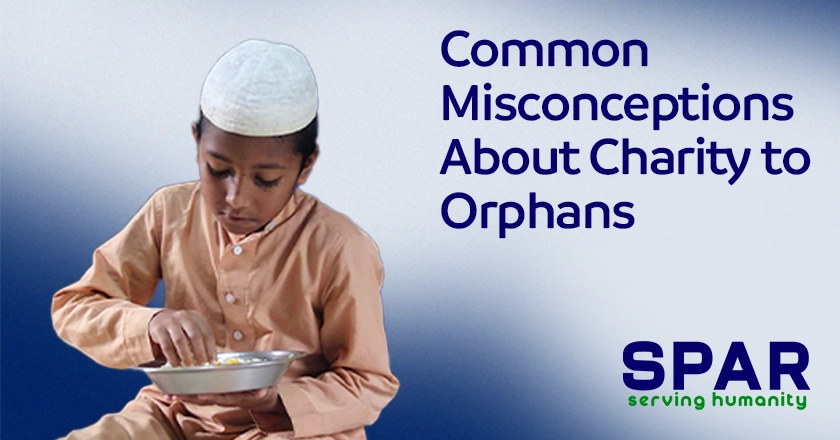
Many people assume charity to orphans means running an orphanage. That’s rarely the best model. UNICEF and child welfare researchers widely agree that children do better when they grow up in family settings, not institutions. Most orphan sponsorship programs now work through the child’s existing family network, usually a mother, aunt, or grandparent. The sponsorship supports the caregiver directly. This approach keeps siblings together. It keeps children connected to their communities and their faith. It’s less visible than a large building with a sign, but it’s more effective for the child’s long-term development.
Who Is Most Affected by Orphanhood in Bangladesh?
Children in rural upazilas, especially those in the northern flood zones, face the highest risk. Fathers in these areas often work in seasonal agriculture. When illness, accident, or flood-related loss takes them, families have no safety net. According to the Bangladesh Bureau of Statistics, households in Rangpur and Kurigram divisions record some of the country’s highest poverty rates. Rohingya children in Cox’s Bazar face an additional layer of vulnerability. Many have no legal documentation. That makes accessing any state support nearly impossible. Orphan sponsorship reaches children that formal systems often miss, because it operates through trusted local networks, not paperwork.
How Does Paternal Loss Connect to Child Marriage and Child Labour?
Paternal loss pushes families toward short-term survival decisions. Girls face pressure to marry early. Boys leave school to work. Both outcomes lock children into cycles that last a lifetime. UNICEF Bangladesh reports that child marriage rates climb sharply in households that lose a male income earner. In the Sylhet and Chittagong regions, this pattern is well documented. Charity to orphans works against that pressure. When a sponsorship covers school fees and basic food costs, the family doesn’t have to choose between survival and a child’s future. The teams working on this don’t make headlines. They show up, week after week.
What Charity to Orphans Actually Changes
Charity to orphans is not a single act. It is a sustained decision to stand between a child and the worst outcomes poverty brings. UNICEF Bangladesh estimates that children without a father face school dropout rates roughly double those of children in two-parent households. In Kurigram and Rangpur, where seasonal flooding destroys livelihoods year after year, that gap widens further. Orphan sponsorship covers the costs that push families toward desperate choices: school fees, food, and basic medical care. SPAR’s work in Bangladesh sits inside this gap. The teams move quietly, but the direction is clear.
Why Sustained Involvement Matters More Than One-Time Giving
A single contribution helps. But orphan welfare research consistently shows that consistent, multi-year support produces measurably better outcomes for children. A child who receives stable sponsorship through primary school has a far better chance of completing secondary education. According to the Bangladesh Bureau of Statistics, secondary school completion in rural upazilas remains below 50 percent for girls from low-income households. Sustained involvement changes that trajectory. It is not the size of the contribution that matters most. It is the consistency.
How Bangladeshi Communities Are Responding
Bangladeshi communities, both inside the country and in the diaspora, have long understood the religious weight of orphan care. The Prophet Muhammad (peace be upon him) himself was an orphan. That history lives in how local mosques organise, how families give, and how community trust networks form. Grassroots involvement, from local imams to overseas Bangladeshi donors, keeps programs like SPAR’s running between the big appeal seasons. The work does not pause when Ramadan ends.
Behind every child who stays in school is a long line of quiet decisions. Someone chose to keep giving. Someone in a field office chose to keep showing up. At SPAR, that consistency is the work. The situation for Bangladeshi orphans, and for Rohingya children in Cox’s Bazar with no legal status and no safety net, does not resolve on its own. It resolves because people stay involved.