


Widows and Orphans Charity: The People Behind the Need
Widows and orphans charity refers to organized support for women who’ve lost their husbands and children who’ve lost one or both parents. It’s one of the oldest forms of structured giving in human history. The United Nations estimates there are about 140 million orphans worldwide. In Bangladesh alone, millions of children grow up in households run by widowed mothers with no steady income. What sets this type of charity apart is its focus on long-term stability, not just emergency relief.
Why Widows and Orphans Charity Matters Right Now
Widowed mothers and parentless children sit at the sharpest edge of poverty. They lose income, social standing, and protection all at once. According to UNICEF, children raised without parental care face much higher risks of malnutrition, school dropout, and early labor. In Bangladeshi rural areas, a widow can lose her husband’s land rights within months of his death. That single loss pushes entire families below the line. Communities in Kurigram and Rangpur show this pattern clearly, where seasonal flooding already strains household income before loss compounds the pressure. SPAR’s orphan sponsorship program addresses exactly this gap, providing consistent support that reaches children and their caregiving mothers together.
Widows and Orphans Charity: What Most People Don’t Know
Most people picture orphan support as food aid. But research tells a different story. The World Bank links the absence of a male earner to a 30 to 40 percent drop in household income for Bangladeshi families in the first year after bereavement. Widows in rural upazilas often can’t access credit, inherit land, or enroll in formal employment programs. Their children don’t just go hungry. They often miss school, enter early marriage, or start work before age 12. Rohingya widowed women in Cox’s Bazar face this in an even sharper form, cut off from legal work and land. Sustainable widows and orphans charity has to address income, education, and dignity together.
What Widows and Orphans Charity Actually Gets Wrong
Most widows and orphans charity work focuses on food relief. Food matters. But food alone doesn’t break the cycle. According to the Bangladesh Bureau of Statistics, female-headed households earn about 40 percent less than male-headed ones on average. A widow in Kurigram doesn’t just need a meal. She needs a way to feed her children next month and the month after that. Effective charity bridges the gap between emergency aid and long-term stability. That means skills training, school enrollment support, and consistent income pathways. One-time donations help in the short term. Sustained programs change trajectories.
Why Food Aid Alone Falls Short
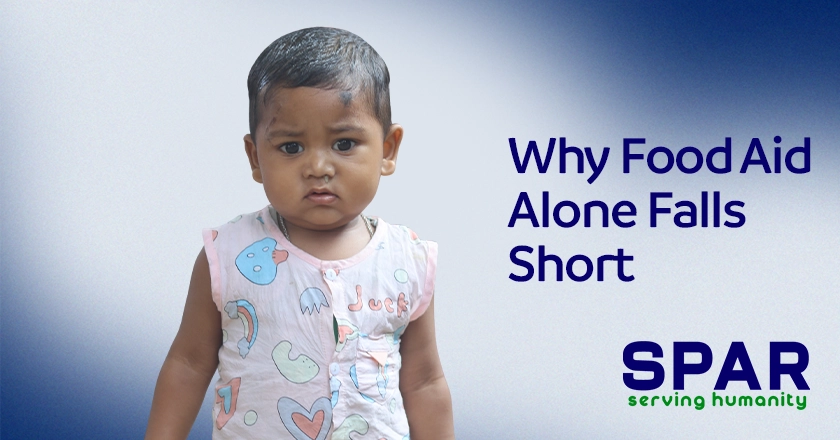
A bag of rice solves Tuesday. It doesn’t solve the school fees due in March, or the medical bill from last week. Rohingya widows in Cox’s Bazar camps face this reality every season. UNICEF Bangladesh data shows that children in food-insecure households are far more likely to drop out before grade five. When aid stops at food, children lose their educational window fast. The real damage isn’t hunger. It’s the closed door that follows.
What Orphans Actually Need at Each Age
Young children need stable caregiving, routine, and school access. Older children need skills they can use. A twelve-year-old boy in Rangpur who drops out to work loses years he can’t recover. A fourteen-year-old girl pulled into early marriage loses even more. Age-sensitive support changes what’s possible. Younger children need their mothers to be kept stable. Teens need structured learning pathways. That distinction matters more than most people realize.
Who Carries the Heaviest Load After Loss
Widows carry it. Not just grief. They carry every practical weight that was shared before. In rural Bangladeshi farming families, the husband often holds the land deed, the credit relationship with the local cooperative, and the harvest contacts. When he dies, all three can vanish within a season. According to World Bank research on South Asian poverty dynamics, households lose between 30 and 40 percent of income in the first year after a male breadwinner’s death. The woman absorbs that loss while also managing children, in-law pressure, and social isolation. This is who widows and orphans charity must reach first.
The Real Story From the Field
Our team visited Char Rajibpur, a low-lying char in Kurigram district, in February 2025. We met Nasrin, a woman in her thirties who had lost her husband to a riverbank collapse. She had four children under ten. The youngest had missed six months of school. Nasrin didn’t ask for food. She asked whether her children could still get an education. That question sits at the center of what widows and orphans charity must answer. Real change in places like Char Rajibpur is rarely sudden. It comes from small, sustained efforts, season after season.
How Consistent Support Differs From One-Time Aid
A single donation buys relief. A sponsorship buys time. Time lets a child finish the school year. It lets a widow rebuild credit. It lets a family avoid the decisions that create lasting harm, like pulling children out of school or selling land at distress prices. UNICEF estimates that keeping a child in school through secondary level can raise lifetime earnings by up to 10 percent per year of schooling. Widows and orphans charity that invests in education is, in effect, investing in the next generation’s income floor. That’s the difference between charity that helps and charity that heals.
What Widows and Orphans Charity Looks Like When It Works
Real widows and orphans charity does one thing well: it stays. A single act of giving matters. But staying, season after season, is what changes a child’s future. The Bangladesh Bureau of Statistics notes that female-headed households earn less and spend more on children’s health. That gap doesn’t close in a month. It closes when sustained support covers school fees, food gaps, and small emergencies. SPAR’s work in Bangladeshi communities focuses on this kind of steady presence. The goal is not to help once. The goal is to make the next crisis smaller.
What Sustained Support Actually Provides
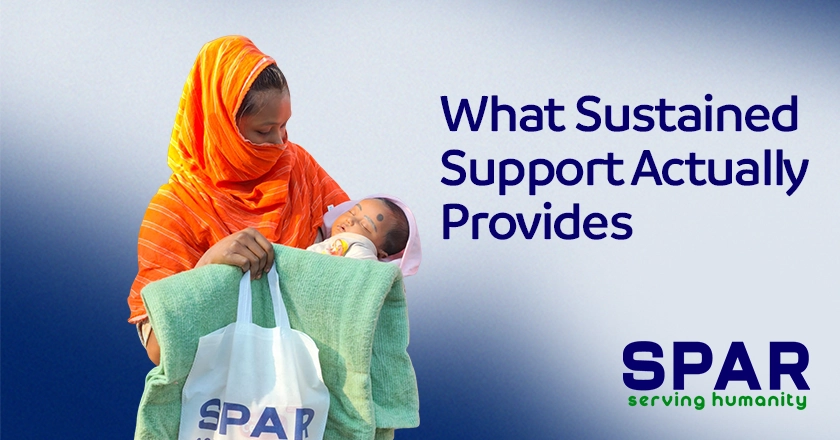
Consistent widows and orphans charity covers the gaps that one-time aid misses. It funds school uniforms in July. It covers medicine in October. It fills the food gap in March, before the harvest. UNICEF notes that children in female-headed households face higher dropout rates during lean seasons. Sustained support breaks that pattern. It lets a child like Nasrin’s youngest finish a full school year. Small, predictable support does more than large, unpredictable help.
Why Bangladesh Needs This Kind of Long-Term Focus
Bangladesh loses land to rivers every year. Families in Bangladeshi chars and coastal belts face repeated loss. A widow who rebuilds after one flood may lose the next season again. The Bangladesh Bureau of Statistics recorded significant increases in female-headed households in flood-prone districts over the past decade. Each loss sets recovery back by years. A charity that understands this cycle plans for it. SPAR’s field teams work in districts where this cycle repeats, building support that outlasts any single flood.
Behind every child who stays in school is a quiet line of decisions made by people far from the headlines. Nasrin’s question, whether her children could still get an education, is not unique to Char Rajibpur. It echoes across Bangladeshi chars, coastal villages, and urban slums. SPAR keeps working in these places because the need does not stop when the news does. See how this work continues →

