Muslim Orphan Charity: What It Is and Who It Truly Serves
Muslim orphan charity is organised giving that provides food, shelter, education, and care to children who’ve lost one or both parents. It’s rooted in Islamic obligation, not just goodwill. The UNICEF estimates that over 140 million orphaned children live worldwide. Muslim-led charities focus specifically on the most vulnerable, including children in conflict zones, flood-hit regions, and extreme poverty. Right now, demand far outstrips what governments can provide.
Why Muslim Orphan Charity Matters Right Now
Orphaned children face compounding crises. Without a parent’s income, they drop out of school first. They go hungry earliest. In Bangladesh, the Bangladesh Bureau of Statistics reports that child poverty rates in rural upazilas like Kurigram remain among the highest in the country. Monsoon floods and economic hardship leave families without any safety net. A child who loses a parent in that context doesn’t just grieve. They lose their future. Muslim orphan charity steps in at that exact point, with structured, sustained support that lasts beyond one meal or one visit. SPAR’s orphan sponsorship program works directly in these communities, providing consistent care where it’s needed most. That consistency is what separates a sponsor from a stranger.
Key Facts About Muslim Orphan Charity Most People Don’t Know
Islam places caring for orphans among its highest acts. The Prophet Muhammad (peace be upon him) said that the one who sponsors an orphan will be close to him in paradise, narrated in Sahih al-Bukhari. But the act isn’t symbolic. It’s practical and structured. UNICEF data shows that children without parental care are significantly more likely to experience malnutrition, child labour, and early marriage. In Bangladesh, Rohingya children in Cox’s Bazar camps face all three at once. Muslim orphan charity addresses this through kafala, a system of guardianship and sponsorship rooted in Quranic principles. It’s not adoption in the Western legal sense. It’s a protected, ongoing commitment to a child’s full welfare, and it carries spiritual weight that motivates long-term giving across the global Muslim community.
What Most People Get Wrong About Muslim Orphan Charity
Many donors assume sponsoring an orphan means covering food alone. But the real gaps are education, health care, and emotional stability. According to UNICEF, children without parental care face much higher rates of school dropout and child labour than children in stable families. In Bangladesh, this plays out in the garment districts of Dhaka, where young children fill labour gaps left by absent parents. Muslim orphan charity, done well, addresses all of these together. It doesn’t treat hunger as separate from schooling. It treats the child as a whole person. That’s what makes it different from a one-time food drive.
Who Are the Children Muslim Orphan Charity Serves?
The children most in need aren’t always visible. Many live with elderly grandparents or distant relatives who can’t afford school fees. According to the Bangladesh Bureau of Statistics, rural upazilas in Rangpur and Kurigram have some of the country’s highest child poverty rates. Orphaned children there often leave school before age ten. In Cox’s Bazar, Rohingya children face an even harder situation. Many have no birth certificates. Without documentation, they can’t access public schooling at all. Muslim orphan charity reaches children the formal system misses, because it operates through community trust, not government paperwork.
The Age Group That Gets Left Behind
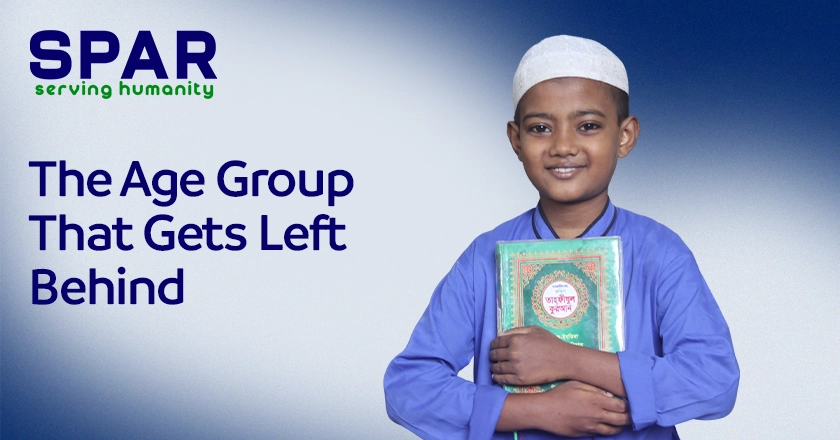
Children between eight and twelve often fall through the cracks. Younger children attract attention. Teenagers sometimes find informal work. But children in this middle range are old enough to be overlooked and young enough to still be shaped. Our team in Kurigram in early 2025 met a boy named Rahim, nine years old, who had been out of school for two years after losing both parents. A sponsorship placed him back in class within three months. That window matters. Once a child falls behind by two years, catching up becomes much harder.
How Root Causes Drive the Need for Muslim Orphan Charity in Bangladesh
Poverty alone doesn’t create orphans. But it determines what happens to them after. In Bangladesh, the leading causes of parental death include waterborne illness, road accidents, and complications during childbirth. The World Health Organization notes that preventable deaths among working-age adults remain far too high in low-income countries. When a father in a farming family in Sylhet dies from an untreated infection, the children don’t just lose a parent. They lose the income that kept them in school. Muslim orphan charity steps into that gap. It can’t reverse a death. But it can prevent the chain of losses that follow.
What Real Sponsorship Looks Like on the Ground
Sponsorship is not a distant transaction. It’s a structured relationship between a donor and a specific child. SPAR’s approach ties monthly support, around $30 to $50 per child, to concrete milestones: school enrollment, health checkups, and regular welfare visits by field staff. Families in Chittagong and Rangpur report that consistency matters as much as the money. Knowing support will arrive next month allows a guardian to plan. It lets a child stay in school without fear of being pulled out mid-term. The teams doing this work don’t make headlines. They show up, month after month, in the same villages, checking on the same children.
What Muslim Orphan Charity Means in Practice
Muslim orphan charity is not a single act. It’s a sustained commitment that runs through Bangladesh’s hardest-hit communities. UNICEF estimates that Bangladeshi children in rural upazilas face some of the highest dropout rates in South Asia, and poverty is the leading cause. Sponsorship programs like SPAR’s create a direct link between a global donor and a specific child. That link funds school fees, health visits, and a guardian’s ability to plan ahead. The families served in Kurigram and Chittagong don’t need grand gestures. They need consistency.
Why Long-Term Commitment Changes Outcomes
Short bursts of aid rarely hold. A child re-enrolled in school in January can drop out again by March if the support disappears. SPAR’s field teams return to the same villages each month. They track each child’s enrollment, nutrition, and wellbeing. This ongoing contact builds trust with guardians. It also catches problems early. A child skipping school for two weeks is a sign, not a statistic. Regular visits turn that sign into action before a small problem becomes permanent.
What Donors Across the World Are Choosing
Bangladeshi orphan sponsorship costs around $30 to $50 per child each month. That range covers school fees, health checks, and welfare visits in areas where daily wages can fall below $5. Global Muslim donors are choosing programs that show this kind of structure. They want to know their support reaches a named child, not a general fund. Islam places orphan care at the center of communal duty. The Prophet Muhammad (peace be upon him) described the one who cares for an orphan as close to him in the next life. That closeness draws donors back, month after month.
Behind every child who stays in school is someone who decided to keep showing up. Not once. Repeatedly. SPAR’s work in Bangladeshi communities continues because people around the world made that choice. The field teams in Kurigram and Rangpur show up because donors do. That chain, quiet and unglamorous, is what actually changes a child’s future. See how this work continues.