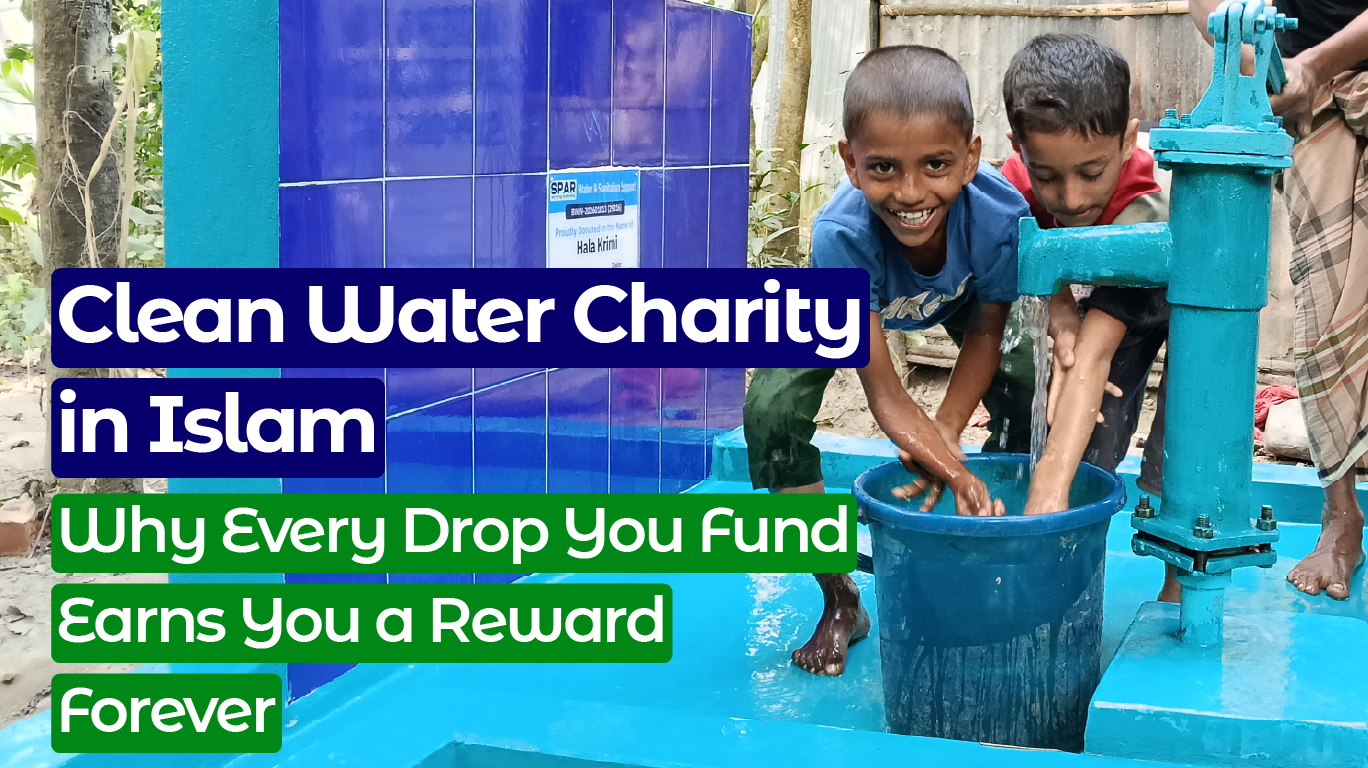
Clean Water Charity in Islam: Why Every Drop You Fund Earns You a Reward Forever
A clean water charity raises funds to build wells, filters, and water systems in places where safe water is out of reach. These groups work in specific communities — not governments, not corporations. They fill the gap between need and access. And that gap is still enormous.
Why Clean Water Charity Matters Right Now
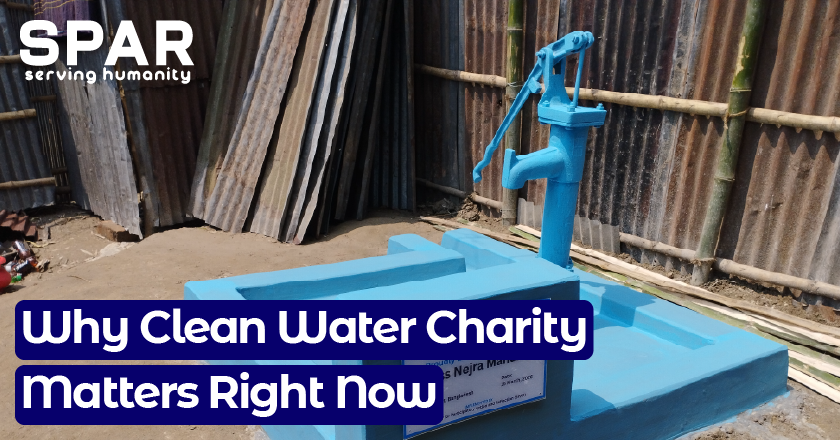
About 2.2 billion people lack safe drinking water at home, according to WHO and UNICEF’s Joint Monitoring Programme. Unsafe water kills more children under five than malaria and AIDS combined. Clean water charities don’t just dig wells — they cut child death rates in the hardest-to-reach places.
Clean Water Charity by the Numbers
The scale is hard to hold in your head. UNICEF estimates that a child dies every two minutes from a water-linked disease. In Bangladesh alone, over 40 million people still rely on water sources that carry arsenic, bacteria, or both. That’s not a developing-world problem. That’s a solvable one.
How Does a Clean Water Charity Actually Work?
A clean water charity surveys a community, identifies the water source, builds or repairs the infrastructure, and then trains locals to maintain it. The full cycle — from site visit to running water — takes three to eighteen months, depending on terrain and funding.
What Happens at the Site Visit?
Field teams test water sources for arsenic, bacteria, and salinity. In Bangladesh, arsenic is the hidden killer. It has no smell. No color. Testing is the only way to know.
Who Builds the Infrastructure?
Local contractors build almost everything. This keeps costs low and skills inside the community. Outside engineers often supervise — but the hands doing the work are usually from the same village.
Who Manages It Long-Term?
Community water committees take over after handover. WASH studies show that local ownership is the single biggest factor in whether a water point stays functional after five years.
Types of Clean Water Charity Projects
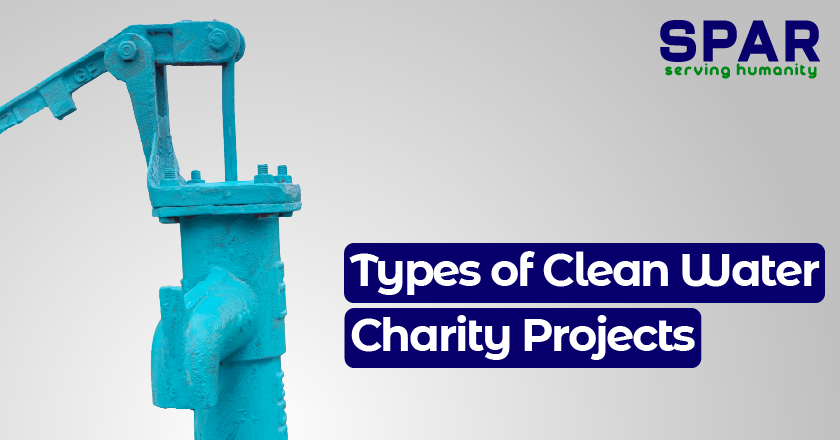
Not every clean water charity does the same thing. Projects range from deep tube wells to biosand filters to rainwater harvesting. The right solution depends on the soil, the season, and how many families need to share it.
Deep Tube Wells
A deep tube well reaches water below the arsenic-contaminated layer — usually below 150 meters. The British Geological Survey found that deep aquifers in Bangladesh carry far less arsenic than shallow ones. One well can serve 50 families.
Biosand Filters
Biosand filters remove bacteria and sediment from surface water. They cost around $30 to $60 per unit. A family can use one for ten years with almost no maintenance.
Rainwater Harvesting Systems
In coastal zones, salinity makes groundwater undrinkable for months. Rainwater systems collect and store monsoon rain. Some households go from walking two hours for water to stepping outside.
Who Is Most Affected by the Clean Water Crisis?
Children under five, women in rural areas, and communities near rivers or coastal belts bear the most risk. These groups rarely appear in national water statistics — but they make up the majority of those without safe access.
Children Under Five
Contaminated water causes diarrhea. Diarrhea causes dehydration. For small children, this kills fast. UNICEF reports that 1,400 children die every day from water-related illnesses—most of them under five.
Women and Girls
Women and girls collect water in most of Bangladesh’s rural households. A 2023 World Bank report found that women spend an average of 40 minutes per day on water collection in water-scarce regions. That’s time taken from school, work, and rest.
Coastal and Char Communities
Chars are river islands. They flood. They shift. Permanent infrastructure is nearly impossible to build there. But people still live there — and they still need water.
Common Misconceptions About Clean Water Charity
Many people assume clean water problems are solved once a well is dug. They’re not. A broken pump, a dry season, or a flood can undo years of progress in days.
“One Well Fixes the Problem”
One well can break. One well can dry up. One well serves one spot — not an entire district. Real water security needs multiple sources, regular maintenance, and trained locals who know how to repair equipment without waiting for outside help.
“Clean Water Charity Is Just About Thirst”
Safe water isn’t only about drinking. It prevents disease, keeps children in school, and lets women spend time on income instead of water collection. The ripple effects are wide. A 2016 study in PLOS ONE found that safe water access raised school attendance for girls by up to 15% in sub-Saharan Africa — a pattern researchers also see in South Asia.
“It’s a Government Job”
Governments in low-income countries often can’t reach every remote village. Char islands, drought-prone northern districts, and flood-prone southern belts get
What Clean Water Charity Looks Like in 2026
Access to clean water is still out of reach for around 703 million people worldwide, according to UNICEF. The good news: field-tested methods now exist to change that — and organizations working in hard-to-reach areas like Bangladesh’s char islands are proving it can be done. See how this work continues →
Why Sustained Work Matters More Than One-Off Projects
A single well won’t hold a community. Long-term water security needs trained locals, spare parts on hand, and regular check-ins. That’s the difference between a project and a program.
How to Spot a Clean Water Charity Worth Trusting
Look for field transparency — photos from actual sites, names of districts, measurable outcomes. Any org worth trusting publishes what worked and what didn’t.
Behind every cleaner water source is a team that kept showing up — long after the digging stopped. At SPAR, our work in Bangladesh runs on that same idea: slow, steady presence in places most people never see.