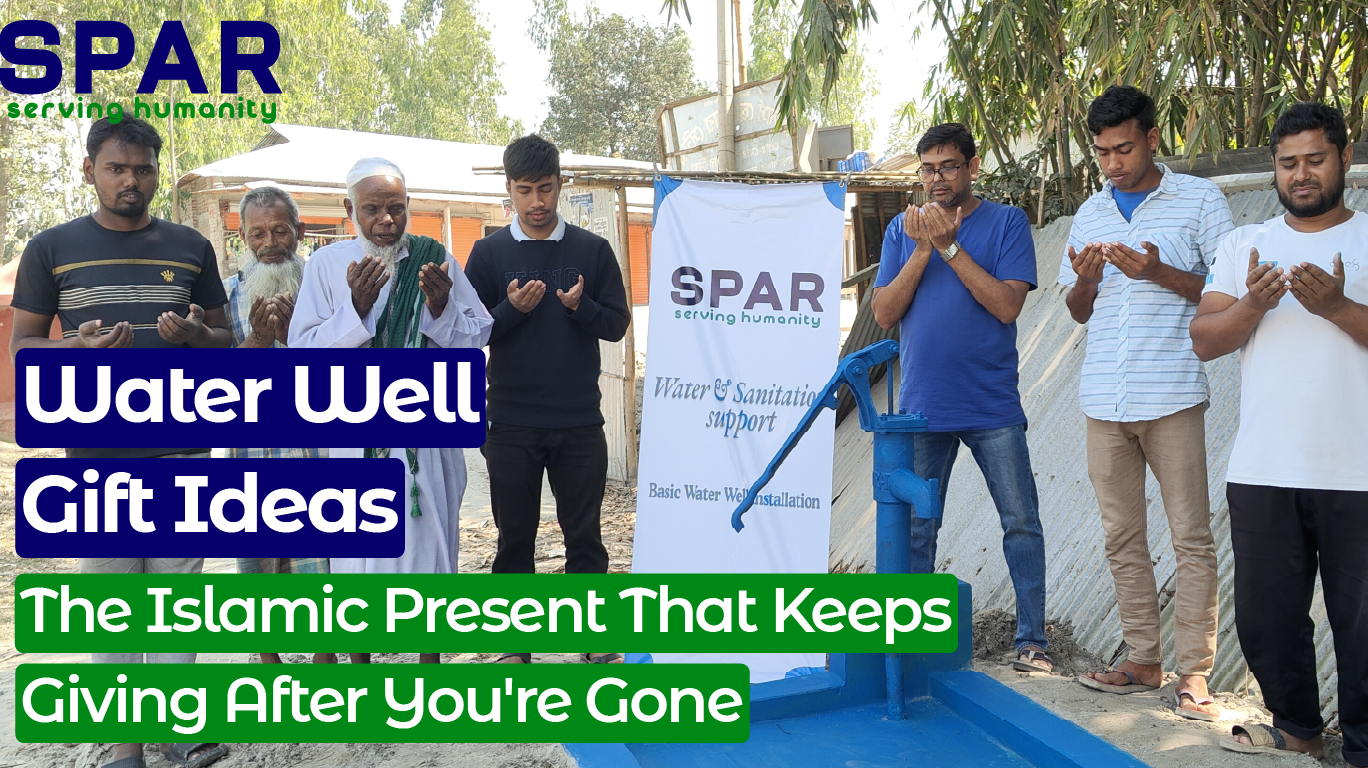
Water Well Gift Ideas: The Islamic Present That Keeps Giving After You’re Gone
A water well gift is a charitable contribution that funds the drilling or construction of a water well in a water-scarce community. It gives families direct, long-term access to clean water — often for the first time. One well can serve hundreds of people for decades.
Why a Water Well Gift Matters Right Now
Clean water is still out of reach for hundreds of millions of people. UNICEF estimates 703 million people lack basic drinking water access, and most of them live in South and East Asia or Sub-Saharan Africa. A single well changes that for an entire village — not just for one season, but for a generation.
Water Well Gift: What Most People Don’t Know
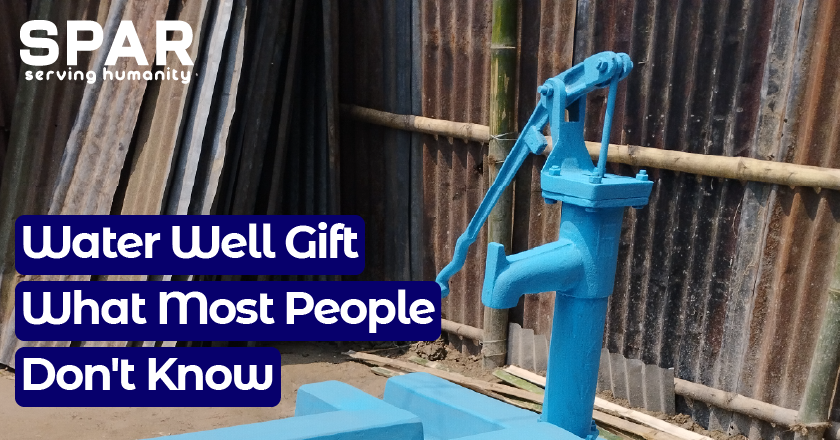
Most donors don’t know a well can cost as little as $300 to $800 USD in high-need regions like rural Bangladesh. According to the World Health Organization, every $1 USD spent on clean water access returns about $4 USD in saved healthcare costs. That’s a measurable return — not just goodwill.
What Types of Water Well Gifts Exist?
A water well gift isn’t one fixed thing. It can fund a hand-dug well, a tube well, or a deep borehole — each suited to different ground conditions and population sizes.
Hand-Dug Wells
Hand-dug wells reach shallow groundwater — usually 15 to 30 feet down. They cost less but need more upkeep. In flat, low-lying areas like the chars of northern Bangladesh, they fill fast during the wet season.
Tube Wells
Tube wells push a narrow pipe deep into the earth. They’re the most common well type in rural South Asia. A single tube well costs about $300 to $500 and can serve 200 to 300 people daily.
Deep Boreholes
Boreholes go deeper — sometimes past 300 feet. They reach clean water below arsenic-contaminated layers. UNICEF and WHO jointly recommend boreholes in arsenic-affected zones across Bangladesh.
Who Is Most Affected by the Water Crisis?
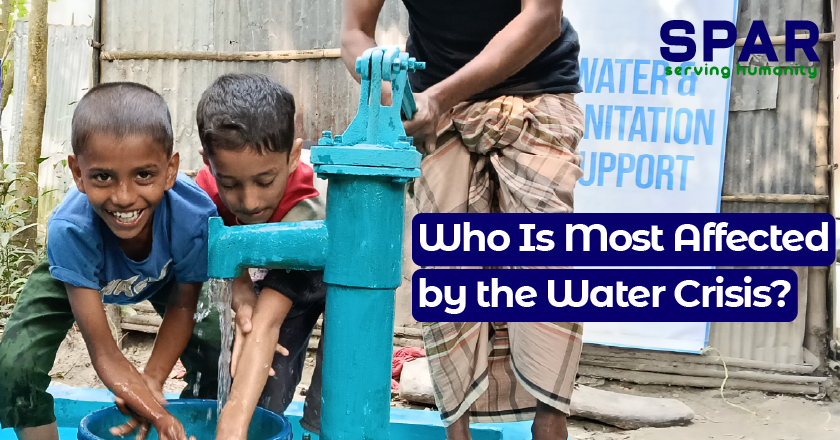
Children under five bear the heaviest burden. The WHO reports that unsafe water causes about 485,000 diarrheal deaths every year — most of them children in low-income countries.
Women and Girls
Women and girls collect most of the world’s water. UNICEF data shows they spend 200 million hours a day on this task globally. A water well gift near a village cuts that walk — and frees girls to go to school instead.
Farming Families in Flood-Prone Regions
Floods destroy surface water sources fast. In Bangladesh’s haor wetlands and char islands, families lose clean water access for months after each flood. A properly cased well survives flooding that destroys open ponds.
The Elderly
Older people can’t walk far to fetch water. When a well sits inside a community — not a kilometer away — it reaches those who need it most but can least afford the journey.
Common Misconceptions About a Water Well Gift
Many people think a water well gift is a one-time fix — drill it, forget it. But wells need maintenance, spare parts, and a community that knows how to manage them. Without that, many wells go dry or break within five years.
“One Well Solves Everything”
A well solves access. But access alone doesn’t guarantee safety. Water can still carry bacteria if the well head isn’t sealed or the apron isn’t built right. Good well programs pair drilling with hygiene training — always.
“It’s Only Useful in Deserts”
Bangladesh gets some of the world’s heaviest rainfall. But dirty floodwater, arsenic in the soil, and broken infrastructure mean millions still can’t get safe water. A water well gift matters just as much in a wet country as a dry one.
“Small Donations Don’t Add Up”
A $50 contribution to a well fund moves real material. Our team in Kurigram District has seen $40 to $60 micro-contributions pool into a fully built tube well within weeks. Small is not small when it’s collected well.
Real Impact: One Well, One Village, One Change
In March 2025, our team visited Char Rajibpur — a strip of land in Kurigram District surrounded by the Brahmaputra River. We met Fatema, a mother of three. She’d been walking 40 minutes each way to fetch water from a shared pond used by livestock.
What Changed After the Well
Two weeks after the well was installed, Fatema’s youngest stopped having stomach pain. She didn’t link it to the water at first. Our field worker did. Contaminated pond water had been making her child sick for over a year.
Why This Matters Beyond One Family
Fatema’s neighbors — 11 families on that char — now share the same well. None of them had safe water before. The teams working on this don’t make headlines. They show up, week after week.
What a Water Well Gift Actually Changes
A water well gift removes a daily burden. Families stop losing hours to water collection. Children miss fewer school days. Waterborne illness drops. UNICEF reports that access to clean water cuts diarrheal disease deaths by up to 65%. That’s the real shift — not a gesture, but a structural change. See how this work continues →
How Long Does the Change Last?
A tube well in rural Bangladesh lasts 15 to 25 years with basic care. That’s one gift stretching across a generation. Communities trained in maintenance keep them running long after the installation team leaves.
Who Feels It First?
Women and children feel it first. They carry the water burden in most households. When the well arrives, their hours open up. Girls return to school. Mothers rest. The shift is quiet — but it’s real.
Behind every working well in Char Rajibpur is a long line of people who decided this was worth their continued attention. At SPAR, we show up week after week in Bangladesh’s hardest-to-reach chars — long after the photos stop circulating. More on our Bangladesh work →