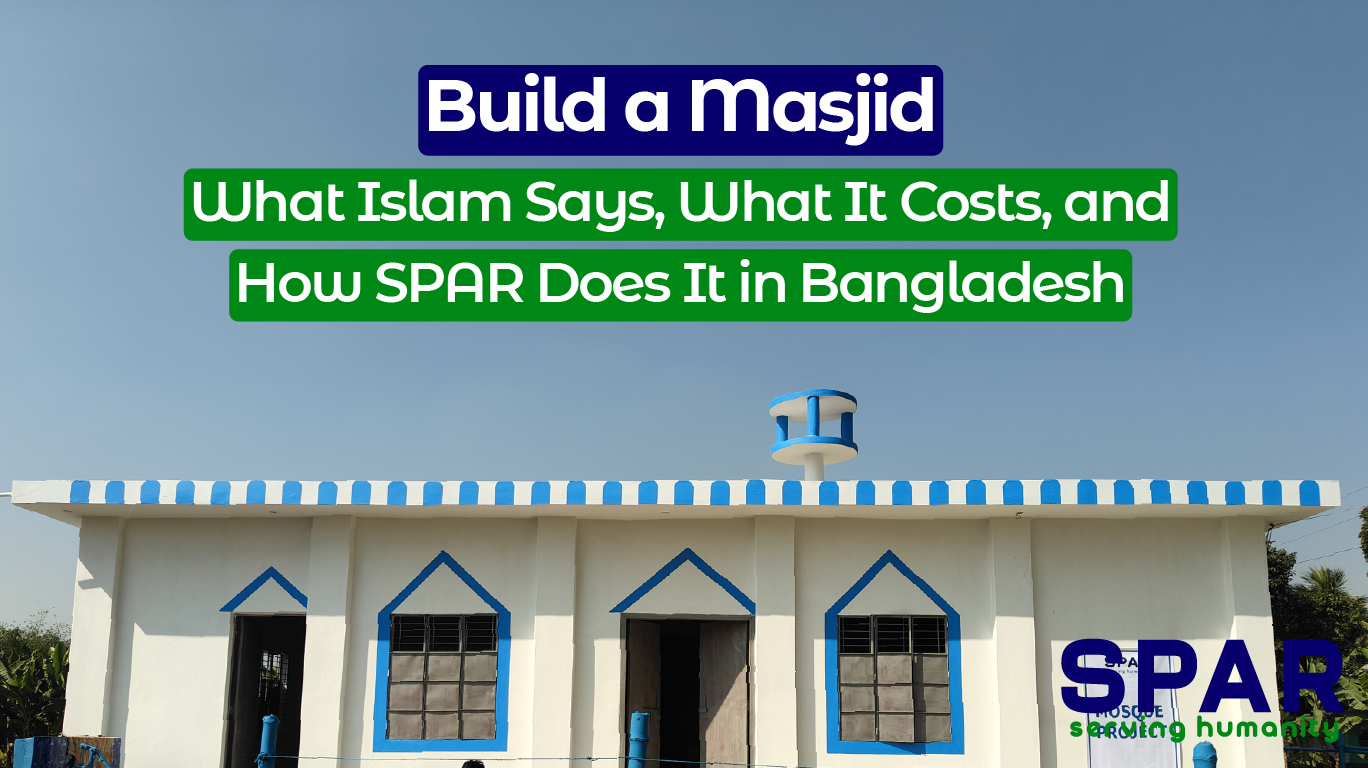
Build a Masjid: What Islam Says, What It Costs, and How SPAR Does It in Bangladesh
Building a masjid means constructing a dedicated space for Muslim worship and community life. It’s not just a building — it’s a waqf, a permanent religious endowment that can’t be sold or repurposed. Once built for Allah, it stays that way.
Why Building a Masjid Matters Right Now
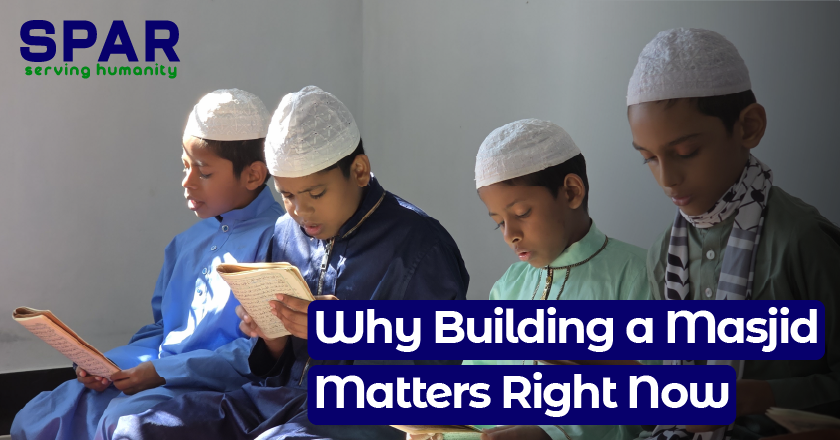
The global Muslim population will hit 2.2 billion by 2030, according to Pew Research Center. Many fast-growing Muslim communities — especially in South and Southeast Asia — don’t have enough prayer spaces. That gap is widening every year.
Build a Masjid: What Most People Don’t Know
Most donors think a masjid project ends at the walls and roof. But the Prophet Muhammad ﷺ taught that a masjid serves the whole community — education, welfare, and shelter included. Islamic Relief’s infrastructure data shows that masjids anchoring community programs reach 3–5 times more people than standalone prayer halls.
What Does It Cost to Build a Masjid?
Costs vary widely by country and size. A small masjid in rural Bangladesh costs around $15,000–$40,000. A mid-size urban masjid in the UK or North America can reach $500,000–$2 million. The Masjid Development Foundation estimates land alone accounts for 30–50% of total project costs in cities.
What Drives the Price Up?
Land is the biggest factor. After that, materials, labor, and specialist finishes — tiling, mihrab carving, minaret work — add up fast. Most first-time project teams underestimate finishing costs by 20–30%.
What’s the Cheapest Way to Start?
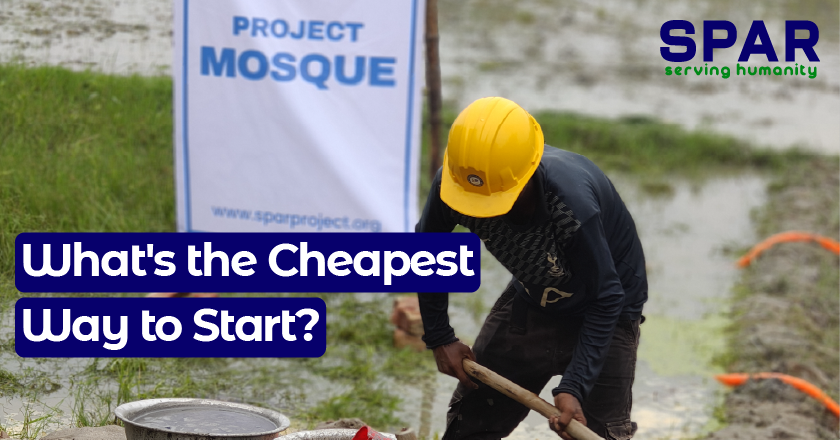
Start small. A single-room prayer hall on donated or waqf land can serve dozens of families for under $10,000. Many lasting masjids began this way — built in phases, expanded as the community grew.
What Hidden Costs Do Most Teams Miss?
Permits, utility connections, and ongoing maintenance rarely appear in initial budgets. UN-Habitat’s guidance on community buildings flags that running costs over ten years often match or exceed the original build cost.
Common Misconceptions About Building a Masjid
Many people think building a masjid is a single act — fund it, build it, done. But Islamic scholarship treats a masjid as a living trust. It needs governance, upkeep, and community ownership to function as the Prophet ﷺ intended.
“Any Building Can Become a Masjid”
Not quite. Once land is declared waqf for a masjid, it can’t be sold, swapped, or repurposed — even if the structure falls. Scholars like Ibn Uthaymeen clarified that the waqf declaration makes the land permanently dedicated, regardless of what stands on it.
“Bigger Means Better”
Size doesn’t equal reward. A small masjid that teaches Quran, feeds the poor, and runs a basic clinic outperforms an empty grand hall. The Prophet ﷺ said: *”Whoever builds a masjid for Allah, Allah will build for him something like it in Paradise”* — the hadith mentions sincerity, not size (Sahih al-Bukhari, 450).
“The Reward Ends When Construction Ends”
It doesn’t. Sadaqah jariyah — ongoing charity — means every prayer, every lesson, every act of worship inside that masjid earns reward for the original founders. That continues after death. Scholars of hadith call this one of the most durable forms of giving in Islam.
Who Needs New Masjids Most?
Rural Muslim communities in South Asia face the biggest gap. UNICEF’s 2023 community infrastructure data shows that in low-income rural areas, shared community spaces — including masjids — are under-resourced by a factor of three compared to urban centers.
Char Communities in Bangladesh
Chars are river islands that shift with flooding. They’re cut off for months at a time. Our team visited Gaibandha District in March 2025 and met Rahim, a 60-year-old farmer who walks 45 minutes through mud to reach Friday prayer. His char has 400 Muslim families and no masjid. Communities like these are slowly building — but the work takes years, not months, and depends on quiet, consistent support from people far from the problem.
First-Generation Muslim Communities Abroad
Muslim families in new diaspora communities — parts of Canada, Germany, and Australia — often pray in rented halls or converted garages for decades before a permanent masjid appears. Pew Research data shows that community cohesion drops when worship spaces are unstable or impermanent.
Rural South and Southeast Asia
Bangladesh, Indonesia, and Pakistan each have thousands of villages with mosques in poor repair or no mosque at all. Indonesia alone has over 800,000 registered masjids — but many are structurally unsafe, according to Indonesia’s Ministry of Religious Affairs.
What to Know Before You Build a Masjid
Planning matters more than money. Communities that map land ownership, secure legal permits, and agree on governance before breaking ground finish faster and argue less. The SPAR team’s work in Bangladesh shows this clearly — preparation cuts delays by months.
How Much Land Does a Masjid Need?
A small masjid serving 100 worshippers needs roughly 1,500–2,000 square feet of floor space. Land costs vary by region, but in rural Bangladesh that can mean as little as $2,000–$5,000 for a plot. Urban builds in South Asia or diaspora communities in the West cost far more.
What Ongoing Costs Should Communities Plan For?
A masjid isn’t finished at the ribbon-cutting. Utilities, an imam’s stipend, basic maintenance — these run $3,000–$8,000 per year for a small rural masjid. Communities that plan these costs upfront keep their masjid open. Those that don’t often close within a decade.
Behind every masjid that stays open is a long line of people who chose to stay involved after the build was done. At SPAR, we see that patience at work every month in Bangladesh’s most isolated communities — and the work keeps going.