Muslim Zakat Charity: What It Is, Who Owes It, and Where It Goes
Muslim zakat charity is the annual act of giving a fixed share of wealth — 2.5% — to those who need it most. It’s one of Islam’s Five Pillars, not a voluntary gift. Zakat has been obligatory since 622 CE. Every Muslim who holds wealth above the nisab threshold for a full lunar year must pay it. In 2026, that nisab sits at roughly $450 USD in silver or $5,000 USD in gold.
Why Muslim Zakat Charity Matters Right Now
Poverty doesn’t wait. And in 2026, the need has never been clearer. The World Bank estimates that around 700 million people still live on less than $2.15 USD a day. Zakat is one of the few giving systems in the world built to reach them directly — no middlemen, no bureaucracy, no delay. In Bangladesh alone, where SPAR works, monsoon floods and rising food costs push millions of families to the edge each year. Zakat channels real money — from everyday Muslims worldwide — to the eight categories of people Islam names as eligible. It’s not charity in the loose sense. It’s a structured transfer of wealth, designed to shrink the gap between those who have enough and those who don’t.
Muslim Zakat Charity by the Numbers
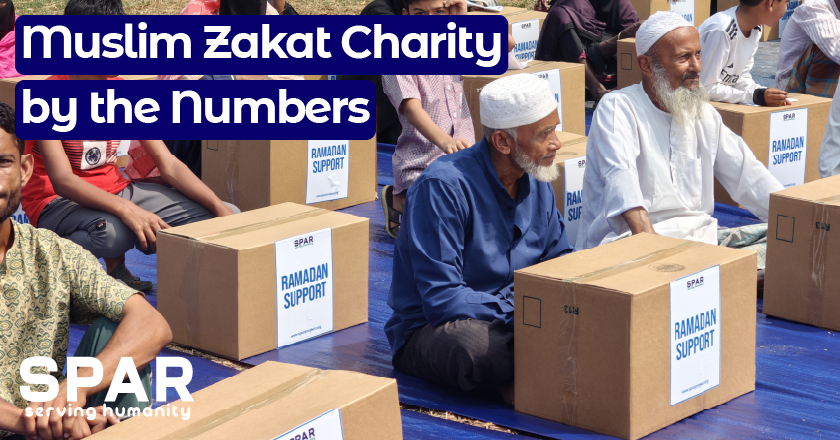
Global Muslims give an estimated $300 billion USD in zakat each year, according to the Islamic Development Bank. But most of it never reaches the poorest communities. Studies show that informal, untracked giving misses the most isolated families — those in flood-prone districts, remote villages, and urban slums. In Bangladesh, our team has seen families in Sylhet and Kurigram go without food for days during lean seasons — not because zakat wasn’t given, but because it didn’t reach them. The eight categories of zakat recipients defined in Surah At-Tawbah (9:60) include the poor, the indebted, and those who can’t meet basic needs. A single zakat payment of $50 USD — given through a trusted channel — can cover a family’s food costs for a full month in many parts of rural Bangladesh.
Who Receives Zakat — and Why It Matters
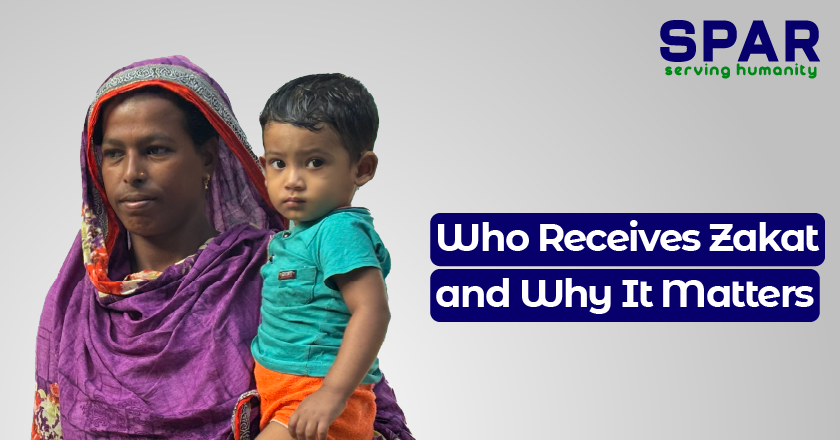
Islam names eight categories of zakat recipients in Surah At-Tawbah (9:60). The poor and the destitute come first. Then come those in debt, travelers stranded without means, and workers who collect and distribute zakat. Each category reflects a real crisis — not a vague need. In Bangladesh, most recipients fall into the first two groups. Families in Sylhet and Rajshahi often carry debt from a single bad harvest. One missed season can trap a family for years. Zakat — properly distributed — breaks that cycle before it locks in.
The Difference Between “Poor” and “Destitute”
Islamic scholars draw a clear line here. The poor own some assets but can’t cover basic needs. The destitute own almost nothing at all. According to An-Nawawi, both qualify — but the destitute take priority. In Bangladesh’s char lands — river islands that flood yearly — destitute families often have no land title and no formal address. That makes them invisible to most aid systems. A Muslim zakat charity that works in these areas must go looking. The families won’t show up on a list.
Debt as a Zakat Category
Many donors don’t know this. Zakat can go to people crushed by debt — not luxury debt, but survival debt. In rural Bangladesh, families borrow at high interest rates to buy food during lean months. The World Bank estimates that over 1.4 billion people globally lack access to formal credit. Informal lenders fill that gap — at a steep cost. A zakat payment of $50 to $80 can clear a small debt and free a family from a cycle that can last generations.
Common Mistakes Muslims Make When Giving Zakat
Most Muslims give zakat with good intent. But intent alone doesn’t guarantee the money reaches those who need it most. Two common mistakes undercut the impact of even generous giving. The first is giving only to people you know. The second is giving late — after Ramadan peaks — when prices are already high and the need has shifted. According to Islamic Finance research, most informal zakat moves in the last ten days of Ramadan. Families in need before that window go without.
Giving Only Within Your Network
This is natural. But it often means zakat circulates within middle-income communities — not down to those with nothing. Scholars including Ibn Uthaymeen have noted that zakat must reach those who truly qualify. Giving to a neighbour who is comfortable, while genuinely poor families go unserved, misses the purpose. A trusted Muslim zakat charity conducts needs assessments. It identifies families by income, debt level, and vulnerability — not by proximity to the donor.
Real Impact: What Zakat Looks Like on the Ground
In March 2024, our team visited Lalpur — a small market town in Natore District, Bangladesh. We met Fatema, a widow with three children and no income since her husband died the previous monsoon. She had borrowed $30 to buy rice in December. By March, the debt had grown to $80 with interest. A single zakat disbursement cleared her debt and covered two months of food. She didn’t need a programme. She needed one payment, directed correctly. That’s what a functioning Muslim zakat charity delivers — not scale, but precision. Communities like Lalpur are slowly turning this around, but the change takes years, not months, and depends on quiet, consistent support from people far from the problem. See how this work continues →
What This Means for You
Zakat works when it moves with precision. The Quran names eight categories of eligible recipients — and scholars have spent centuries refining how each one applies. That structure exists for a reason. According to Zakat House Kuwait data, over 40% of zakat collected globally goes unclaimed by its rightful recipients due to weak distribution systems. A credible Muslim zakat charity bridges that gap. It calculates nisab correctly, verifies eligibility, and puts funds where Islamic law says they belong — not where it’s convenient.
How Nisab Affects What You Owe
Nisab changes with silver and gold prices. As of early 2025, the silver nisab sat around $450, while the gold nisab exceeded $5,000. Most scholars recommend using the silver nisab — it captures more donors and reaches more people in need. Your Muslim zakat charity should publish its nisab threshold and update it each lunar year. If it doesn’t, that’s a gap worth asking about before you calculate.
Why Bangladesh Needs Consistent Zakat, Not One-Time Gifts
Bangladesh ranks among the world’s most flood-affected countries. UNICEF estimates that 20 million people face acute poverty in Bangladesh’s northern and coastal districts. Seasonal floods reset progress. A family that climbs above the zakat threshold in March can fall below it again by September. One payment helps. But recurring, structured zakat — distributed through a charity that tracks the same families year over year — is what creates lasting change. That’s the standard worth holding any Muslim zakat charity to.
Behind every quiet change in a place like Lalpur is a long chain of decisions — to verify, to distribute, to return the following year. At SPAR, our team works in the districts that aid budgets often skip. The work is slow. The needs are real. And the families we meet aren’t waiting for a big announcement — they’re waiting for the next disbursement to arrive on time.