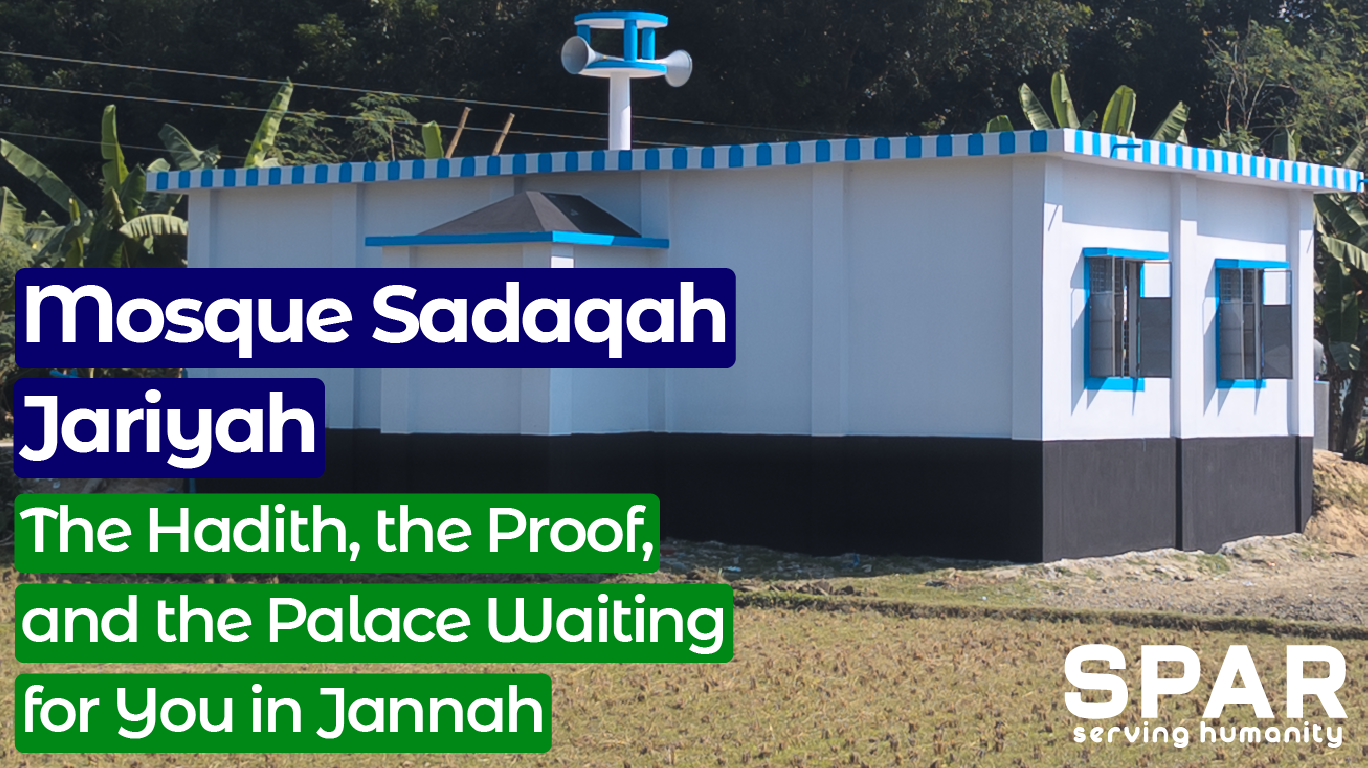
Mosque Sadaqah Jariyah: The Hadith, the Proof, and the Palace Waiting for You in Jannah
Mosque sadaqah jariyah is a gift to a mosque that keeps generating spiritual reward after the donor’s death. Unlike regular charity, it doesn’t end when the money runs out — the reward flows as long as the mosque serves its community. Scholars trace this concept to a hadith in Sahih Muslim. It applies to any Muslim donor, anywhere in the world. And in 2026, millions of mosques in underserved regions still need this kind of lasting support.
Why Mosque Sadaqah Jariyah Matters Right Now
The Prophet Muhammad ﷺ named ongoing charity — sadaqah jariyah — as one of three deeds that continue after death (Sahih Muslim, Book 13, Hadith 1631). A mosque is one of the clearest examples scholars cite. It teaches, shelters, and unites a community for decades. In Bangladesh alone, the UN estimates that over 30 million people in rural areas lack access to basic religious and educational infrastructure — including functioning mosques. Giving toward a mosque in a place like Sylhet or Cox’s Bazar doesn’t just fund bricks. It funds every prayer, every lesson, every person who finds refuge there. That’s why our team at SPAR sees mosque sadaqah jariyah as one of the highest-impact gifts a Muslim donor can make.
Mosque Sadaqah Jariyah: What Most People Don’t Know
Most donors think sadaqah jariyah requires a large, one-time gift. It doesn’t. A contribution of $30 USD can fund a mosque’s lighting for a full month in rural Bangladesh — meaning every Fajr prayer, every Friday khutbah, every Quran class runs because of that one gift. Scholar Ibn Uthaymeen noted that even small, repeated contributions to a mosque count as sadaqah jariyah if the donor’s intention is sincere. The reward multiplies with use. The more a mosque serves its community, the more reward reaches the donor — across years, not just days.
What Types of Mosque Sadaqah Jariyah Actually Exist?
Mosque sadaqah jariyah isn’t one single act. It covers many different forms of giving — each one building a different part of a mosque’s life. You can fund the building itself, but you can also fund what happens inside it. According to UNICEF, over 40% of rural communities in Bangladesh lack functioning community structures — mosques included. Common forms include funding construction, installing solar panels or lighting, buying water wells for wudu, providing Qurans and learning materials, or paying an imam’s salary. Each form ties your sadaqah jariyah to a specific, ongoing benefit. The reward flows as long as that benefit continues.
Building vs. Sustaining: Two Paths
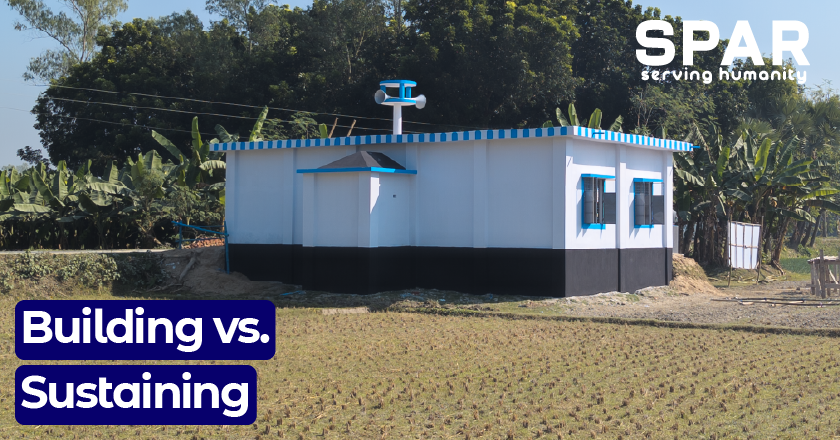
Most people think mosque sadaqah jariyah means funding construction. But sustaining a mosque costs money every month. Lighting, water, repair, learning materials — these recurring needs are often harder to fund than the initial build. A $50 gift can cover a mosque’s water supply for a full month in rural Sylhet. Our team in Sylhet District met Rahima, a 60-year-old widow, in March 2025. She told us the mosque near her home had no running water for wudu — until a donor abroad changed that with a single monthly commitment.
The Role of Qurans and Educational Materials
Buying Qurans for a mosque is one of the most cited forms of sadaqah jariyah. Every time someone reads from that copy, the original donor earns reward. Scholar An-Nawawi wrote in *Al-Adhkar* that knowledge shared through a gift — a book, a lesson, a written teaching — carries reward that mirrors ongoing charity. A single Quran in a rural mosque in Cox’s Bazar may be read thousands of times across a decade. That’s thousands of moments of reward from one $10 gift.
Who Benefits Most From Mosque Sadaqah Jariyah?
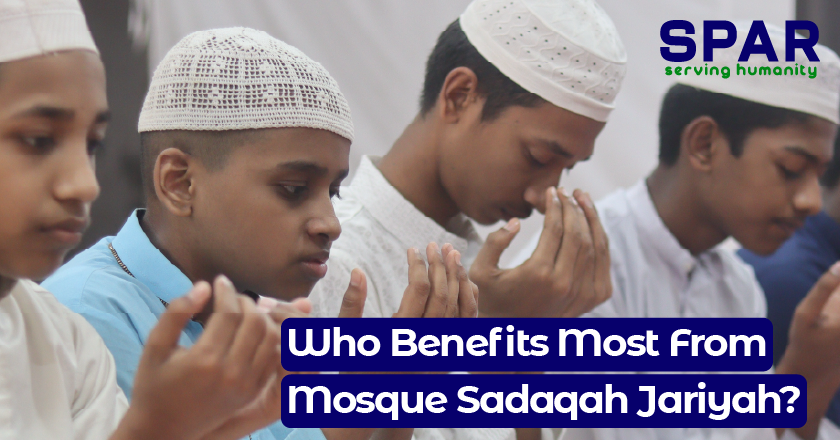
Rural Muslim communities in low-income countries benefit most from mosque sadaqah jariyah. In Bangladesh, rural areas like Kurigram, Barguna, and Sunamganj have high concentrations of underserved mosques. Many serve communities where the average daily income is under $2. The World Bank estimates that about 18% of Bangladeshis still live below the national poverty line. In these districts, a mosque is often the only gathering place — the only source of education, grief support, and community news. Giving toward these mosques reaches people who have no other safety net. The impact isn’t symbolic. It’s structural.
How Does Mosque Sadaqah Jariyah Connect to Islamic Education?
A mosque isn’t just a prayer hall. It’s the primary place of learning for millions of Muslim children who can’t access formal schooling. In Bangladesh alone, an estimated 50,000 mosque-based maktabs — informal Quran schools — teach children daily. Many run in the early morning, before government school hours. When a mosque has no lights, no learning materials, and no imam — those classes stop. Mosque sadaqah jariyah directly funds the conditions that let Islamic education happen. A donor who funds lighting funds every lesson taught under it. That’s a chain of reward most donors never fully picture when they give.
The Imam’s Salary as Sadaqah Jariyah
Funding an imam’s salary is one of the least-discussed forms of mosque sadaqah jariyah — but one of the most impactful. An imam teaches, leads prayers, counsels families, and serves as the spiritual anchor of a community. In remote Bangladesh, many imams serve for little or nothing. Some earn as little as $20 per month. The communities working to change this don’t make headlines. They show up, week after week.
What Mosque Sadaqah Jariyah Means for Donors Right Now
Mosque sadaqah jariyah is one of the clearest paths a Muslim donor has to ongoing reward. The concept is simple: fund something that keeps giving — a well, a roof, a learning space — and the reward keeps flowing. According to Islamic scholarship, the Prophet Muhammad ﷺ named ongoing charity as one of three deeds that continue after death (Sahih Muslim, Book 13). In Bangladesh, an estimated 50,000 mosque-based maktabs teach children each day. One stable mosque serves all of them. The work at SPAR stays focused on exactly that kind of long-term ground.
Does the Size of the Mosque Matter?
It doesn’t. A small mosque in a flood-prone district serves the same spiritual function as a grand one in a city. What matters is whether it stays open. In rural Bangladesh, the mosques most in need of support often serve 200 to 400 people — yet run on less than $30 a month in operational funding. Small contributions to these spaces carry outsized impact. Mosque sadaqah jariyah works at any scale.
How Do Donors Know Their Contribution Keeps Running?
Accountability is the question donors ask most. Verified field organizations document the mosques they support — by name, district, and date. This matters because sadaqah jariyah is a long-term commitment, not a one-time act. Donors who want to see continuity should look for partners with field presence, named locations, and regular reporting. That’s what separates meaningful giving from guesswork.
Behind every stable mosque in a remote district is a long line of people who chose to stay involved. At SPAR, we work in Bangladesh because the need is quiet, the communities are consistent, and the gaps are real. The mosques we support don’t make headlines — but they open every morning.