

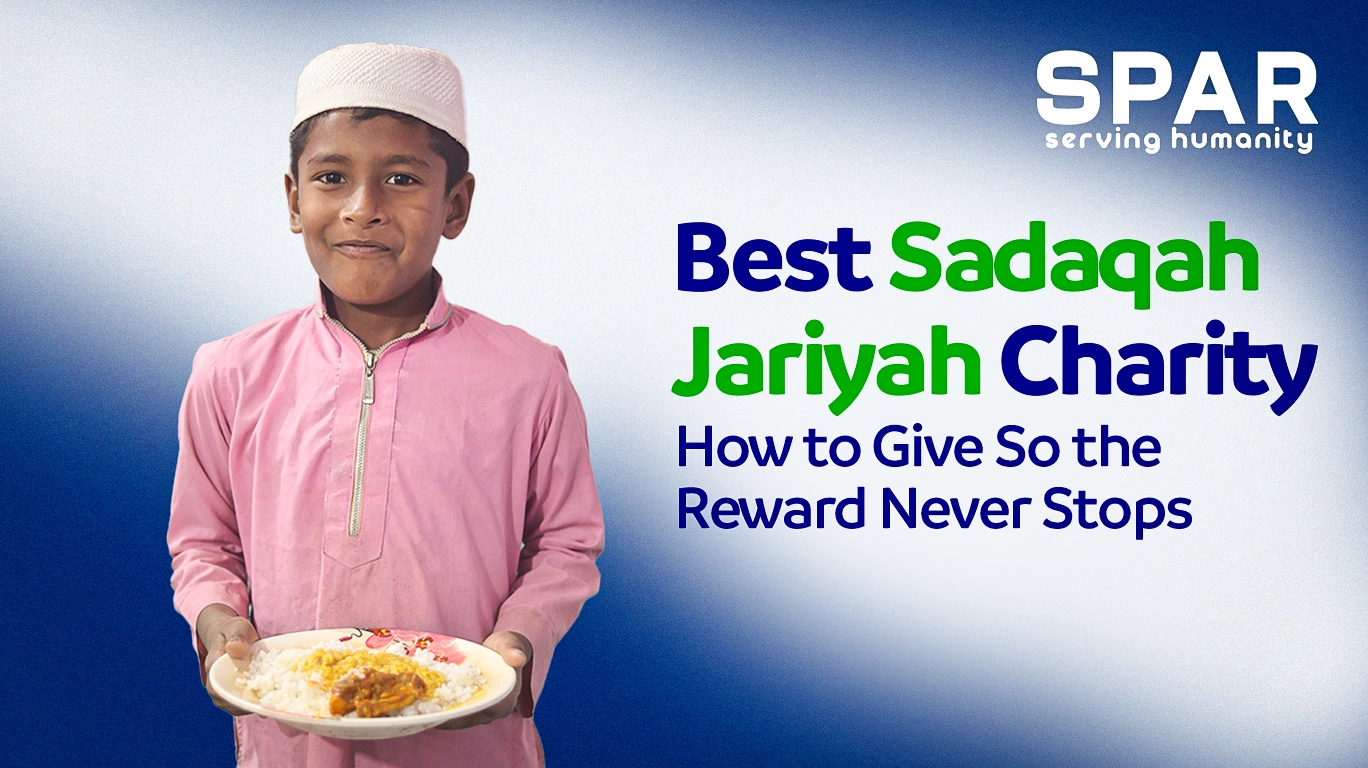
Best Sadaqah Jariyah Charity: How to Give So the Reward Never Stops
Sadaqah jariyah is an ongoing charity. Its rewards continue after the giver dies. The Prophet Muhammad named it one of only three deeds that outlast a person’s life, alongside beneficial knowledge and a righteous child. This makes it different from regular sadaqah, which ends when the act ends. For Bangladeshi Muslims and donors worldwide, choosing the best sadaqah jariyah charity means choosing where your reward lives on.
Why Sadaqah Jariyah Matters More Than Ever in 2026
Many Bangladeshi families still lack clean water, quality education, and basic medical care. UNICEF estimates that millions of children in South Asia remain out of school, and rural upazilas across Rangpur and Kurigram face persistent poverty. These are exactly the conditions where sadaqah jariyah does its deepest work. A well built in a Bangladeshi village keeps giving for decades. A child educated through an Islamic school carries that knowledge for a lifetime. That’s why the choice of charity matters so much. You can explore our ongoing programs and field work to see how sustained giving reaches the communities that need it most. The right charity turns a one-time gift into a living act of worship.
Sadaqah Jariyah: What Most Donors Don’t Know
Most donors think sadaqah jariyah means building a well. But Islamic scholars like Imam An-Nawawi clarified that any deed whose benefit continues after death qualifies. That includes funding a Quran teacher, sponsoring an orphan’s education, or planting trees that feed a community. According to World Bank data, about 20% of Bangladeshis live below the national poverty line, many of them in rural Sylhet and Chittagong districts. For a donor giving $30 USD, that amount can fund clean water access for a family for an entire year in many parts of rural Bangladesh. What makes a charity “best” isn’t its size. It’s whether the benefit keeps reaching people long after your bank transfer clears.
Which Forms of Sadaqah Jariyah Last the Longest?
Not all sadaqah jariyah carries the same staying power. Some gifts run dry in a season. Others keep giving for a generation. Water sources, mosques, and educational programs rank among the most lasting forms. But Islamic scholars like Imam Ibn Uthaymeen also counted sponsoring a child’s full education as among the deepest acts, because knowledge outlives stone and steel. According to UNICEF Bangladesh, about 36% of children in rural Bangladeshi districts face serious learning gaps tied to poverty. A single sponsored school seat can change that family’s direction for decades. The form you choose shapes how long your reward flows.
Water and Sanitation Projects
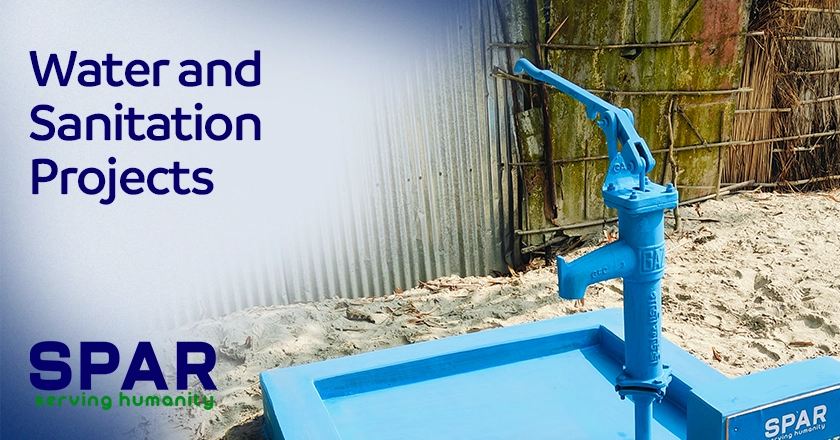
Clean water is among the most cited forms of sadaqah jariyah. The Prophet Muhammad (peace be upon him) called giving water to the thirsty one of the greatest acts of charity, recorded in Sunan Ibn Majah. UNICEF data shows that in remote In Bangladeshi upazilas, many families still walk long distances for safe water. A single hand pump or tube well, when maintained well, can serve dozens of families for fifteen years or more. The cost is low. The return, in lives changed and rewards earned, is not.
Quran and Islamic Education
Funding a Quran teacher is sadaqah jariyah in its purest form. The hadith in Sahih Muslim states that when a person dies, three things continue: ongoing charity, beneficial knowledge, and a righteous child who prays for them. A child who learns the Quran in a rural Bangladeshi madrasa may teach others for fifty years. That chain of knowledge keeps the reward moving long after the original donor is gone. This form costs little to fund and produces some of the deepest, longest-running benefits of any giving program.
Common Misconceptions About Sadaqah Jariyah
Many donors assume sadaqah jariyah requires a large, formal project. That’s not accurate. Imam An-Nawawi taught that the essence of sadaqah jariyah is continuing benefit, not scale. Planting a fruit tree that feeds a Bangladeshi farming family qualifies. So does funding a single child’s school fees. The Bangladesh Bureau of Statistics shows that rural household incomes average just $80 to $100 per month in low-income upazila areas. In that context, $25 to $30 can fund meaningful, ongoing support for an entire family. Small, consistent giving done through a trustworthy charity often beats a single large gift given without follow-through.
Who Benefits Most From Sadaqah Jariyah in Bangladesh?
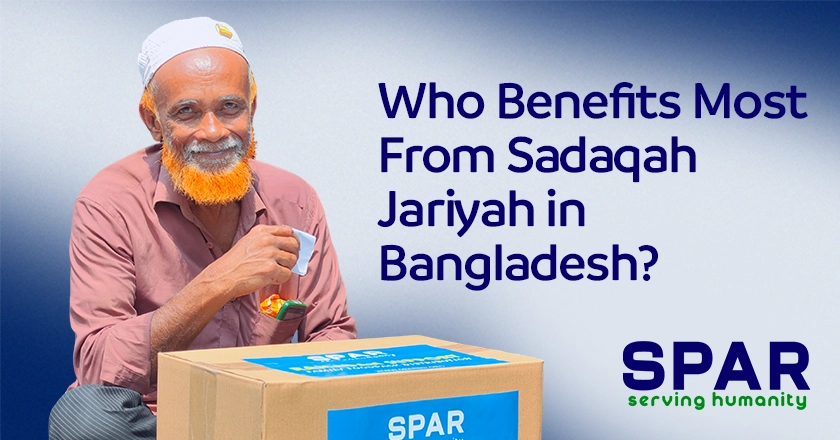
Orphaned children and rural women head the list of those who gain most from this kind of giving. A child without a father in rural Kurigram or Rangpur faces a sharply narrower future, with fewer school years and less food security. Our team visited a small village in Kurigram District in March 2025 and met Farida, a widow raising three children on less than $2 a day. She described how a consistent monthly support program had kept her youngest, Rimon, in school through two full academic years. These aren’t isolated cases. Across low-income Bangladeshi communities, sustained support changes outcomes in ways that one-time relief cannot.
How a Trustworthy Charity Makes the Difference
Choosing the best sadaqah jariyah charity means choosing one that handles your gift with care long after you’ve given it. A poorly run charity can waste a well within a year through bad maintenance. A good one builds community ownership from day one. SPAR works directly in Bangladeshi communities, running water, education, and family support programs designed to outlast any single funding cycle. The teams working on this don’t make headlines. They show up, season after season, because that’s what lasting change actually takes.
What to Look for in a Sadaqah Jariyah Charity
The best sadaqah jariyah charity builds something that outlasts your payment. It works in places where need is structural, not seasonal. According to UNICEF Bangladesh, nearly 20 million Bangladeshi people still lack access to safe drinking water. That gap doesn’t close with one-time relief. It closes when a charity stays, maintains what it builds, and trains communities to carry the work forward. Programs in water, education, and orphan support are the ones most likely to run for years after a single gift.
How Do You Know the Work Will Last?
Look for charities that describe maintenance plans, not just installation counts. A well without a repair fund fails fast. An orphan program without community ties collapses when funding pauses. SPAR’s work in Bangladeshi communities is designed around long-term presence. Field teams return season after season. Local families know the staff by name. That kind of continuity is what separates a lasting program from a completed project.
What Does Ongoing Work Actually Look Like?
It looks like Farida’s youngest, Rimon, is is still in school two years after the initial support arrived. It looks like Bangladeshi villages that don’t flood out their own water points because they know how to protect them. It looks unglamorous. But across Kurigram and Rangpur, the families we work with aren’t waiting for the next crisis appeal. They’re building on what the last year already made possible.
Behind every lasting change is a long line of people who chose to stay involved after the headlines moved on. SPAR is one of those quiet lines. The work in Bangladeshi communities keeps going because sustained attention is what actually changes outcomes. No single gift rewrites a family’s future overnight. But a consistent presence, season after season, is what makes the difference between a one-time act and a chain of good that continues long after you’ve moved on. See how this work continues →

