

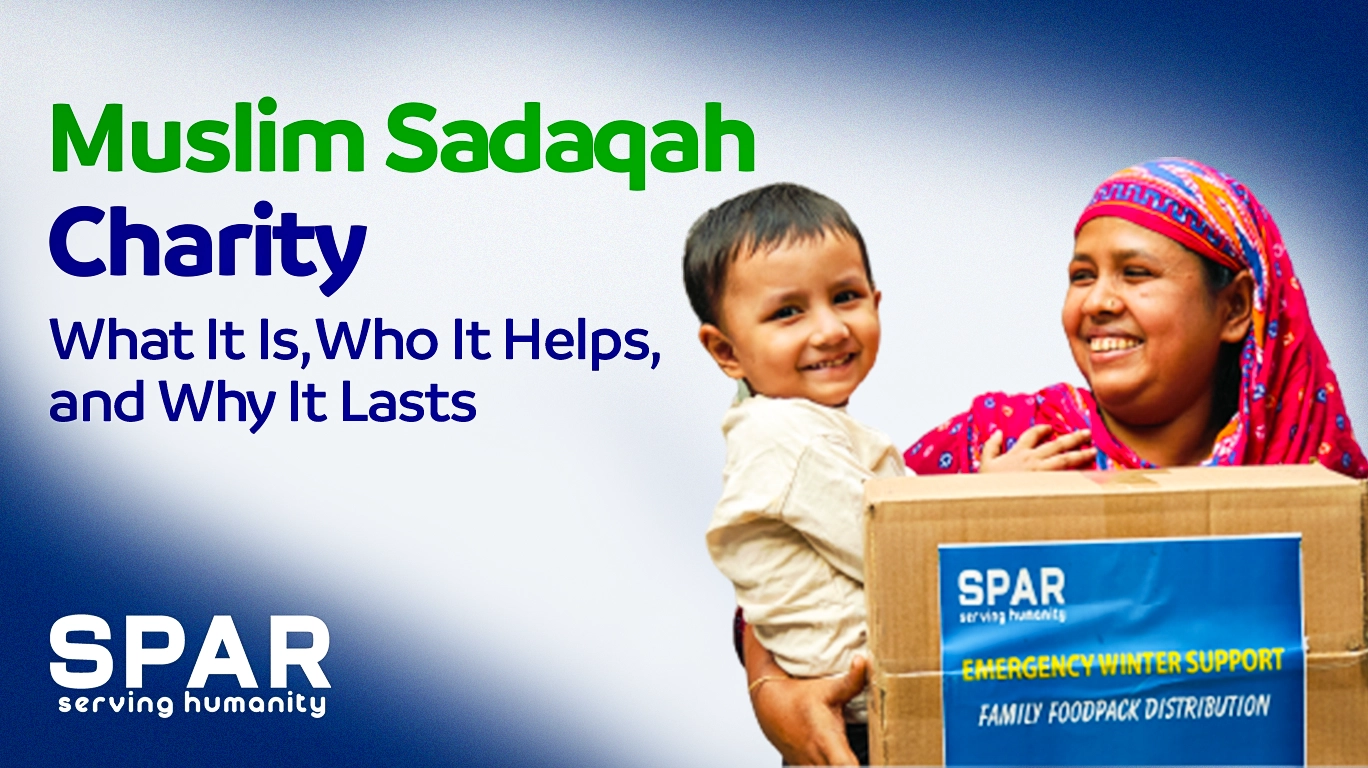
Muslim Sadaqah Charity: What It Is, Who It Helps, and Why It Lasts
Muslim sadaqah charity is voluntary giving in Islam — any act of generosity done for the sake of Allah. It’s not zakat, which is obligatory. Sadaqah has no fixed amount and no deadline. Any Muslim can give it, at any time, in any form. And it doesn’t stop at money — a smile, shared knowledge, or a kind word all count as sadaqah.
Why Muslim Sadaqah Charity Matters Right Now
Voluntary giving holds communities together when systems fail. The UN Office for the Coordination of Humanitarian Affairs estimates over 300 million people globally need urgent aid in 2026 — a number no government can meet alone. Muslim sadaqah charity steps into that gap. It funds food, clean water, and shelter for families in crisis. In Bangladesh, seasonal floods push millions into need each year. Sadaqah-backed projects reach those families fast — often before formal aid does. That speed and flexibility is what makes voluntary Islamic giving different from anything else.
Muslim Sadaqah Charity by the Numbers
The scale of Muslim giving is hard to ignore. Global Islamic philanthropy — including sadaqah, zakat, and waqf — reaches an estimated $1 trillion USD annually, according to the Islamic Development Bank. Sadaqah alone accounts for a significant share of that total. In Bangladesh, our team works across flood-prone districts like Sylhet and Sunamganj, where a single $30 USD contribution can feed a family for a week. Scholars like An-Nawawi noted that sadaqah doesn’t diminish wealth — and that principle still drives millions of donors worldwide to give, even in hard years.
What Are the Different Forms of Muslim Sadaqah Charity?
Muslim sadaqah charity isn’t one thing. It’s a wide family of acts — some cost money, some cost only time. Scholars classify sadaqah into material giving, like food and cash, and non-material giving, like a kind word or removing harm from a path. The Prophet Muhammad ﷺ said that even a smile is sadaqah (Sahih al-Bukhari). This breadth is what makes the concept so powerful. Anyone can give. Sadaqah jariyah — ongoing charity — carries extra weight. A well, a school, or a clean water project keeps earning reward long after the giver is gone.
Sadaqah Jariyah vs. Spontaneous Giving
Sadaqah jariyah is charity that keeps working. A water pump installed in a village in Sylhet doesn’t stop giving when the donor does. It serves that community for years. Spontaneous sadaqah — a meal handed to a hungry neighbor, cash to someone in crisis — meets an immediate need. Both matter. But sadaqah jariyah is what builds lasting infrastructure in places like northern Bangladesh, where seasonal flooding wipes out livelihoods every year. The two forms aren’t competing. They’re complementary.
Can Non-Material Acts Count as Sadaqah?
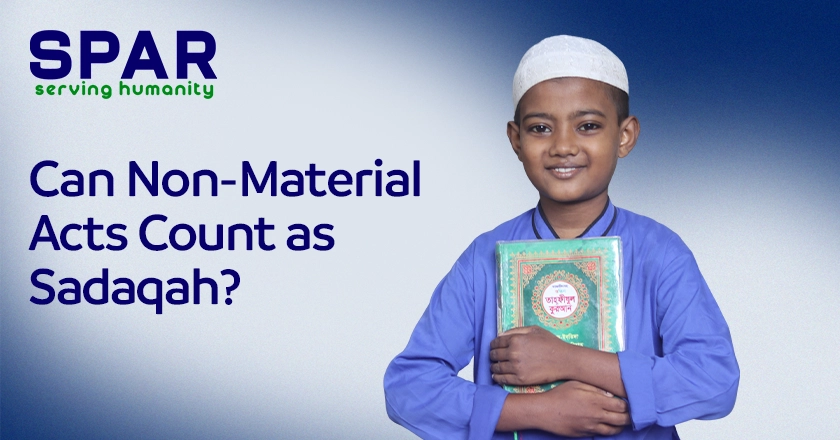
Yes — and this point surprises many donors. The Prophet Muhammad ﷺ confirmed that guiding someone who is lost, helping a person with heavy bags, or even speaking a good word counts as sadaqah (Sahih Muslim). This matters for Muslim sadaqah charity in practice. It means communities don’t only wait for outside funds. Local volunteers who teach, counsel, and advocate are also givers. In our work across Bangladesh, that local action is often what makes outside support land well — and stick.
Common Misconceptions About Muslim Sadaqah Charity
People often confuse sadaqah with zakat. But they’re different. Zakat is a fixed obligation — 2.5% of qualifying wealth, paid annually, to specific categories of recipients. Sadaqah is voluntary, open-ended, and has no minimum. You don’t need to be rich to give sadaqah. According to UNICEF, small consistent contributions to humanitarian programs often outperform one-time large donations in long-term impact — because they fund staffing, not just supplies. Muslim sadaqah charity works best when donors understand this. A small, steady gift every month does more than one large gift once a year.
Who Benefits Most From Muslim Sadaqah Charity?
The people who benefit most are those sitting outside formal systems. In Bangladesh, that means flood-affected families in Sunamganj, day laborers in Kurigram, and women-led households with no male earner. According to the World Bank, about 18% of Bangladesh’s population still lives below the international poverty line. Many of those families never access government aid — either because they don’t qualify, or because they can’t navigate the process. Muslim sadaqah charity reaches them through trusted local networks. It doesn’t ask for paperwork. It just shows up.
A Family in Kurigram — May 2025
Our team visited Kurigram District in May 2025. We met Fatema, a mother of four whose home had flooded twice in twelve months. Her husband had left for Dhaka to find work and hadn’t sent money in weeks. A local sadaqah-funded program provided rice, lentils, and a small cash transfer — about $30. That amount covered her family’s food for a week. It sounds small. But it was the difference between her children eating and not eating. Real change here is rarely sudden. It comes from small, sustained efforts repeated season after season.
How Muslim Sadaqah Charity Connects to Wider Poverty
Sadaqah doesn’t exist apart from the bigger picture. It’s a response to structural poverty — and it works alongside it. The World Bank estimates that climate-driven displacement will push 216 million people into internal migration by 2050. Bangladesh sits near the top of that risk list. Muslim sadaqah charity can’t fix climate change. But it can fund the bridge: the food aid, the shelter kit, the clean water point that keeps a family stable while the bigger systems catch up. That’s not a small role. That’s
The Path Forward on Muslim Sadaqah Charity
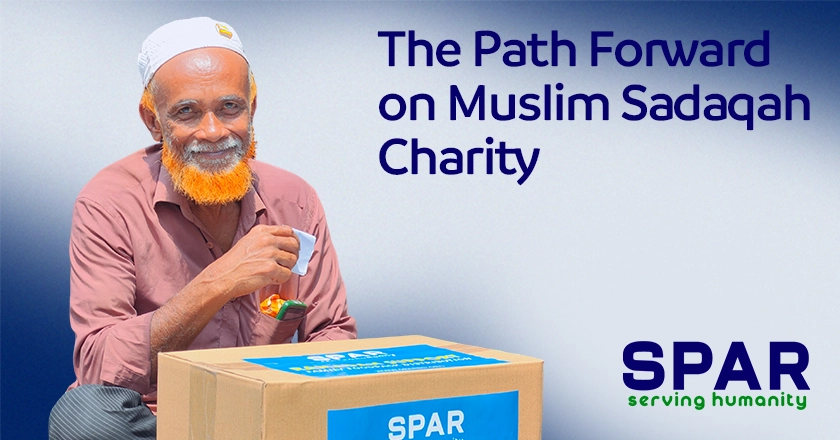
Muslim sadaqah charity is not a trend. It’s a system — and it’s one of the most direct tools a global Muslim community has for reducing measurable poverty. The World Bank estimates 700 million people still live on less than $2.15 a day. Bangladesh is home to millions of them. Small, consistent sadaqah — even $10 or $20 a month — funds food, clean water, and emergency cash that families can’t get anywhere else. Islamic scholars like Ibn Uthaymeen taught that sadaqah given in secret carries greater reward. That tradition of quiet giving still drives the most effective charity work happening in Bangladesh right now.
What Makes Sadaqah Different From One-Off Aid
Sadaqah jariyah — ongoing charity — creates results that outlast the gift itself. A $200 water point serves a village for years. A $50 skills training session helps a widow earn for a decade. One-time aid feeds a family for a week. Sustained sadaqah builds the structure that keeps them fed. That difference matters when we look at long-term poverty data from places like Kurigram District.
How Sadaqah Connects to Real Change in Bangladesh
Bangladesh loses roughly 1% of its GDP each year to climate damage, according to the Asian Development Bank. That number hits the poorest hardest. Muslim sadaqah charity doesn’t replace government response. But it fills the gap — fast, direct, and without the delay of institutional aid. Our team has seen this in Kurigram. The families who received sadaqah-funded aid in 2024 were more stable heading into 2025’s flood season. That’s not coincidence. That’s sustained giving working exactly as it should.
Behind every measurable change is a long line of people who chose to stay involved long after the headlines moved on. Fatema’s family in Kurigram didn’t need a large rescue. They needed a $30 food transfer and someone to check back the following season. At SPAR, that’s the work — quiet, repeated, and grounded in a command that’s been in the Quran for fourteen centuries.

