Build a Water Well Donation: What It Really Funds — and Who It Reaches
What Is a Build a Water Well Donation?
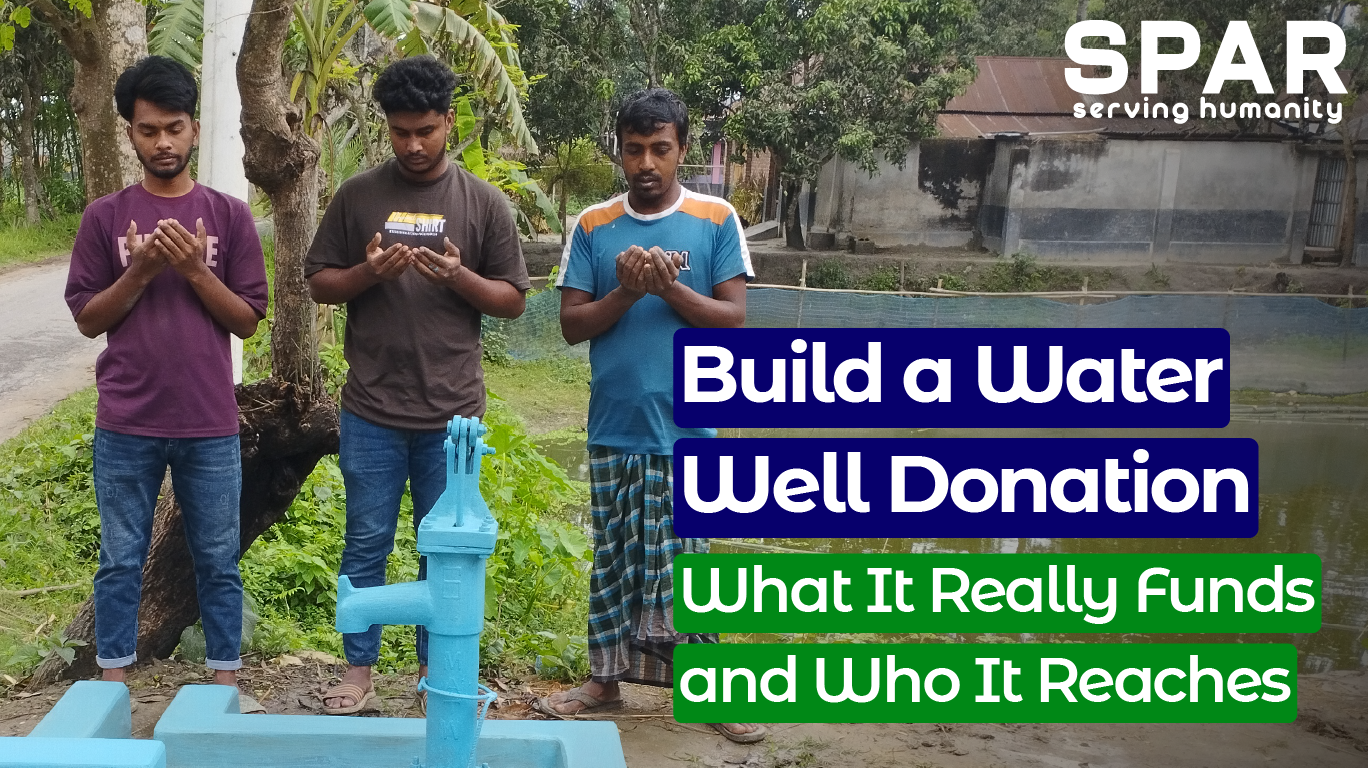
A build a water well donation funds the digging, drilling, or lining of a freshwater well for a community that can’t access clean water. It’s a one-time gift that creates a long-term water source. Unlike food aid, one well can serve hundreds of people for years.
Why Build a Water Well Donation Matters Right Now
Every 2 minutes, a child dies from a water-related disease. That’s not an estimate—WHO puts the annual death toll from unsafe water at 1.4 million people. A single funded well cuts that risk for an entire village at once.
Build a Water Well Donation: What Most People Don’t Know
Most donors assume a well costs thousands. But in high-need regions like Bangladesh, a hand-pump well can serve 200 to 300 people for as little as $300 to $600 USD. UNICEF reports that basic water access costs around $30 USD per person, making this one of the highest-impact gifts in humanitarian aid.
How Does a Build a Water Well Donation Actually Work?
A donation funds the full process: site survey, drilling or digging, lining the shaft, installing a hand pump, and testing the water. Most wells in rural Bangladesh take 3 to 7 days to complete. The water flows the same week.
Who Picks the Site?
Field teams — not head offices — choose the location. They talk to village leaders, check the water table, and test the soil. A bad site means a dry well. So our team in Kurigram District spends days on the ground before a single tool goes in.
How Long Does the Water Last?
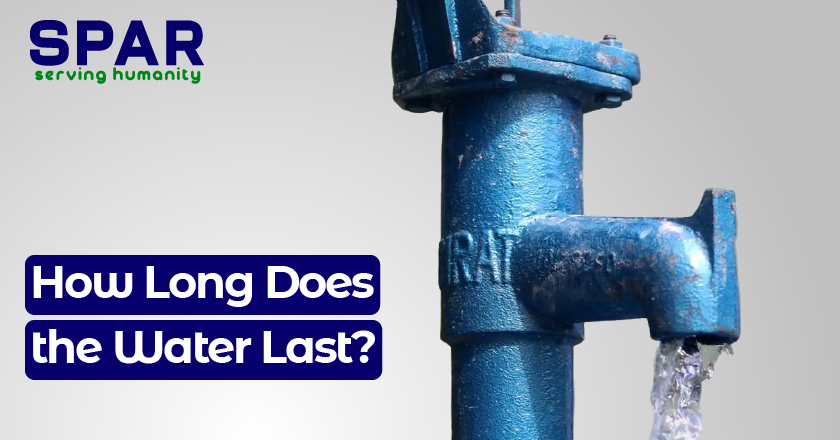
A properly built hand-pump well lasts 10 to 15 years with basic upkeep. UNICEF’s WASH program found that community-managed wells fail far less often than wells with no local ownership. Training a local caretaker doubles the lifespan.
Who Manages It After?
Local women’s committees — common across northern Bangladesh — take charge of daily upkeep. This isn’t a formality. It’s the difference between a well that works in year five and one that sits broken.
What Are the Different Types of Water Well Donations?
Not all wells are the same. The type depends on the depth of the water table, the soil, and how many people the well must serve. A $300 shallow hand-pump well suits a hamlet of 50 families. A deeper borehole for 500 people costs more — but the cost per person stays low.
Shallow Hand-Pump Wells
These reach water at 10 to 30 meters. They’re the most common type funded by a build a water well donation in Bangladesh. Fast to build, easy to maintain, and cheap enough that one donor can fund one well outright.
Deep Borehole Wells
These go 50 to 100 meters down. They reach cleaner water, away from surface contamination. The World Bank notes that deeper wells cut arsenic exposure — a silent crisis in Bangladesh’s delta region — by up to 80%.
Tube Wells
Tube wells are narrow-diameter boreholes fitted with a hand pump. They’re the standard SPAR uses across haor wetland zones, where seasonal flooding makes shallow wells unsafe for half the year.
Who Is Most Affected by Lack of Clean Water?
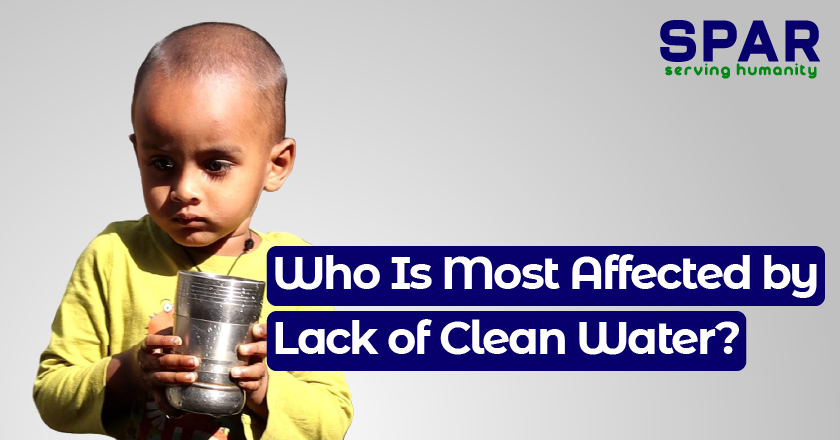
Children under five and pregnant women bear the worst of it. WHO data shows that diarrheal disease — almost entirely water-linked — kills about 525,000 children under five every year. In Bangladesh, low-income rural women walk up to 6 kilometers daily just to reach water.
Children in Rural Bangladesh
Kids here miss school to collect water. Our team in Jamalpur in March 2025 met Rumana, age 9. She carried a clay pot to a pond every morning before class. That pond had no treatment. She’d been sick three times that year.
Women and Girls
Water collection falls on women in 8 out of 10 households across South Asia, according to UN Women. A nearby well gives those hours back. It’s not a small thing — it’s a full shift in how a household runs.
Older Adults With No Mobility
They can’t walk to distant sources. And they can’t afford to buy water from vendors, who charge up to 10 times the piped-water rate. A community well 200 meters away changes everything.
Common Misconceptions About Build a Water Well Donation
Most people think one well helps one family. It doesn’t — it helps a whole community. And most people assume wells are a one-time fix. They’re not. But they’re close: a well-funded and maintained well needs only small, occasional repairs. The ratio of impact to cost is hard to beat.
“Wells Run Dry Quickly.”
This happens when wells are placed incorrectly. Site selection matters most. Our field teams use soil surveys and local hydrological maps before drilling. Properly sited wells in Bangladesh rarely run dry within the first decade.
“Only Big Charities Can Do This Right”
Scale isn’t always better. Smaller on-the-ground
What This Means for You Now
A well placed in the right location lasts 10 to 15 years. It serves hundreds of people. The decision to fund one is among the highest-impact choices a person can make. SPAR’s field teams in Bangladesh show exactly how that works in practice.
How Small Groups Can Get More Done
One well costs roughly $1,500 to $3,000 in Bangladesh—far less than most people expect. A group of friends, a mosque committee, or a workplace team can reach that together. The well gets built in weeks. The water flows for years.
What Happens After the Well Goes In
A trained local caretaker handles upkeep. Small repairs run $30 to $100. That’s far less than what families were spending on vendors. The community takes ownership — and that’s what makes it last.
Behind every clean water source is a long line of people who decided this was worth their time. At SPAR, we’re one of those quiet lines—and the work in Bangladesh keeps going because of it. See how this work continues →