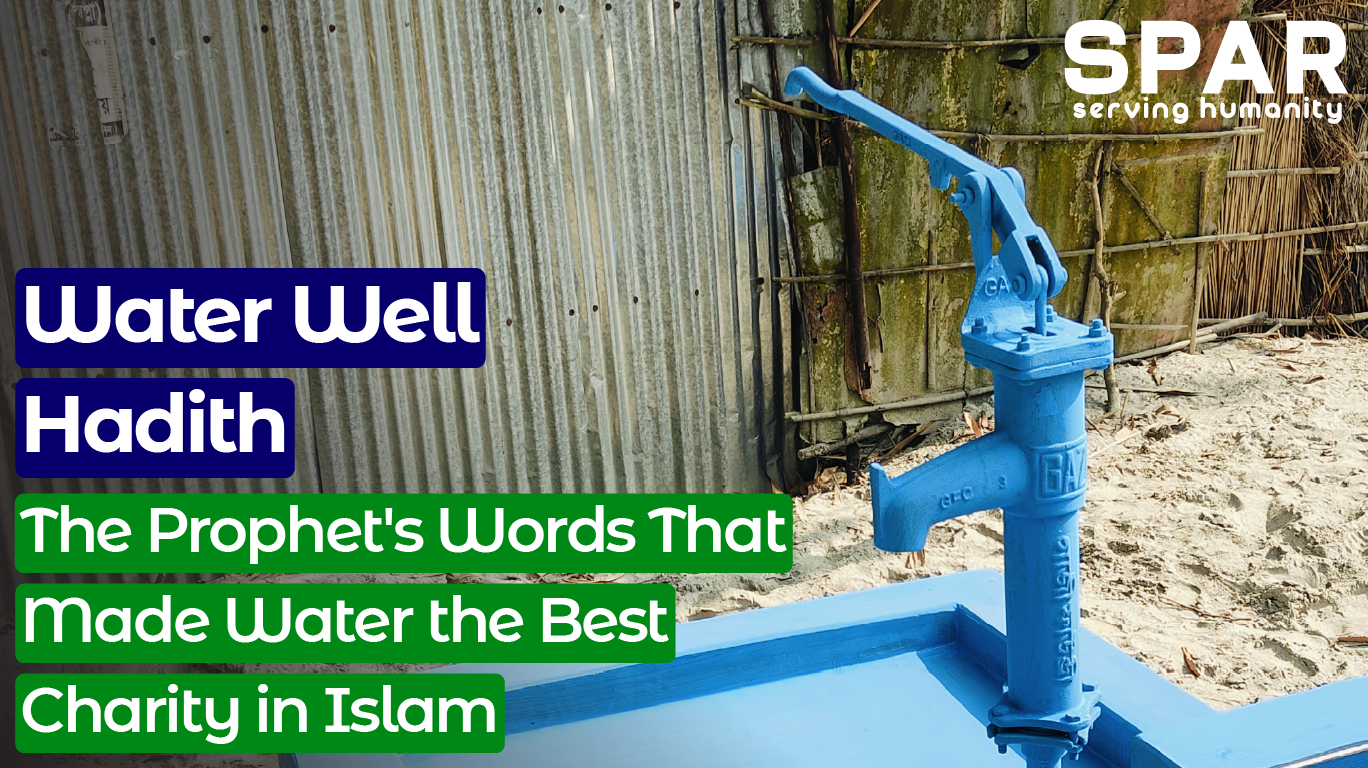
Water Well Hadith: The Prophet’s Words That Made Water the Best Charity in Islam
The water well hadith is a narration where Sa’d ibn ‘Ubadah (may Allah be pleased with him) asked the Prophet ﷺ which charity was best. The Prophet ﷺ replied: “Water.” Sa’d then dug a well in his mother’s name. Recorded in Sunan Abu Dawud (1681) and Sunan an-Nasa’i (3664).
Why the Water Well Hadith Matters Today
Clean water is still out of reach for 703 million people worldwide, according to UNICEF. The hadith doesn’t just describe a good deed — it names water as the *best* form of sadaqah. That’s a direct answer to one of the world’s biggest problems, spoken fourteen centuries ago.
Water Well Hadith: What Most People Don’t Know
Most people know the hadith. But they don’t know that it’s classed as sadaqah jariyah — ongoing charity that earns reward after death. Ibn Qudamah noted this in *Al-Mughni*. And WHO data shows unsafe water kills about 1.4 million people each year. The hadith isn’t historical. It’s urgent.
Does the Water Well Hadith Only Apply to Digging Wells?
No. Scholars apply it to any act that brings clean water to people who need it. That includes repairs, filtration systems, and water storage tanks. The form changes. The reward doesn’t.
Can You Give Water Charity Without Digging?
Yes. Ibn Baz noted that sadaqah jariyah covers any lasting benefit to others. A sealed storage tank in a flood-prone village counts. So does a hand pump fixed after years of disuse.
What About Water Purification Efforts?
Clean delivery isn’t enough if the water itself is unsafe. WHO reports that contaminated water causes about 485,000 deaths from diarrhea each year. Purification work — filters, testing, treatment — falls inside the same principle the hadith describes.
Does the Hadith Cover Urban Communities?
Yes. The hadith doesn’t mention deserts or villages. It mentions water. Urban slums in Dhaka face water access gaps just as rural areas do. UNICEF data shows about 2 billion people still lack safely managed drinking water at home.
Who Needs This Most Right Now?
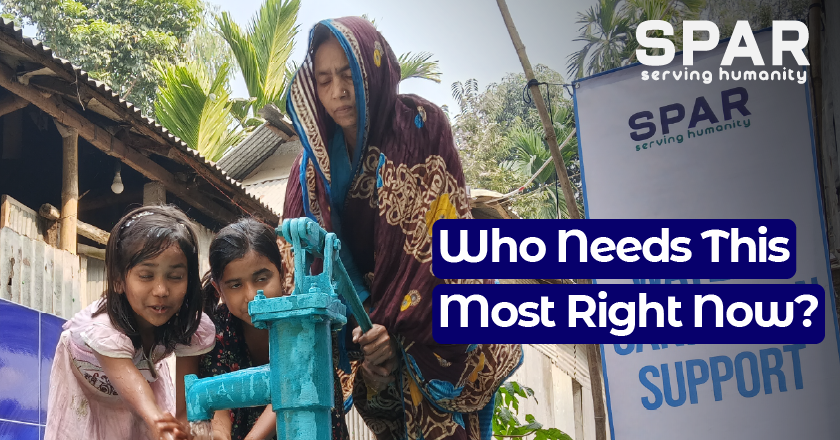
Children under five and women bear the highest cost of water scarcity. UNICEF estimates that children account for most of the 1.4 million deaths linked to unsafe water each year. Women and girls spend an average of 200 million hours daily collecting water — time taken from school and work.
Where Is the Need Highest?
Sub-Saharan Africa and South Asia carry the biggest burden. In Bangladesh alone, DPHE records show that millions in coastal and flood-plain districts drink water high in arsenic or salt. Char islands — small river islands — are among the hardest to reach.
Which Age Group Suffers Most?
Children under five die from waterborne illness at rates adults don’t. Their immune systems can’t fight off the same bacteria. A $30 water filter can cut a family’s risk by more than half. The math is simple. The gap in access isn’t.
Why Do Women Walk for Water?
In communities without nearby wells, water collection falls to women by default. It’s not culture alone — it’s survival logistics. Girls miss school. Women miss work. One well can return dozens of hours a week to a single household.
Common Mistakes People Make About the Water Well Hadith
Most people treat the hadith as permission to do something good. It’s actually a ranking. The Prophet ﷺ said water was *best* — not just acceptable. That word changes how Muslims should think about where they direct sadaqah.
Mistake 1: Treating All Charity as Equal
Zakat and sadaqah cover many needs. But the water well hadith sets a priority. Ibn Qudamah’s *Al-Mughni* describes sadaqah jariyah as charity with a continuing return. Water wells fit that definition precisely — they serve communities for years after they’re built.
Mistake 2: Thinking One Well Is Enough
One well serves one community. But water needs aren’t static. Floods break pumps. Droughts lower water tables. A well built in 2019 may need repair by 2024. The sadaqah jariyah principle rewards the *ongoing* benefit — which means ongoing maintenance matters too.
Mistake 3: Ignoring Water Quality
A well that pumps arsenic-laced water isn’t safe charity. Our team visited Sunamganj District in March 2025 and met Rohima, a mother of three. Her family had a well. But the water failed a basic salinity test. Access without quality is half a solution.
The Real Impact: What Changes When a Well Arrives
A well doesn’t just solve thirst. It shifts how a community spends its time, money, and energy. Families stop buying water from vendors at $0.10 to $0.20 per litre — costs that add up fast for households earning under $2 a day.
Health Changes First
Waterborne diseases drop when clean water arrives. [WHO data](https://www.who.int
What the Hadith on Water Wells Means for You Right Now
The Prophet ﷺ named water as one of three acts that outlive a person (Sunan Ibn Majah, 242). That’s not a metaphor. It’s a framework. Communities in Bangladesh still lack safe water — and SPAR’s ongoing work shows what happens when that framework meets action on the ground.
Who Benefits Most From a Water Well
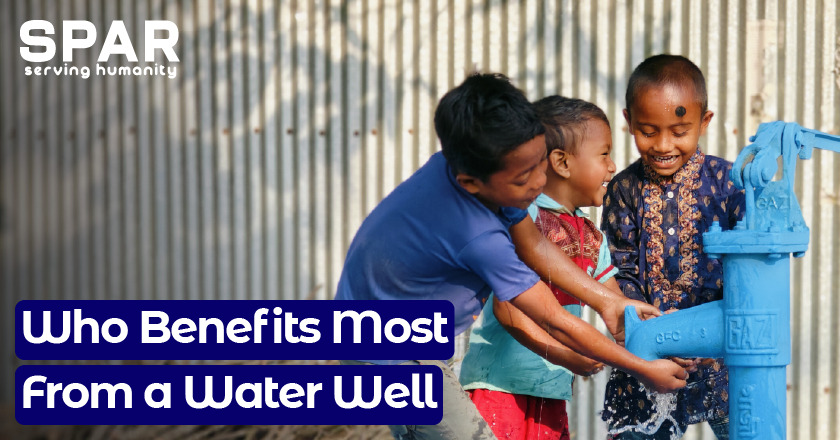
Women and children carry the heaviest load. UNICEF reports that women and girls spend 200 million hours daily collecting water worldwide. A well ends that daily walk. It frees time for school, for work, for rest.
How Long Does the Reward Continue
Scholars like An-Nawawi held that sadaqah jariyah flows as long as the benefit flows. A well built today can serve a community for 20 to 30 years. The reward — according to this hadith — doesn’t stop when the donor does.
Behind every clean-water statistic is a family that no longer spends $20 a month on vendor water. At SPAR, we’ve seen that shift happen in Sylhet, in Sunamganj, in Kurigram. The work isn’t loud. It just keeps going — one well, one community, one year at a time. See how this work continues →