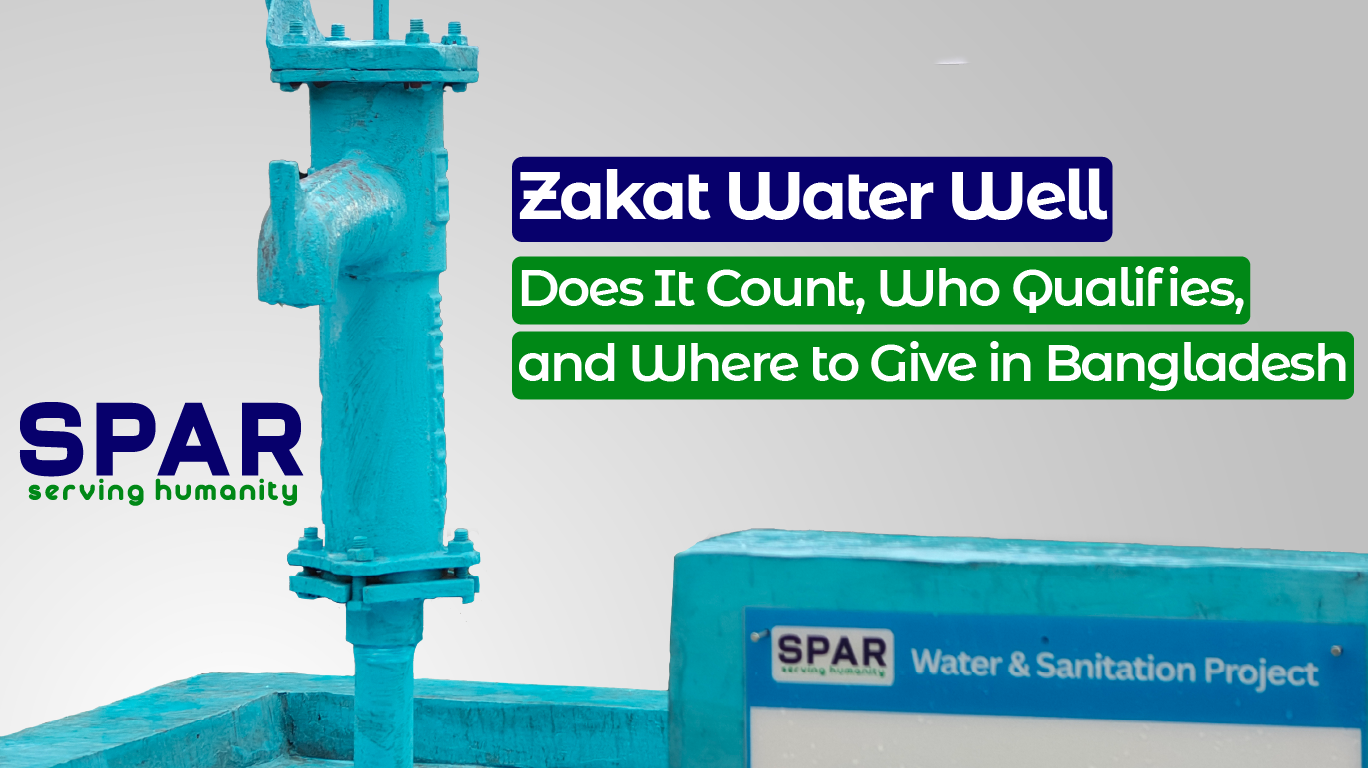
Zakat Water Well: Does It Count, Who Qualifies, and Where to Give in Bangladesh
A zakat water well is a freshwater source — a borehole, handpump, or deep-tube well — funded through Islamic charitable giving to bring clean water to communities in need. It counts as sadaqah jariyah, meaning the reward continues long after the gift is made. Many scholars also accept it as a valid channel for zakat al-mal funds.
Why a Zakat Water Well Matters Right Now
Water is the difference between life and death for millions of families. UNICEF reports that 703 million people worldwide still lack basic clean water access — and most live in South Asia and sub-Saharan Africa. A single well can serve 200 to 500 people for decades.
Zakat Water Well by the Numbers
The World Health Organization links unsafe water to over 1.4 million deaths each year. In Bangladesh alone, rural families often walk more than two miles to reach any water source. One properly drilled borehole — costing as little as $300 to $500 USD — can end that walk for an entire village.
Does a Zakat Water Well Count as Valid Zakat?
Most scholars say yes — with conditions. The well must serve people who qualify as zakat recipients: the poor, the destitute, or those in pressing need. Sheikh Ibn Uthaymeen held that water provision for the needy is a sound zakat channel when it reliably reaches those who cannot help themselves.
What Makes It Qualify?
The well must serve a genuine need. If a community already has clean water, the gift shifts from zakat to voluntary sadaqah. The distinction matters — but either way, the reward stands.
Does the Donor Lose Ownership?
Yes. Once zakat funds leave your hands, they belong to the recipients. The well exists to serve them — not to carry your name. That’s the contract at the heart of Islamic giving.
What Do Scholars Say About Sadaqah Jariyah?

The Prophet ﷺ named flowing benefit as one of three deeds that outlast death — cited in Sahih Muslim. A well that keeps drawing water after the donor has died is the textbook case. Most scholars, including An-Nawawi in his commentary on Sahih Muslim, treat it as one of the clearest examples.
Who Needs a Zakat Water Well Most?
Children under five bear the biggest burden. UNICEF estimates that contaminated water causes about 1,000 child deaths every single day. In rural Bangladesh, women and girls walk the farthest — sometimes two hours round-trip — to collect water for the family.
Where Is the Need Sharpest?
Northern Bangladesh — districts like Kurigram, Gaibandha, and Jamalpur — sits in the flood belt. Wells here fail or get contaminated every monsoon season. Families cycle in and out of waterborne illness year after year.
Why Are Women Hit Hardest?
Water collection falls on women in most rural households. That walk takes hours. It cuts into school time for girls, and work time for mothers. A nearby well changes both.
What Age Group Is Most at Risk?
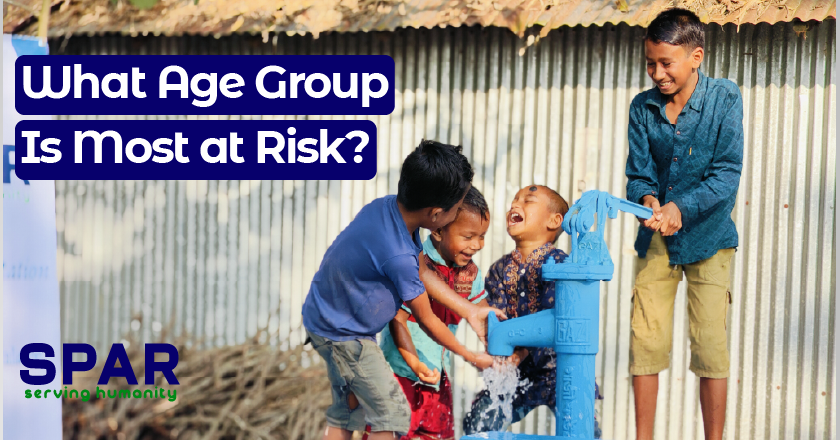
Children under ten are most vulnerable to diarrhea, typhoid, and arsenic exposure from shallow wells. The World Bank links contaminated groundwater directly to stunted growth in under-five children across South Asia.
Common Mistakes When Giving a Zakat Water Well
The biggest mistake is paying for a well without checking who drills it. Poorly sited boreholes can hit arsenic-heavy aquifers. A well that looks clean can carry dangerous levels of arsenic — a silent, slow harm invisible to the eye.
Drilling Too Shallow
Shallow wells — under 50 meters — hit contaminated groundwater in many parts of Bangladesh. A proper borehole needs to reach the deep sand aquifer, below the arsenic layer. That depth matters more than speed.
Skipping Maintenance Plans
A well with no maintenance plan breaks within two to three years — and nobody fixes it. The WHO found that nearly 25% of hand pumps in rural South Asia are non-functional at any given time. Funding the pump is step one. Funding the spare parts is step two.
Choosing by Price Alone
A $300 well sounds better than a $600 well. But the cheaper option often skips water testing, proper casing, and local training. The communities we work with in Bangladesh need wells built to last a decade — not wells built to a budget.
Real Impact: One Well in Kurigram
In March 2025, our team visited a cluster of six families in Kurigram District. They’d been drawing water from an open pond shared with livestock. Fatema, a mother of three, told us her youngest had diarrhea for most of the previous year. One borehole — drilled to 80 meters — changed that.
What Changed in Six Months?
By September 2025, all three of Fatema’s children had been diarrhea-free for four consecutive months. The school attendance rate among the six families rose. The women stopped the daily two-hour walk. One well. Six families. Real, measurable change.
What This Means for Your Zakat Water Well Decision
A zakat water well is one of the most direct ways to fulfill sadaqah jariyah. The science backs it — UNICEF reports that one clean water point can reduce waterborne illness by up to 50% in a community. See how this work continues at sparproject.org/our-work.
Ask Before You Fund
Before you commit, ask three things. Who drills it? Who tests the water? Who maintains it? A well without those answers isn’t a well — it’s a risk.
Match the Well to the Need
Shallow wells work in some regions. Bangladesh’s arsenic belt needs deep boreholes — often 60 to 80 meters. The right well depends on the geology, not the price tag.
Wells like the one in Kurigram don’t appear because of one big push. They appear because someone decided this was worth their continued attention — year after year, long after the photos were taken.