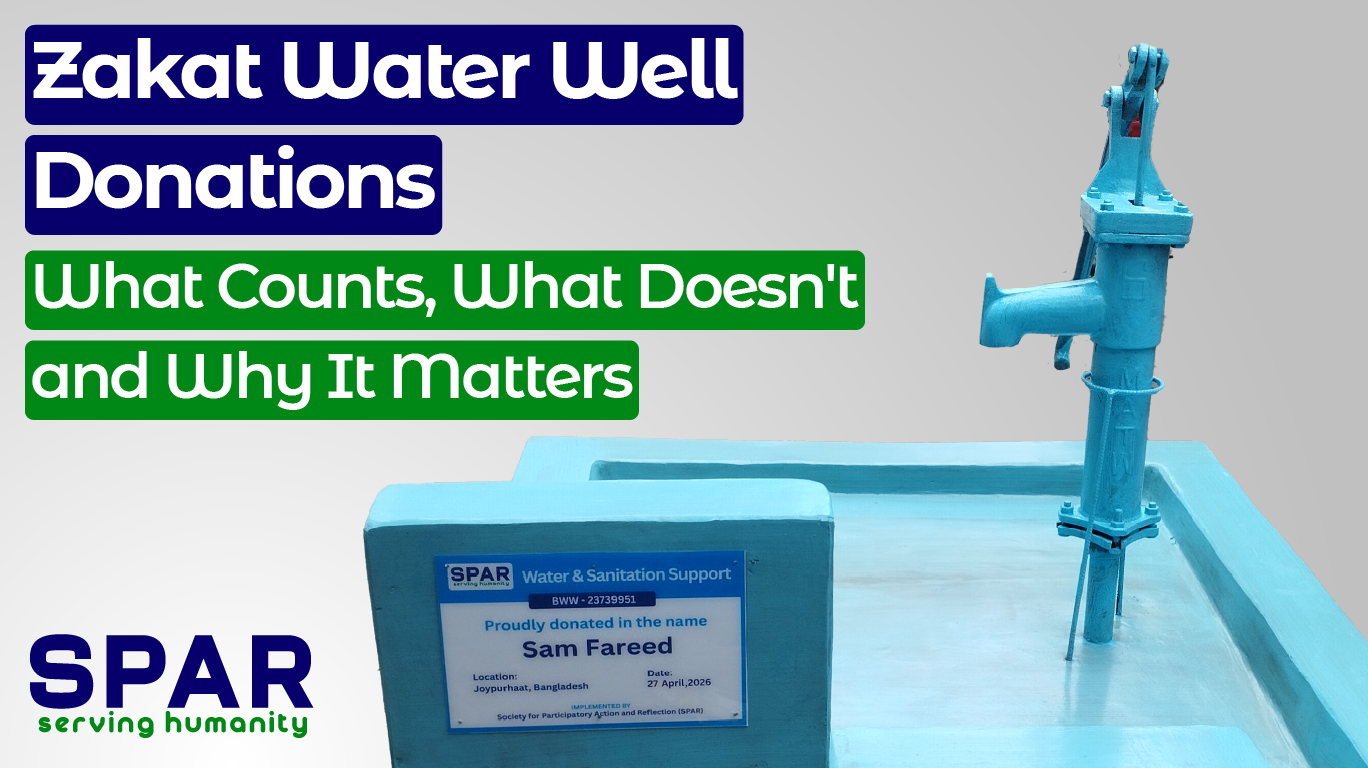
Zakat Water Well Donations: What Counts, What Doesn’t, and Why It Matters
What Are Zakat Water Well Donations?
Zakat water well donations are payments of obligatory zakat used to fund clean water access—typically wells or boreholes—for people in severe need. Scholars classify them under the *fi sabilillah* or *ibn al-sabil* categories. They’re one of the few charity forms that can serve as both zakat and ongoing sadaqah jariyah.
*(Word count: 49)*
Why Zakat Water Well Donations Matter Right Now
Water poverty kills. UNICEF estimates that about 1,000 children under five die every day from diarrhea linked to unsafe water. In countries like Bangladesh, a single hand-pump well can serve 40 to 50 families—making each dollar of zakat reach further than almost any other intervention.
Zakat Water Well Donations by the Numbers
The scale is hard to ignore. WHO and UNICEF’s Joint Monitoring Programme reports that 703 million people still lack basic drinking water access worldwide. In rural Bangladesh alone, arsenic-contaminated groundwater affects an estimated 20 million people — a crisis that well-based zakat projects directly address.
Is Zakat Valid for Water Wells? What Scholars Say
Most classical scholars accept water wells under *fi sabilillah* — the “in the path of God” category. Some also permit them under *ibn al-sabil*, covering travelers and those cut off from basic needs. Both paths are documented in the major legal schools.
What Does *Fi Sabilillah* Actually Cover?
Classical scholars like Ibn Qudama and Ibn Taymiyyah defined *fi sabilillah* broadly. It covers any act that upholds the religion and relieves human suffering. Clean water — a direct condition for prayer, hygiene, and survival — fits squarely within that scope.
Do All Four Madhabs Agree?
Not entirely. The Hanafi school traditionally limits *fi sabilillah* to military jihad. But contemporary scholars—including the late Sheik Ibn Baz—ruled that public welfare projects like water wells qualify. This is now the majority position among modern Islamic councils.
What Makes a Well Count as Sadaqah Jariyah?
A well counts as sadaqah jariyah when it continues to benefit people after the donor’s death. The Prophet Muhammad ﷺ named water among the best ongoing charities. Tirmidhi records, “The best charity is giving water.”* Zakat water well donations carry that dual weight — obligatory duty and lasting reward.
Who Is Most Affected by Water Poverty?
Children under five face the highest risk. WHO data links unsafe water to roughly 485,000 diarrheal deaths each year — most of them in South Asia and sub-Saharan Africa. Women and girls bear the added burden of fetching water, often walking two hours or more each day.
Rural Bangladesh: A Specific Picture
In northern Bangladesh—districts like Kurigram, Gaibandha, and Jamalpur—seasonal flooding destroys shallow tube wells. Families fall back on river water or stagnant ponds. UNICEF Bangladesh flags these char lands as among the hardest places to maintain safe water year-round.
What Happens to Children Without Clean Water?
Repeated waterborne illness stunts growth. It pulls children out of school — up to 443 million school days are lost globally each year due to water-related sickness, per UNICEF’s global data. In Bangladesh’s flood-prone belts, that number spikes after each monsoon.
Common Mistakes People Make With Zakat Water Well Donations
The biggest mistake is treating the well as the final step. A drilled well with no maintenance plan fails within three to five years. A 2023 RWSN field report found that 30 to 40 percent of rural hand pumps in South Asia are broken at any given time.
Choosing Cost Over Quality
Cheap drilling cuts corners on casing and depth. Shallow wells in Bangladesh hit arsenic-laden layers. The World Bank estimates that arsenic poisoning from shallow groundwater affects more than 20 million people in Bangladesh alone — many of them from poorly sited wells.
Ignoring Local Management
A well without a local committee is a well without a future. Communities need someone to collect small maintenance fees — about $5 to $10 per family per year — and call a technician when the pump fails. Zakat water well donations work best when they fund the structure *and* the system around it.
What Real Impact Looks Like on the Ground
Our team visited Char Brahimpur — a sandbar island in Gaibandha District — in March 2025. We met Rahima, a mother of four. Her nearest safe water source was a forty-minute walk. Her youngest son had been sick three times that year with diarrhea. One deep tube well, installed the previous December, had changed her morning completely.
The Math Behind One Well
A single deep tube well in rural Bangladesh costs between $300 and $600 to install. It serves roughly 40 to 50 families. That puts the cost per family at around $10 — and the
What to Know Before You Direct Your Zakat Water Well Donation
Zakat water well donations stretch further in Bangladesh than almost anywhere else. A single deep tube well costs $300 to $600 and serves 40 to 50 families — that’s roughly $10 per family for years of clean water. SPAR’s work in rural Bangladesh shows what that math looks like when the siting, drilling, and community handover are done right.
How to Tell a Good Program from a Bad One
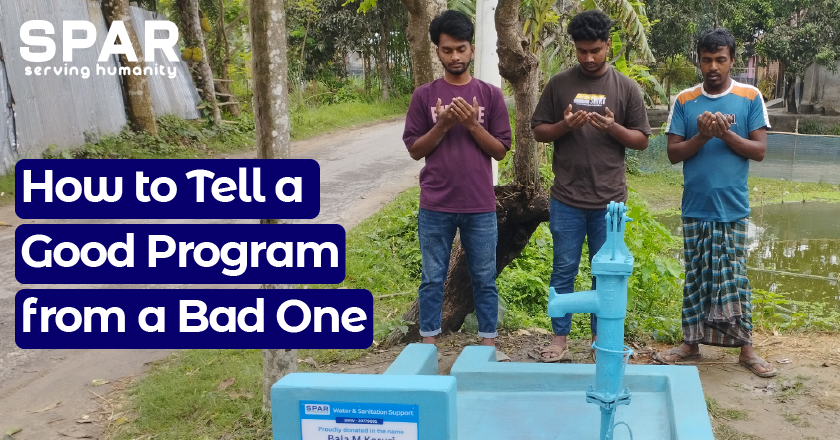
Ask one question: Who maintains the well after installation? Programs that answer with a named local committee—and a small annual fee of around $5 to $10 per family—are the ones built to last.
What Scholars Say About Water as Zakat
Ibn Baz and Ibn Uthaymeen both affirmed that building public water sources counts as valid zakat spending under the “fi sabilillah” category. The condition is that the benefit must be ongoing and reach those who qualify—exactly what a maintained village well does.
Wells like the one in Char Brahimpur don’t appear from one big push. They appear because someone decided this was worth their continued attention — and then an organization stayed to make sure the pump kept running.